In just a few weeks, your tummy will be rumbling and your mouth salivating with the promise of the once-a-year feast that is Thanksgiving. America’s biggest food holiday serves up the chance to do some serious (and seriously fun) fun wine and food pairing. Here in Temecula Valley, Southern California’s Wine Country, we’ve got the perfect wine pairings to go with each Thanksgiving course. No matter what your budget, this simple guide will have your friends and family giving thanks to you for making their holiday meal extra special.
Light Appetizers + Mellow Whites These bright yet mellow whites pair well with lighter dishes to kick off your Thanksgiving meal. The floral notes of a viognier complement a fall salad of pears, blue cheese and walnuts; a selection of fruit and cheeses match nicely with a chardonnay; and light pinot grigio will sing next to your pumpkin soup.
Herbacious Side Dishes + Spicy Reds The spicy notes derived from these unique wine grapes pair especially well with stuffings and gravies seasoned with holiday herbs like sage, thyme and rosemary. Having a vegetarian Thanksgiving? These wines work well with earthy mushroom and winter squash dishes too!
Poultry & Meats + Bold Reds Whether it’s wine or food, everyone looks forward to the main course. The dark fruit flavors in these big reds will enhance similar flavors in your herb-rubbed turkey or peppered roasts. Whether you’re serving poultry, lamb or beef, all three are bold enough to stand up to a rich meat course.
Dessert + Sweet Wines Your Thanksgiving meal isn’t complete without dessert, and no dessert is complete without wine – at least that’s how we feel! Apple pies and pear tarts are practically made to pair with a sweet moscato, where red delicious apples, kiwi , pears, and apricots come together nicely with honeysuckle and jasmine undertones.
One Meal, One Wine On a wine-buying budget? Or just looking to simplify your evening by serving one wine from start to finish? Any of these four, well-priced wines fit the bill. Each is lighter on the palate, with only subtle hints of sweetness making them suitable to drink from appetizers all the way to dessert. Bon appetit!
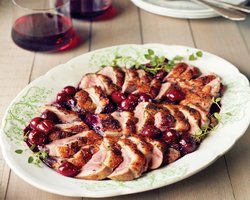
Cooking duck breasts slowly, skin side down, helps eliminate almost every speck of fat. After about 20 minutes, the skin will be crisp and the flesh as rosy and tender as a fine steak. A silky port and cherry sauce makes this a restaurant-caliber dish. Serve with wild rice and your favorite Temecula Valley Cabernet Sauvignon or Merlot. Serves 4
Ingredients Seasoning Rub: 8 juniper berries 2 teaspoons minced fresh thyme 2 teaspoons kosher or sea salt 1 teaspoon black peppercorns 4 boneless duck breasts, about 1⁄2 pound (250 g) each
Sauce: 1 cup (250 ml) Zinfandel Port or Ruby Port 1 shallot, minced 3 fresh thyme sprigs 1 strip orange zest, removed with a vegetable peeler 1 tablespoon balsamic vinegar 24 cherries, pitted and halved 1⁄2 cup (125 ml) strong chicken broth, reduced from 1 cup (250 ml) 1⁄2 teaspoon sugar Kosher or sea salt and freshly ground black pepper 1 tablespoon unsalted butter
Directions Make the seasoning rub: Put the juniper berries, thyme, salt, and peppercorns in a mortar or spice grinder and grind to a powder. Duck breasts vary tremendously in size; scale up the spice rub if the breasts you buy are considerably larger.
Slash the skin of each breast in a crosshatch pattern, stopping short of the flesh. (The slashes help render the fat.) Sprinkle the seasoning rub evenly onto both sides of each breast. Put the breasts on a flat rack and set the rack inside a tray. Refrigerate uncovered for 24 to 36 hours. Bring to room temperature before cooking.
Choose a heavy frying pan large enough to accommodate all the duck breasts comfortably. (If necessary to avoid crowding, use two frying pans.) Put the breasts, skin side down, in the unheated frying pan and set over medium-low heat. Cook until the skin is well browned and crisp, about 15 minutes, frequently pouring off the fat until the skin no longer renders much. (Reserve the fat for frying potatoes, if you like.)
Turn the duck breasts and continue cooking flesh side down, turning the breasts with tongs to sear all the exposed flesh, until the internal temperature registers 125°F (52°C) on an instant-read thermometer, about 3 minutes longer. Transfer the breasts to a cutting board and let rest for 5 minutes before slicing.
While the duck cooks, make the sauce: In a small saucepan, combine the port, shallot, thyme, orange zest, vinegar, and half of the cherries. Bring to a simmer over medium heat and simmer until reduced to 3∕4 cup (180 ml). Add the broth and sugar and simmer until the liquid has again reduced to 3∕4 cup (180 ml). Remove from the heat and, with tongs, lift out the thyme sprigs and orange zest and discard.
Puree the sauce in a blender. Set a very fine-mesh sieve over the saucepan and pass the sauce through the sieve, pressing on the solids with a rubber spatula. Return to medium heat, season with salt and pepper, and simmer until reduced to 1∕2 cup (125 ml). Stir in the remaining cherries and remove from the heat. Add the butter and swirl the saucepan until the butter melts.
Slice the duck on the diagonal. Spoon some of the sauce on each of four dinner plates, dividing it evenly. Top with the sliced duck. Serve immediately.
Thornton Winery 2014 Merlot – Cherry, black berry currant and blueberry notes along with a fruit-driven entry that is complemented by oak barrels from France, Eastern Europe and North America.
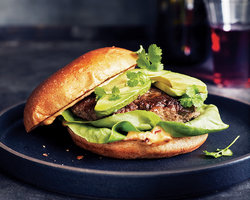
Buttery avocados make any sandwich better, and they put this burger over the top. Grass-fed beef can be lean, but the sliced avocado and spicy chipotle mayonnaise ensure that this burger is a luscious, moist, flavor-packed experience. Pair with your favorite Temecula Valley Cabernet Sauvignon or Syrah.
Serves 4
Ingredients:
Burgers:
1 1⁄2 pounds (750 g) grass-fed ground beef chuck
Scant 1 1⁄2 teaspoons kosher or sea salt
3⁄4 teaspoon garlic powder
Freshly ground black pepper
Chipotle Mayonnaise
1⁄4 cup plus 2 tablespoons (90 ml) mayonnaise, homemade or store-bought
1 tablespoon extra virgin olive oil, if using store-bought mayonnaise
1 small clove garlic, grated with a rasp grater or very finely minced
1 1⁄2 teaspoons very finely minced chipotle chile in adobo, or more to taste
1 tablespoon extra virgin olive oil
4 hamburger buns, split
1 ripe but firm small avocado
1⁄2 lime
About 1⁄2 cup (20 g) loosely packed fresh cilantro leaves
4 large, soft lettuce leaves
Directions:
Make the burgers: Put the beef in a bowl and add the salt, garlic powder, and several grinds of black pepper. Mix quickly with your hands; try not to overwork the mixture. Divide into four equal portions, each 6 ounces (185 g), and shape into balls. Flatten each ball into a round patty about 3∕4 inch (2 cm) thick. Make the patties a little thinner in the center. They shrink a bit when cooked, and this step ensures they will be of even thickness after cooking. Place them on a tray and refrigerate.
Make the mayonnaise: Put the mayonnaise in a small bowl. If it is store-bought, whisk in the olive oil to improve the flavor. Whisk in the garlic and chile. Taste and add more chile if you like. Cover and refrigerate until needed.
Preheat the broiler. Heat a large cast-iron frying pan over medium heat. Add the olive oil and swirl to coat the bottom of the pan. When the oil is hot, add the patties and fry until nicely browned and done to your taste, flipping them with a spatula two or three times and adjusting the heat to keep them from getting too crusty on either side. For medium doneness, the total cooking time will be about 10 minutes.
Set the burgers aside on a platter to rest for about 3 minutes. Meanwhile, toast the buns, cut side up, under the broiler. Halve, pit, and peel the avocado and slice thinly.
Spread chipotle mayonnaise on both halves of the toasted buns. Top the bottom half of each bun with a burger. Divide the avocado slices evenly among the burgers. Sprinkle the avocado lightly with salt and a squeeze of lime. Top with a tuft of cilantro leaves, then with a lettuce leaf, and finally the top half of the bun. Cut in half with a serrated knife and serve immediately.
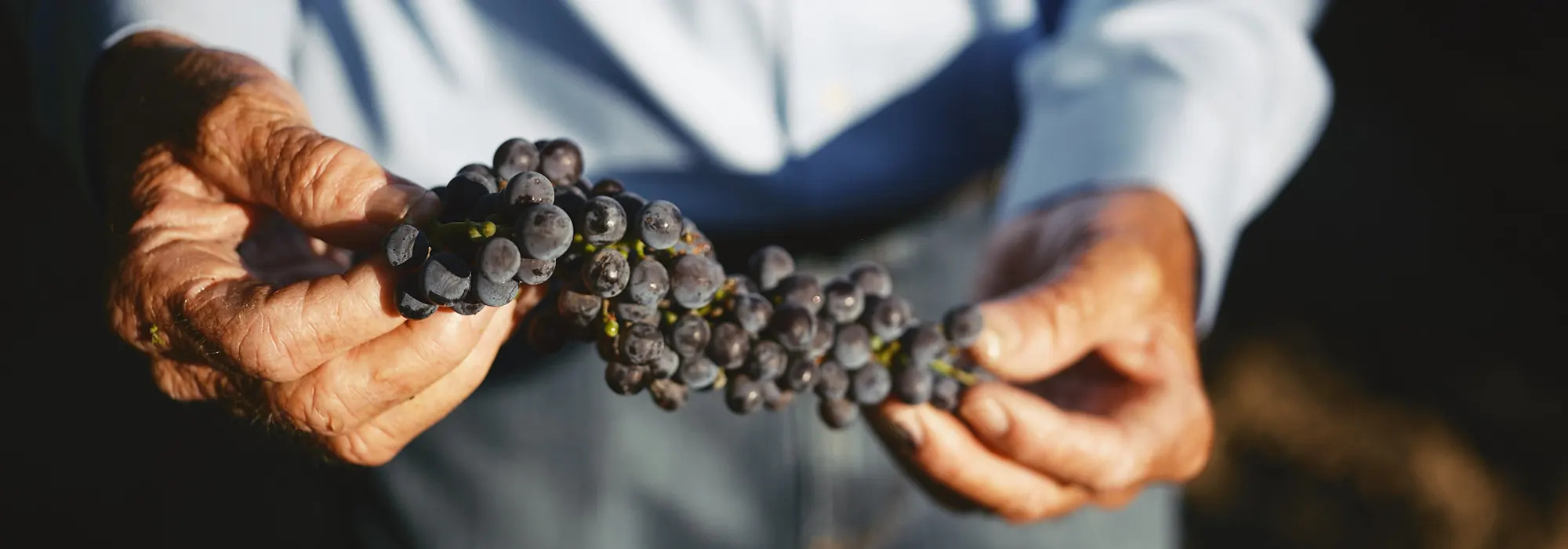
As summer winds to an end, and pumpkin spice starts creeping into
what seems like literally everything, it’s about that time to turn our palates
to Fall flavors, especially when it comes to wine. Harvest is under way and
this year’s grape crop is getting picked and processed into a new vintage. As
we welcome this change in weather and celebrate the next phase in the life
cycle of the grape, we thought we would put together a list of some of our
favorite wine grapes for fall. Whether you love the classics or are itching to
try something new and unique, you’re bound to find something you like in this
lineup.
Grape: Chardonnay
What it’s like: If you’re part of the “Anything but
Chardonnay” crowd, you need to think again. Chardonnay is a wonderfully
versatile grape that comes in so many different styles, from crisp and clean
with notes of green apple and citrus, to rich and buttery, dripping with
tropical fruit and caramel, and everything in between.
Why we love it: Although classically linked to the Burgundy
region of France, Chardonnay is actually the most-planted white grape in the
world, growing in every region wine grapes are planted, including Temecula
Valley. Chardonnay is the perfect departure from the light and zingy whites of
Summer. It’s got a little more body, and takes on a wide range of dishes
depending on the style of the wine.
This Chardonnay is only slightly oaked, imparting delicate flavors
of vanilla, butterscotch and caramel, mingled with apple, pineapple, honey and
vanilla. A dream paired with roast chicken.
Translating to “without oak,” this Chardonnay is bright and clean,
with notes of Honeycrisp apple, citrus zest, and jasmine blossom and a long,
mouth-watering finish.
Grape: Viognier
What it’s like: Viognier is a red-wine drinker’s white. It’s
rich, luscious and full-bodied, with powerful and unmistakable floral
aromatics.
Why we love it: Viognier originated in Southern France and
the Rhône Valley, and thrives equally well in the soils and climate of Temecula
Valley. Like Chardonnay, it tends to have more weight than other whites so can
stand up to some of the richer flavors of Fall.
This vibrant wine’s aromatics
explode with bright floral notes on the nose, delighting the senses as it hits
the palate. An elegant backbone of acidity balances out the soft tones of
honeysuckle and apricot.
Ripe stone fruit meets tropical
aromas and notes of apple blossom in this rich bottling. The luscious and layered
palate of this wine makes it a great match for exotic cuisines like spicy Thai and
Indian dishes.
While Viognier is sometimes fermented in oak, this bottling
was done in stainless steel in order to let the pure, rich fruit character prevail.
Aromas of ripe nectarines, orange blossoms and a hint of fresh herbs flow into
a soft and balanced palate with long-lasting, tingling acidity. This wine is
perfect for sushi night with family and friends.
Grape: Cinsault (also Cinsaut)
What it’s like: If you like lighter bodied wines like Pinot
Noir and Gamay, you will love Cinsault. Hailing from Southern France as well,
this grape is capable of producing elegant, complex wines with juicy red fruit
and unique savory notes when handled well.
Why we love it: It’s not Winter yet, so if you’re not ready
to move to the heavy Syrahs and Zinfandels we crave in cold weather, Cinsault
is the perfect pick. It’s juicy, it’s easy-drinking and it’s great with all
kinds of dishes. If you’re really not ready for Summer to be over, you can even
serve it with a slight chill.
This Temecula Valley Cinsault
displays lively floral and ripe strawberry aromas on the nose, and a lush, warm
palate balanced by an elegant structure. A perfect food wine, pair this with
pizza, pasta, cheese and charcuterie.
This bottling is bursting with aromas
of cherry and raspberry with hints of black licorice and spice. The wine is
soft, elegant and approachable thanks to the addition of a light touch of Syrah
& Grenache and 18 months spent in small French Oak barrels.
The Grape: Cabernet Franc
What it’s like: Cabernet Franc is actually one of Cabernet
Sauvignon’s parents (the other being Sauvignon Blanc), and yet it is often
overlooked in favor of its more famous offspring. Known for its role in
Bordeaux blends, it stands alone quite well, offering savory notes of bell
pepper, green herbs, graphite, berry fruit and cedar
Why we love it: Cabernet Franc has the benefit of being both
age-worthy and drinkable now. Its medium-bodied structure makes it a great food
wine, but it also holds up to serious oak treatment quite well, giving it a
wide range of different possible styles depending on how it is handled.
Baily Winery is known for their traditional, Old World take on
winemaking and this Cabernet Franc is no exception. Ripe berry and plum mingle
with exotic spice and black pepper and a touch of forest floor. This is a wine
to linger over now, or put away for several years to let it develop.
Notes of crushed raspberries,
black currants, violet and graphite are prominent on the nose, backed by a
pleasant green bell pepper note. This Cabernet Franc is medium-bodied with
well-integrated tannins and a smooth mouthfeel.
A balanced wine with crisp acidity and bright fruit reminiscent of
Cabernet Franc wines from France’s Loire Valley. Notes of green olive, clove,
raspberry and violet on the nose are followed by tart berry fruit and licorice,
backed by firm, elegant tannins on the palate.
Share your favorite Temecula Valley wine picks for Fall! Tag us
@temeculawines using the hashtag #DrinkTemecula.
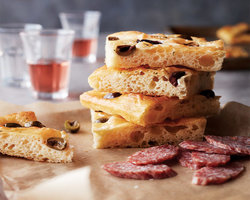
Welcome guests to your home for dinner with a glass of your favorite Temecula Valley rosé and a slice of warm olive focaccia. If you’ve baked the focaccia hours before, you can reheat it quickly in a hot oven, although it’s plenty tasty at room temperature, too. Pack it on a picnic or a hike with your favorite salami and cheeses. Or adapt the topping to showcase a seasonal fresh vegetable like halved cherry tomatoes or strips of roasted sweet pepper. Adding cooked potato to the dough produces an especially moist and tasty result.
Ingredients
1⁄2 pound (250 g) Yukon Gold potatoes, unpeeled
1 1⁄2 teaspoons active dry yeast
3 3⁄4 cups (465 g) unbleached all-purpose flour, plus more for kneading
2 1⁄2 teaspoons (8 g) kosher or sea salt, plus more for sprinkling
1⁄4 cup (60 ml) extra virgin olive oil, plus more for coating and brushing
Put the potatoes in a small saucepan and add water to cover by 1 inch (2.5 cm). Do not add salt. Bring to a simmer over high heat, adjust the heat to maintain a gentle simmer, and cook until the potatoes are tender when pierced, 15 minutes or more, depending on size.
Remove from the heat, set aside 1 1∕3 cups (330 ml) of the potato water, and then drain the potatoes. When cool enough to handle, peel the potatoes and pass them through a ricer or food mill fitted with a fine disk into a bowl. If you don’t have a ricer or food mill, mash the potatoes well with a potato masher.
Refrigerate the potato water until it cools to 105° to 115°F (40° to 46°C). Put 1∕3 cup (80 ml) of the cooled potato water in a large bowl and sprinkle the yeast over it. Let soften for about 3 minutes, then whisk with a fork to dissolve and let stand until bubbly, about 10 minutes.
Meanwhile, in a bowl, combine the flour and salt and whisk to blend.
Add the olive oil, riced potato, and the remaining 1 cup (250 ml) potato water to the proofed yeast. Stir to combine, then add the flour gradually, stirring with a wooden spoon until the dough clears the sides of the bowl. Keeping the dough in the bowl, knead it gently by hand until smooth, adding just enough additional flour to keep it from sticking to your hand. You should not need more than 1 to 2 tablespoons. Shape the dough into a ball and coat lightly with olive oil. Cover the bowl tightly with plastic wrap and let the dough rise until doubled, 1 1∕2 to 2 hours.
Punch the dough down. Using 1 tablespoon olive oil, grease the bottom and sides of an 11-by-17-inch (28-by-43 cm) rimmed baking sheet. Transfer the dough to the baking sheet. With well-oiled fingers, poke and prod the dough into a rectangle that fits the pan. The dough is elastic and will want to spring back. If it resists your attempts to flatten it enough to cover the pan, let it rest for 5 minutes and try again. If it still springs back from the edges, let it rest for 5 minutes longer and try once more. You should be able to flatten it sufficiently after a couple of rests, but don’t worry if the dough doesn’t completely fill the pan. Let rise, uncovered, until puffy, about 1 1∕2 hours.
While the dough rises, preheat the oven to 400°F (200°C). If you have a pizza stone (or baking tiles), put it in the oven on the middle rack to preheat—ideally for at least 30 minutes before baking.
Arrange the olives, evenly spaced, on the surface of the focaccia, then gently press them into place. Brush the surface of the dough with 1 tablespoon olive oil, then scatter the rosemary and a little salt on top. Place the pan on the baking stone, if using, and bake until the focaccia is golden brown, 20 to 25 minutes, rotating the baking sheet back to front halfway through.
Immediately slide a long metal offset spatula under the focaccia to make sure it is not sticking to the baking sheet, then slide the focaccia onto a rack to cool. Slice into desired portions with a bread knife and serve warm or at room temperature.
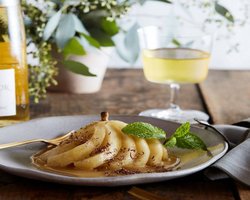
Share a silky, wine-poached pear with friends on a hot summer night. Both the pear and the luscious caramel-yogurt sauce can be prepared ahead, so dessert will be ready when you are. Pair with your favorite Temecula Valley Riesling or Sauvignon Blanc.
Ingredients 1 cup (250 ml) Riesling 1 cup (250 ml) water 6 tablespoons (3 oz/90 g) granulated sugar ½-inch piece of vanilla bean 1 ripe but firm Bartlett or Anjou pear
Caramel Sauce: 2 tablespoons brown sugar 2 tablespoons granulated sugar 2 tablespoons water ¼ cup (2 oz/60 g) plain whole-milk Greek yogurt, at room temperature Small chunk of bittersweet chocolate, optional
Directions In a small saucepan, combine the wine, water, sugar, and vanilla bean. Bring to a simmer over medium heat, stirring to dissolve the sugar. Peel the pear with a vegetable peeler, leaving the stem intact. Place the pear on its side in the simmering liquid. Spoon some of the liquid over the exposed pear. Cut a parchment round a little larger in diameter than the saucepan and place it over the pear, tucking the edges under the liquid to hold the parchment in place. Adjust the heat to maintain a gentle simmer and cook 10 minutes.
Remove the parchment and use 2 large spoons to gently turn the pear over without damaging the flesh. Recover with parchment, tucking the edges under as before, and continue simmering until the flesh is just tender when pierced, about 10 minutes longer. The pear will continue to cook as it cools. With a slotted spoon, transfer the pear carefully to a lidded container. Remove the vanilla bean from the poaching liquid. Simmer the poaching liquid until reduced to ½ cup (4 fl oz/125 ml). Cool completely, then pour it over the pear.
Cover and refrigerate for at least 8 hours or up to 1 day, turning the pear every few hours in the syrup.
Make the caramel sauce: In a small saucepan, combine the sugars and water. Bring to a simmer over medium heat, stirring to dissolve the sugar. Simmer until reduced to 2-1/2 to 3 tablespoons, about 4 minutes. Do not reduce further or the caramel will be too sticky. Pour into a measuring cup and let cool 2 minutes. Put the yogurt in a small bowl and gradually whisk in the caramel. Cover and refrigerate until chilled.
To serve, cut the pear in half lengthwise. Core both halves with a melon baller. Put the halves, cut side down, on a work surface and thinly slice lengthwise, leaving the slices attached at the stem end. Using a spatula, transfer each pear half to an individual plate, maintaining the shape of the pear half. Press lightly on the slices to fan them. Spoon the caramel sauce alongside and drizzle about 1 teaspoon of the pear poaching syrup over the pear. If desired, use a rasp grater or other fine grater to grate a little bittersweet chocolate over all. Serve immediately.
Pairing Suggestions:
Baily Winery ~ 2017 Riesling– This cool and crisp white wine is perfect on a summer day, enjoy it poolside with friends and family!
Danza Del Sol Winery ~ 2017 Sauvignon Blanc – A mouthwatering balance of fresh fruit and acidity. Opens with aromas of white blossoms that lead to white peach, melon, and ripe citrus. Flavors include crisp apple and lime.
Mount Palomar Winery ~ NV Riesling – The wine is fragrant with pear, guava, gardenia, and banana. The taste is full with apricot, peach, tangerine, lychee, star fruit and guava.
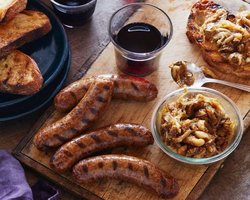
This recipe couldn’t be more perfect for a Father’s Day or summer BBQ. And chances are, you’ll find many other uses for this fragrant sweet-tart jam. Enjoy it on a grilled-cheese or ham sandwich or serve it with a cheese or charcuterie board. It’s the perfect complement for fresh goat cheese or a tangy Cheddar. Serve it with grilled sausages and pair with your favorite Temecula Valley Cabernet Sauvignon or Syrah.
Ingredients ¼ pound (125 g) dried Calimyrna figs, stems removed 2 tablespoons extra virgin olive oil 1 large yellow onion, about 10 ounces (315 g), halved and thinly sliced from root to stem 1 teaspoon minced fresh thyme ½ teaspoon ground fennel seed Kosher or sea salt and freshly ground black pepper 1 tablespoon sherry vinegar, or more to taste 4 fresh Italian sausages, hot or sweet, 5 to 6 ounces (155 g to 185 g) each
Directions Put the figs in a small saucepan with 1 cup (8 fl oz/250 ml) water. Bring to a simmer over medium heat and simmer for 2 minutes. Cover and set aside for 30 minutes.
Heat the olive oil in a large skillet over medium-low heat. Add the onion, thyme, and fennel seed. Season with salt and pepper. Cook, stirring often, until the onions are soft, golden-brown, and sweet, about 30 minutes. Lower the heat if necessary to prevent burning.
While the onions cook, prepare a medium-hot charcoal fire or preheat a gas grill to medium-high.
Lift the figs out of the liquid with a slotted spoon and slice thinly. Add the figs to the onions, along with the sherry vinegar and 2 tablespoons of the fig-cooking liquid. Cook, stirring often, until the liquid has been absorbed and the flavors have merged, 3 to 4 minutes. Taste for seasoning. The jam should be moist with a balanced sweet-tart flavor.
Grill the sausages until they are nicely browned all over and feel firm when probed, about 10 minutes. Serve immediately with the warm jam.
Suggested Pairings:
Akash Winery ~ 2016 Cabernet Sauvignon – Bright aromas of pomegranate & fresh raspberry with hints of vanilla bean. Tart and round on the palate with tastes of cranberry, dark pepper, vanilla and cherry.
Chapin Family Vineyards ~ 2015 Syrah – Full-bodied taste, flavors of chocolate, blueberry and caramel with a hint of vanilla and finishes with a hint of spicy peppers.
Falkner Winery ~ 2016 Cabernet Sauvignon – This delicious Cabernet has wonderful flavors of blueberry, blackberry, coco, and licorice on the finish. This is an easy to drink Cabernet without heavy tannins on the finish.
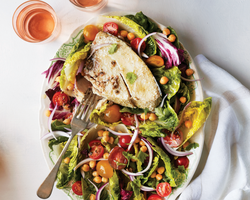
This dish requires a lot of olive oil for poaching, but you won’t waste a drop. Use some of the flavorful poaching oil in the salad dressing; strain and refrigerate the remainder for cooking greens or for dressing future salads. The strained oil will keep for a month. Pair with your favorite Temecula Valley Rosé or Sauvignon Blanc.
Ingredients 1 albacore tuna steak, about 10 ounces (315 g) and 3⁄4 to 1 inch (2 to 2.5 cm) thick 3⁄4 teaspoon ground fennel seed 3⁄4 teaspoon kosher or sea salt 1 large fresh thyme sprig 1 bay leaf 1 clove garlic, halved 6 black peppercorns 1 3⁄4 to 2 cups (430 to 500 ml) extra virgin olive oil dressing 6 tablespoons (90 ml) extra virgin olive oil (from the tuna baking dish) 3 tablespoons red wine vinegar 1 tablespoon salt-packed capers, rinsed and finely minced 1 teaspoon dried oregano 1 small clove garlic, finely minced Kosher or sea salt and freshly ground black pepper 1 1⁄2 cups (280 g) cooked chickpeas (drain and rinse if canned) 1⁄2 pound (250 g) Little Gem lettuce or romaine hearts 1⁄4 pound (125 g) radicchio 1⁄2 red onion, shaved or very thinly sliced 3⁄4 cup (125 g) halved cherry tomatoes 1⁄4 cup (10 g) chopped fresh flat-leaf parsley
Directions Preheat the oven to 200°F (95°C). Remove the tuna from the refrigerator 30 minutes before baking.
Season the tuna on both sides with the fennel seed and salt. Put the tuna in a deep ovenproof baking dish just large enough to hold it. Add the thyme, bay leaf, garlic, and peppercorns. Pour in enough olive oil just to cover the tuna.
Bake until a few white dots (coagulated protein) appear on the surface of the fish and the flesh just begins to flake when probed with a fork, 30 to 40 minutes. The tuna should still be slightly rosy inside. Remove from the oven and let cool to room temperature in the oil.
Make the dressing: In a bowl, whisk together the olive oil, vinegar, capers, oregano, garlic, and salt and pepper to taste. Add the chickpeas and let them marinate for 30 minutes.
With a slotted spatula, lift the tuna out of the olive oil and onto a plate.
Put the lettuce in a large salad bowl. Tear the larger outer leaves in half, if desired, but leave the pretty inner leaves whole. Tear the radicchio into bite-size pieces and add to the bowl along with the onion, tomatoes, and parsley.
Using a slotted spoon, add the chickpeas, then add enough of the dressing from the chickpea bowl to coat the salad lightly. By hand, flake the tuna into the bowl.
Ponte Winery ~ 2018 Pas Doux – Its notes of strawberry and rose with a pleasantly balanced acidity make it a staple for everything from a springtime brunch to the dinner table.
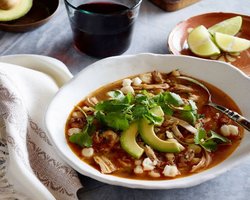
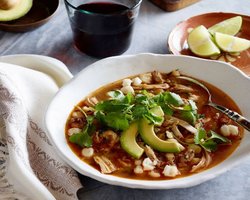
A rich broth, moist hand-shredded chicken and smoky chipotle make this posole a standout. And you’ll have some extra poached chicken to enjoy in a salad the following day. Pair with your favorite Temecula Valley Barbera or Zinfandel.
Serves 4
Ingredients 2 pounds (1 kg) chicken legs and thighs 2 quarts (2 l) water 1 large onion, halved and sliced 1 dozen black peppercorns 3 cloves garlic, peeled and smacked 2 bay leaves 1 teaspoon whole cumin seed or ground cumin 1/3 pound (155 g) Mexican-style chorizo Vegetable oil 1 small onion, minced ½ green bell pepper, minced 2 cloves garlic, minced 1 large plum tomato, peeled, seeded, and finely diced 1 teaspoon dried oregano 1-1/2 tablespoons all-purpose flour ¼ cup (10 g) chopped cilantro, plus some for garnish 1 can (15 oz/470 g) whole hominy, drained and rinsed Canned chipotle chile en adobo, to taste Kosher or sea salt. 1 small avocado, halved and pitted, then sliced crosswise 1 lime, quartered
Directions Put the chicken and water in a large pot and bring to a simmer over medium heat. Skim any foam that collects on the surface. When the chicken stops producing foam, add the onion, peppercorns, garlic, and bay leaves. Adjust the heat to maintain a bare simmer and cook 1 hour. Cool, then strain. Remove the chicken meat from the bones, discarding the skin. Refrigerate half the meat for another use. Shred the remaining meat by hand. Set aside 5 cups (1.25 l) of chicken broth and refrigerate or freeze any remaining broth for another use.
Put the whole cumin seed in a small dry skillet and toast over medium heat, shaking the skillet often, until the cumin darkens and becomes fragrant, 3 to 5 minutes. Cool, then pound fine in a mortar or grind in a spice grinder.
Remove the chorizo from its skin and put it in a large pot over medium-low heat. Cook, crumbling it with a wooden spoon, until it has rendered its fat and is fully cooked. Transfer it to a plate with a slotted spoon, leaving any fat behind. Add enough vegetable oil to the pot to make 2 tablespoons fat.
Add the minced onion, bell pepper, and garlic and cook until softened, 5 to 10 minutes. Add the tomato, oregano, and cumin and cook about 3 minutes longer to soften the tomato. Add the flour and cook, stirring, for about 1 minute. Add the 5 cups (1.25 l) chicken broth and bring to a simmer, stirring. Add the cilantro, hominy, shredded chicken, and chorizo and return to a simmer. Whisk in some of the thick adobo sauce from the canned chipotle chiles, adding as much as you like. Season posole to taste with salt.
Divide the soup among 4 bowls. Top each portion with a few avocado slices and garnish with chopped cilantro. Serve immediately with lime wedges.
Hart Winery ~ 2015 Zinfandel – This fruity, classic Zin has been aged 12 months in premium American oak and blend with a kiss of Petite Sirah.
Robert Renzoni Vineyards ~ 2015 Barbera – Ripened cherry aromas and flavors, this wine is bursting with berries and bright acidity,along with tart blackberry jam and tobacco on the finish.
There’s nothing better on a cold winter day than a big bowl of hearty soup! A rich broth, moist hand-shredded chicken and smoky chipotle make this posole a standout. And you’ll have some extra poached chicken to enjoy in a salad the following day. Pair with your favorite Temecula Valley Barbera or Zinfandel.
Serves 4
Ingredients 2 pounds (1 kg) chicken legs and thighs 2 quarts (2 l) water 1 large onion, halved and sliced 1 dozen black peppercorns 3 cloves garlic, peeled and smacked 2 bay leaves 1 teaspoon whole cumin seed or ground cumin 1/3 pound (155 g) Mexican-style chorizo Vegetable oil 1 small onion, minced ½ green bell pepper, minced 2 cloves garlic, minced 1 large plum tomato, peeled, seeded, and finely diced 1 teaspoon dried oregano 1-1/2 tablespoons all-purpose flour ¼ cup (10 g) chopped cilantro, plus some for garnish 1 can (15 oz/470 g) whole hominy, drained and rinsed Canned chipotle chile en adobo, to taste Kosher or sea salt. 1 small avocado, halved and pitted, then sliced crosswise 1 lime, quartered
Directions Put the chicken and water in a large pot and bring to a simmer over medium heat. Skim any foam that collects on the surface. When the chicken stops producing foam, add the onion, peppercorns, garlic, and bay leaves. Adjust the heat to maintain a bare simmer and cook 1 hour. Cool, then strain. Remove the chicken meat from the bones, discarding the skin. Refrigerate half the meat for another use. Shred the remaining meat by hand. Set aside 5 cups (1.25 l) of chicken broth and refrigerate or freeze any remaining broth for another use.
Put the whole cumin seed in a small dry skillet and toast over medium heat, shaking the skillet often, until the cumin darkens and becomes fragrant, 3 to 5 minutes. Cool, then pound fine in a mortar or grind in a spice grinder.
Remove the chorizo from its skin and put it in a large pot over medium-low heat. Cook, crumbling it with a wooden spoon, until it has rendered its fat and is fully cooked. Transfer it to a plate with a slotted spoon, leaving any fat behind. Add enough vegetable oil to the pot to make 2 tablespoons fat.
Add the minced onion, bell pepper, and garlic and cook until softened, 5 to 10 minutes. Add the tomato, oregano, and cumin and cook about 3 minutes longer to soften the tomato. Add the flour and cook, stirring, for about 1 minute. Add the 5 cups (1.25 l) chicken broth and bring to a simmer, stirring. Add the cilantro, hominy, shredded chicken, and chorizo and return to a simmer. Whisk in some of the thick adobo sauce from the canned chipotle chiles, adding as much as you like. Season posole to taste with salt.
Divide the soup among 4 bowls. Top each portion with a few avocado slices and garnish with chopped cilantro. Serve immediately with lime wedges.
Suggested Pairings:
Doffo Winery ~ 2016 Zinfandel – 2018 People’s Choice Winner – This always popular Zinfandel is sure to delight the senses with aromas of plum, raspberry, figs, and cherries. The balanced acidity and voluminous mouthfeel leave a long lasting finish
Europa Village ~ Private Reserve Barbera 2014 -Complex nose of ripe wild plums, figs, dried herbs, and bourbon; the mouthfeel is fleshy and powerful, but nicely balanced with proper acidity.
Hart Winery ~ 2015 Barbera – Aged in fine American oak barrels, this Barbera displays typical varietal high acidity with a significant dollop of American oak on the finish.