Blog
Blog

Tag: temecula wines

California Apple, Brie, and Pomegranate Flatbread

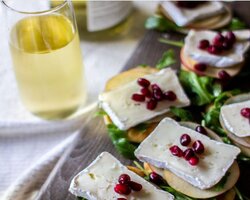
As spring unfolds in Temecula, embrace the vibrant flavors of the season with this delightful California Apple, Brie and Pomegranate Flatbread. Quick to prepare and bursting with fresh ingredients, this dish captures the essence of springtime. Pair with your favorite Temecula Valley Sparkling Wine.

Prep: 10 minutes

Ingredients

  • 2 ounces baby arugula
  • 1 teaspoon olive oil
  • Half of a Cara Cara or Navel orange
  • Salt and pepper to taste
  • 10 store-bought mini naan or flatbreads
  • 2 small Fuji apples, thinly sliced on a mandoline or with a very sharp knife
  • 4 ounces Brie cheese, sliced into 10 thin slices
  • 3 tablespoons California pomegranate arils

Instructions

  • Place the arugula in a mixing bowl. Sprinkle the olive oil over the top, squeeze the orange half over the greens and season lightly with salt and pepper. Toss with fingertips to coat all of the arugula.
  • On a serving board, arrange the flatbreads. Divide the dressed arugula amongst the flatbreads; you may have a bit leftover.
  • Lay 2-3 thin slices of apple over the arugula on each naan/flatbread and top each one with a thin slice of Brie.
  • Sprinkle pomegranate arils over the tops of all of the flatbreads right before serving.

Suggested Pairings:

South Coast Winery~ ~ Sparkling Brut

Carter Estate Winery – Sparkling Brut

Raul Ramirez Winery ~ Vintage Gran Reserva Sparkling Cava

Recipe and photo courtesy of the Wine Institute of California

Share

Toast Temecula Valley This Earth Day

This SoCal region will be making award-winning wines for generations to come thanks to their robust sustainability efforts and regenerative agricultural practices

Nestled in the rolling hills of Southern California, Temecula Valley is emerging as a beacon of sustainable viticulture, marrying age-old winemaking traditions with pioneering environmental practices. The region, famed for its warm Mediterranean climate, diverse range of grape varieties, and welcoming tasting rooms, has also become a hotbed for regenerative agriculture, where wineries strive not merely to coexist with nature but to actively rejuvenate their land. This approach, championed by local vintners, emphasizes soil health, water conservation, and biodiversity, ensuring that the vineyards not only produce high-quality grapes but also contribute to the ecological balance and social well-being of the valley.

Several Temecula wineries are leading the charge in this green revolution, adopting organic farming techniques that shun synthetic pesticides and fertilizers in favor of natural alternatives. These practices not only enrich the terroir but also foster a sustainable ecosystem conducive to premium winemaking. Among the vineyards, one can witness a harmonious blend of traditional methods and innovative strategies aimed at reducing the carbon footprint and preserving the natural beauty of the region for future generations. In exploring Temecula’s commitment to sustainability, we delve into the stories of these pioneering wineries, their philosophies, and the tangible impact of their efforts on both the environment and the quality of their wines.

Palumbo Family Vineyards & Winery

The Palumbos have been active participants in the California Sustainable Winegrowing Alliance since 2002, and were one of the first wineries in Temecula Valley to become certified through this program. “We not only became certified in our vineyard, but also in our winery, knowing that if you are truly committed to sustainability, you have to look at your whole business and its impact on the community,” says owner/winemaker Nick Palumbo.

Palumbo notes that they share many of the same tenets and practices of regenerative farming, although they place equal emphasis on the three “Es” of sustainability. “After all, being Environmentally friendly, socially Equitable, and Economically sound is more than a business model,” he says. “By living on property, raising our children here, and being active members in our community, it is important to be good stewards of the land and good neighbors, as well as being able to continue to do business in a positive and ethical way.”

Robert Renzoni Vineyards

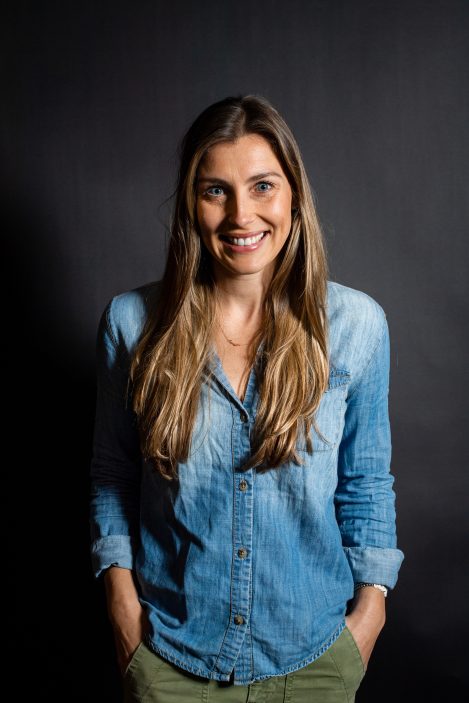
Robert Renzoni Vineyards, a trailblazer in sustainable winemaking in Southern California, achieved a significant milestone in 2023 by obtaining certification as a California Sustainable Winegrowing (CSWA) operation and becoming the region’s first winery to be fully powered by solar energy. “As a family-owned winery dedicated to producing high-quality wines, Robert Renzoni Vineyards shares the commitment to preserving sustainable agriculture and protecting the land for future generations,” says winemaker Olivia Bue.

They are also deeply committed to soil and nutrient management to maintain vineyard health. “Healthy soil is the basis of sustainable winemaking and has a direct impact on wine quality,” says Bue. “In order for Temecula Valley to continue succeeding and growing as a region, we need to prioritize our land for future generations.”

The winery’s care for the soil includes integrating high quality compost (the most nutrient dense material) from Amended Soils in Sonoma into their own soil, planting cover crops annually to stimulate biological activity and enhance organic matter content within the soil, avoiding synthetic fertilizers (they are a pesticide-free estate), implementing rain water collecting tanks to limit water usage, properly managing pH and vine balance, and managing pests with organic materials when necessary. “Our commitment to the land goes beyond just sustainability,” adds Bue. “It’s about creating a partnership that benefits both the environment and the community for decades to come.”

Wilson Creek Winery and Vineyards

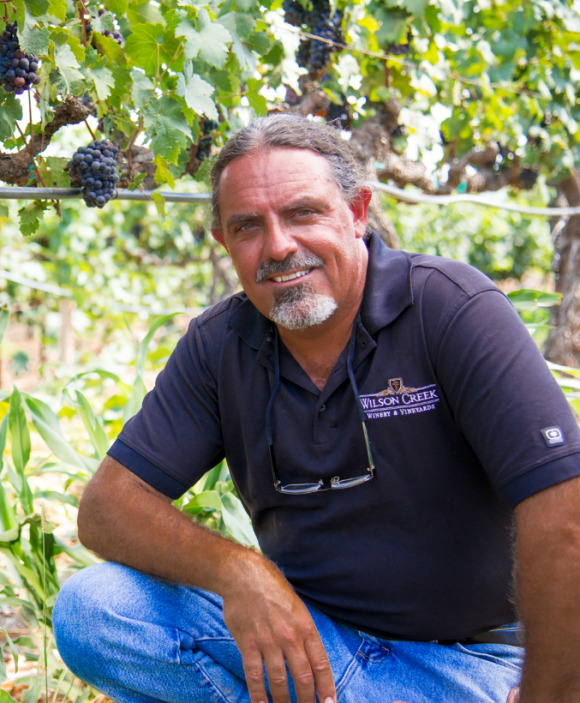
Wilson Creek has long been fully committed to a program of regenerative agriculture. They started with a traditional sustainability program eleven years ago, which included the elimination of all herbicides, the introduction of cover crops, reduced and eliminated tillage, irrigation, efficiency, and a program of reduced fungicides and insecticides through integrated pest management programs. 

Seven years ago, led by vineyard manager Greg Pennyroyal, they introduced a regenerative agriculture program. “The core concept of regenerative agriculture is that all things are connected in a diverse community of self-regulating related systems,” explains Pennyroyal. “To assist in managing these complex systems, we started a program of environmental-monitoring and data-gathering to see the effects of our regenerative program.”

This extensive program includes a rigorous regimen of tasks, including biweekly plant sap analysis during the growing season, which gives a detailed quantitative report over time of the actual uptake of all major and minor plant nutrients, monthly soil health assessments, Glassy Winged Sharpshooter monitoring, and the introduction of beneficial insects and insectary flowering plants, among many other activities. It also includes ongoing collaborative studies with other regulatory agencies, utilities companies, government entities, and private businesses for monitoring and cause-effect analysis.

And the proof is in the pudding. “Block Nine is our most intensive biologically supported block,” notes Pennyroyal. “After three years, Block Nine is showing significantly increased yields, decreased pathogen pressure, improvement of vineyard microbiome, and improved winemaking. We are also monitoring economic inputs and returns to demonstrate not only the scientific but the economic viability of regenerative practices.”

Pennyroyal and his team are always the first to support others in their efforts toward sustainable practices.  “Sustainability has generally been focused on limiting additional negative impacts on the environment,” he says. “Considering our current state of accelerating ecosystem degradation, we feel we need to go beyond stability and move towards regeneration. Regeneration is not only limiting negative factors but also supporting overall ecosystem services to reverse the downward spiral towards an upward spiral of improvement in diversity and resiliency.” 

He believes that Temecula Valley is in a unique position to lead these efforts both locally and in other wine-producing regions, given their climate for wine production, as well as access to outreach through direct-to-consumer experiences. “The public is often confused by the newly emerging science of true ecosystem restoration and regeneration,” he explains. “By directly engaging with our guests, we can deliver an authentic person-to-person experience and understanding.” 

Ponte Winery

Ponte Winery began its transition to sustainable practices in 2007, and, in 2011, became the first winery in Temecula Valley to achieve the Certified California Sustainable Winegrower designation. A key aspect of their environmental strategy is the “no tillage” approach, which they have implemented to control erosion and maintain the integrity of organic matter in the soil, limiting soil disturbance to just once a year for weed management. They have also embraced the use of native cover crops since 2007. “We work to respect the land by not introducing non-native plants into the vineyard,” says assistant winemaker Juan Domingo. “We leave fields fallow for a minimum of two years with only native plants to let the soil rest before we replant.”

Always pushing their sustainability efforts forward, Ponte has been committed to recycling glass, cardboard, and cork since 2007, ensuring that waste materials are repurposed and not simply sent to landfills. This recycling initiative is a significant part of their sustainability efforts, reflecting their dedication to environmental stewardship across all their properties.

“We take care of the land and business as one,” says winemaker Arnaud Debons. “We started as leaders in sustainability, and we would like to continue to be the one others get inspiration from. In doing so we as a Valley can help reduce our Carbon footprint while still providing good hospitality to our guests.” 

South Coast Winery & Carter Estate Winery

South Coast Winery and its 200-acre vineyard have been certified sustainable since 2013, with sister property Carter Estate Winery joining the ranks in 2018. Both are accredited by the California Sustainable Winegrowing Alliance. Their sustainability efforts prioritize resource conservation – in particular water – with more than 100 acres of vineyards relying on water sourced from their own reservoir, a critical strategy given the recurring drought conditions fueled by climate change. To that end, the winery’s vineyard management practices are finely tuned to optimize water use and availability.

In a concerted effort to ensure the health of their grapevines, both properties minimize synthetic inputs and implement rigorous pest and disease monitoring and control. “An exceptional aspect of our vineyard ecosystem is its integration with the natural environment, exemplified by our vineyards bordering the Cleveland National Forest,” says assistant winemaker Emily Bloom. “We endeavor to maintain harmony with the surrounding ecosystem, fostering the growth of native plants and encouraging natural pest control through neighboring wildlife.”

Bloom and her team understand that sustainability is not a one-and-done philosophy and acknowledge that there is always room for progress. But they also know that these efforts are non-negotiable when it comes to safeguarding viticulture in Temecula Valley and beyond for generations to come. “In line with global trends, Temecula Valley, like much of the world, is experiencing more extreme weather due to intensified climate change. It’s crucial for us all to acknowledge this reality and continually improve our farming and winemaking practices,” she says. “Many wineries and vineyards in the area are already leading the way with sustainable, organic, and regenerative methods, inspiring us to strive for a more sustainable future. We commend the hard work of growers in the valley and remain committed to crafting distinctive wines from high-quality grapes through environmentally responsible practices.”

Share

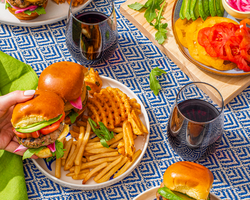
Golden State Sliders

These sliders bring together a tantalizing medley of meats and toppings, resulting in a bite-sized masterpiece that embodies the true essence of the Golden State. Pair with your favorite Temecula Valley Cabernet Sauvignon.

Ingredients

Patty Ingredients:

  • 1-pound (454g) medium ground beef
  • ½ pound (225g) lean ground beef
  • 1-pound (454g) ground turkey
  • A bunch of fresh parsley, finely chopped
  • ½ – 1 cups (60-120g) breadcrumbs
  • 1 large egg
  • 3 cloves garlic, minced
  • Coarse salt
  • Ground pepper
  • 3 tablespoons (45g) Worcestershire sauce

Toppings:

  • Arugula
  • Heirloom tomatoes, sliced
  • Pickled red onions
  • 12 buns (recommend brioche)
  • Slices of aged sharp cheddar
  • 2 ripe avocados, sliced

Sauces, as desired:

  • Dijon
  • Ketchup
  • Aioli or mayonnaise

Instructions

  • In a large bowl, combine the ground meats with the chopped parsley, egg, Worcestershire sauce, garlic, and ½ cup of breadcrumbs. If the texture feels too wet, add in more breadcrumbs until the patties feel like they’ll hold their shape.
  • Using hands, roll out into 10-12 even balls, using your mini buns as reference. Reminder! They will shrink a bit as they cook. Press lightly to form patties.
  • Place patties in refrigerator for at least 30 minutes. In the meantime, prepare your toppings.
  • Preheat grill to medium-high. Grill the patties to your liking, adding the slices of cheese on top of the patties once they’ve been flipped. Toast your buns on the grill in the last minute or two before the burgers are done.
  • Remove from heat and place back into the mixing bowl if chilling to serve cold or place an even amount onto each plate and top with a spoon of goat cheese. Sprinkle fresh shredded basil overtop and serve.
  • Build with desired toppings and sauces and serve warm.

Suggested Wines:

Falkner Winery~ 2021 Cabernet Sauvignon – The wine has smooth flavors of blueberry and plum.

Chapin Winery ~ 2021 Cabernet Sauvignon This wine has aromas of blueberry, mocha, plum and vanilla.

Wiens Family Cellars~ 2019 Kriel Cabernet Sauvignon – This wine has aromas of black plum, nutmeg & baked vanilla bean

Recipe and photo courtesy of the Wine Institute of California

Share

Get to Know the New and Emerging Talent in Temecula Valley Winemaking

Shane Sevier, Vitagliano Winery & ActionWines

Shane Sevier’s winemaking journey began in 2010 at the young age of 18. By 2018, he had taken over winemaking at Vitagliano Winery, and, just last year, he launched his own company, ActionWines.

Shane’s foray into winemaking started when he was a busboy at Falkner Winery. “The winemaker Steve Hagata would always come in for lunch and I got to know him and his assistant winemaker George Meyers very well,” he says. This led to a lifelong passion. “I would not be where I am if it wasn’t for Steve Hagata and George Meyers.  They have become like family to me.”

He cherishes the breathtaking beauty of Temecula Wine Country and the supportive community that surrounds him. “I also love being able to craft something that people enjoy with friends and family and how it can bring people together to celebrate life in general!” When it comes to Temecula grapes, Shane is captivated by Muscat. “I love making a dry, crisp, and tropical wine with Muscat,” he says. “[It] has such an amazing nose and can offer great complexity if done right. It can be very versatile and is a beautiful grape.”  

Looking forward, he sees a bright and bustling future for Temecula, driven by a dedication to continuously elevating the quality of the region’s wines. “We have a community here that is trying to push the quality of our wines and striving to always improve and be better,” he says. “As time goes on and that catches more and more traction, Temecula will keep getting better and better. 

Nathan Zema, Mount Palomar Winery

Nathan Zema’s winemaking odyssey in Temecula Valley kicked off in 2006 at the age of 17, with a career spanning various roles including everything from events and tasting room hospitality to Jeep tours to operational management and, ultimately, wine production. “Each of these positions has deepened my understanding of the Valley’s distinctive farming and winemaking practices and our patrons’ evolving tastes and preferences,” he says. “Mentored by notable figures like Marshall Stuart and Enrique Ferro, I had the privilege of observing and contributing to the Valley’s evolution from a young age, watching as other winery owners embarked on their ventures.”  

For Nathan, the allure of winemaking in Temecula lies in the Valley’s stunning landscapes, tight-knit community, and unwavering commitment to quality. “[Through] its evolution over the years, the Valley has preserved its original, fun-loving community ethos,” he says.

He has a particular fondness for Petite Sirah, thanks to its intense, bold colors, depth, and intricate characteristics. It also carries personal significance for him. “It’s the first variety I worked on in the Valley, with my contribution, which led to a notable achievement – a double gold best-in-class,” he recalls.

Nathan sees a bright horizon for Temecula Valley winemaking. “I foresee immense opportunities for the younger generation to marry traditional winemaking methods with cutting-edge technological advancements,” he says. “This fusion is crucial in producing wines that are not just of superior quality but also embody the true essence of our region.”

Nadia Urquidez, Doffo Winery

Born in Ensenada and raised in the small town of San Vicente in Baja California, Mexico, Nadia Urquidez’s winemaking career started in 2011 at Doffo Winery, where she has been for nearly nine years. Her entry into winemaking was sparked by a friend’s call about a winery in need of her expertise in science. Thankfully her Bachelor of Science degree in chemistry came in handy.

Nadia enjoys the diversity of grapes and the supportive winemaking community in Temecula Valley. When it comes to making wine, she has a special affinity for Cabernet Sauvignon. “I just love the way it is,” she says. “The maturation in the vine is perfect. During the fermentation process, it releases spectacular aromas that remind me of Mexican cuisine. And then it is a challenge because [if not produced correctly] it can have a lot of astringency and green notes… The most important thing is that people always expect a good Cabernet Sauvignon: big, round, and balanced.”

While Nadia remains optimistic about the future of winemaking, she is realistic about obstacles the wine industry faces in general. “It will be a challenge; first because of global warming,” she says. “Weather directly impacts the quality of the grapes. Also, young adults are choosing to drink less or choosing other types of beverages.”  

Kristina Filippi, Wilson Creek Winery

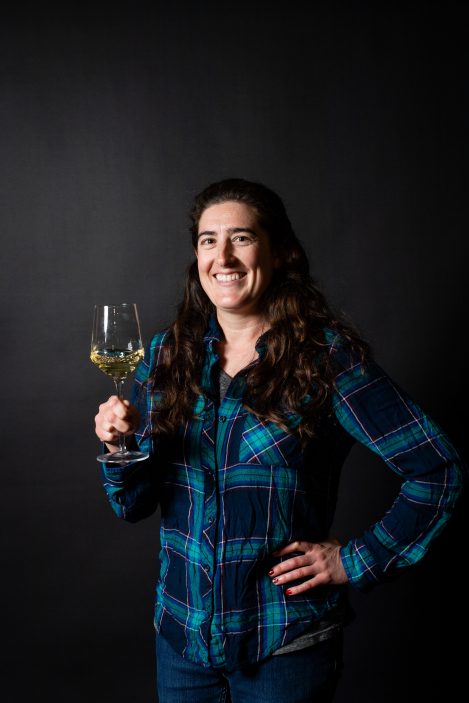
Kristina Filippi has 16 years of winemaking under her belt, with the last 2.5 at Wilson Creek Winery. Her journey began shortly after her 21st birthday when she fell in love with the winemaking process and industry, ultimately making her way to Temecula Valley. “The climate and weather can’t be matched, [plus] the beautiful scenery and wonderful people!”

While she admits that choosing a favorite grape to work with feels akin to picking a favorite child, she’s currently leaning toward Malbec, especially thrilled with the unique outcome of the 2023 vintage.

Kristina believes the future of winemaking in Temecula is bright, marked by creativity, innovation, and a collaborative spirit that is setting a new standard for the industry. “The quality of Temecula Valley wine improves each year, and the willingness of so many in our winemaking community to communicate, share knowledge, and help each other out is creating an environment that is truly valuable and unique,” she says.

Chris Johnson, Altísima Winery

Chris Johnson transitioned from a career as a paramedic to winemaking over 10 years ago, bringing his passion for wine to Altísima Winery in December 2020. “I have always been Intrigued with wine since I was a teenager [and] how the same variety could vary from winery to winery and region to region,” he says. “So, I decided to enroll in Washington State University’s extension Enology program. Over the next 3 years, I had the opportunity to learn from Enrique Ferro, Pete Mousis, and Tim Kramer. Being surrounded by the passion they all shared really shaped the winemaker I am today.” 

Chris relishes the year-round effort to craft exceptional wines in Temecula Valley, from vineyard maintenance to the bottling process. “I love working hard and showing a wine I’m proud of,” he says. When it comes to grapes, Tempranillo holds a special place in his heart for its blending potential and unique characteristics.

Looking ahead, Chris is optimistic about Temecula’s winemaking future, crediting some of the original wineries and winemakers for setting a high standard and fostering a culture of innovation and growth. “I’m excited to see how this new generation of winemakers can learn from the original winemakers and continue to push the standard every year,” he says.

Dakota Denton, Gershon Bachus Vintners

Dakota Denton has been crafting wines for 18 years, serving as the winemaker for Gershon Bachus Vintners for the last decade. His entry into the wine industry was somewhat accidental, starting at Carol’s Restaurant at Baily Winery at the age of 15. By the time he was 20, he had landed a full-time job in the cellar, where he came to love the process of winemaking.

Dakota treasures the camaraderie among Temecula’s winemakers and the quality of grapes that make his job a joy. “One of my favorite things about making wine in Temecula is that the people get to know the other winemakers and staff, and everyone is always so friendly,” he says. “Plus, the grapes we are growing in the Valley are amazing to work with which makes my job a little easier.” He has a particular fondness for Cabernet Franc, drawn to its berry aromas, hint of earthiness, and long, dry finish.

Dakota sees the future of Temecula winemaking leaning toward Spanish and Italian varieties, excited about the potential for these grapes in the Valley. “Which reminds me,” he says. “We have a great Sangiovese on the menu!”

Share

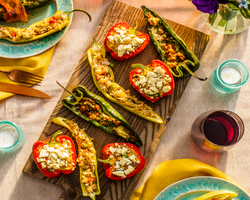
Trio of Stuffed Peppers

If you’re looking for a party favorite that will appeal to all palates, look no further than this trio of peppers recipe. This recipe comes complete with a trio of different stuffing options: meat, vegetarian, and vegan. We suggest you pair it with your favorite Temecula Valley Zinfandel!

Ingredients

Pepper Preparation

  • 8 jalapeno or poblano peppers halved and seeded
  • 8 sweet red banana pepper or 4 sweet red bell peppers halved and seeded
  • 8 yellow chile peppers or banana pepper peppers halved and seeded

Jalapeno or poblano pepper filling (Meat)

  • ½ lb (226.8g) ground spicy Italian or chorizo sausage
  • ¼ cup (25g) chopped green onions
  • ¼ cup (6g) cilantro chopped
  • ½ cup (60g) smoked Gouda shredded
  • 8 slices of bacon cut in half to make 16 smaller strips

Red banana or sweet red pepper filling (Vegetarian)

  • ¼ cup (30g) chopped asparagus
  • ¼ cup (60g) diced tomatoes
  • 2 tablespoons (20g) chopped red onion
  • ½ cup (75g) feta cheese crumbled
  • 2 tablespoons (5g) shredded basil
  • 2 eggs with 2 tablespoons (28g) extra virgin oil whisked together
  • 1 teaspoon (5.7g) sea salt
  • ½ cup (30g) breadcrumbs

Stuffed yellow chile or banana peppers filling (Vegan)

  • 1 cup (195g) cooked rice
  • ½ cup (85g) cooked black beans
  • ¼ cup (30g) corn kernels
  • ¼ cup (40g) diced tomatoes
  • 2 tablespoons (15g) chopped green onions
  • 1 tablespoon (3g) chopped parsley
  • 1 teaspoon (5g) Tabasco
  • 1 teaspoon (2g) cumin
  • 1 tablespoon (15g) lime juice
  • 1 teaspoon (5.7g) sea salt
  • ½ cup (30g) breadcrumbs

Instructions

  • Jalapeno or poblano pepper filling (Meat)
  • Mix the cheese, onions, cilantro and ground sausage together.
  • Stuff each halved jalapeño with an equal amount of filling and wrap each one tightly with a slice of bacon.
  • Place on a lined baking sheet and bake in a preheat oven at 350°F degrees for 15 to 20 min or until filling and bacon are cooked.
  • Red banana or sweet red pepper filling (Vegetarian)
  • Combine all ingredients, except the feta cheese, into a bowl and mix thoroughly together.
  • Stuff the peppers with an equal amount of stuffing and top with crumbled feta cheese.
  • Bake in 350°F degrees oven for 7 to 10 min or until mixture is firm and cheese is melted and slighted browned.
  • Stuffed yellow chile or banana peppers filling (Vegan)
  • Combine all ingredients into a bowl and mix thoroughly together.
  • Stuff each half pepper with an equal amount of filling and bake at 350°F for 7 to 10 min or until pepper is cooked.
  • An additional option is to top them with a vegan cheese of your choice before baking.

Suggested Wines:

Wilson Creek Winery~ 2020 Zinfandel – The wine is full of flavors of boysenberry and blackberry. 

Akash Winery ~ 2020 Zinfandel – This wine has aromas of blueberry crumble with notes of caramel, campfire smoke, and wild blackberry.

Danza del Sol ~ 2020 Zinfandel – This wine has aromas of blackberry, cinnamon spice, and dried date.

Recipe and photo courtesy of the Wine Institute of California

Share

Cheesy Garlic Pull Apart Bread

This tangy, round-shaped loaf we know as San Francisco sourdough bread, brushed with garlic butter, stuffed with cheese, then baked until toasty is the golden melty goodness you didn’t know you needed. Sourdough bread certainly wasn’t invented in San Francisco—that’s a credit to ancient cultures of Egypt—but it became closely associated with the city during the California Gold Rush era when it was a staple of miners’ diets. Today, loaves are often hollowed out, filled with creamy clam chowder, and served to visitors. Some say the foggy climate gives San Francisco’s sourdough bread a special bounce, and others say it’s a specific local strain of yeast that gives the characteristic flavor. That bounce and flavor are notes that pair perfectly with a Temecula Valley Chardonnay.

Yield: 6 Servings
Prep: 5 minutes | Cook: 30 minutesTotal Time: 35 minutes

Ingredients

  • 1 round or oval loaf of sourdough bread
  • 1 stick (8 tablespoons/125 g) butter
  • 2 cloves garlic, finely minced
  • ½ teaspoon (3 mL) salt, omit if using salted butter
  • 3 cups (700 g) shredded Monterey Jack cheese
  • 2 tablespoons (30 mL) chopped fresh parsley

Special equipment: serrated bread knife, pastry brush is helpful but not required, aluminum foil

Instructions

  • Preheat the oven to 350°F (175°C).
  • In a small saucepan over low heat, melt butter with garlic and salt if using. Remove from heat. Alternatively, you can melt the butter and garlic in a microwave-safe bowl in the microwave oven.
  • Using a serrated bread knife, cut the bread into 1-inch (2 cm) slices, without cutting all the way through the bottom. Turn the bread a ¼-turn and cut the bread at 1-inch (2 cm) intervals to create small diamonds or squares, again, without cutting all the way through the bottom of the loaf of bread.
  • Brush the inside cut surfaces of the bread with the melted garlic butter. If you don’t have a pastry brush, you can simply drizzle the melted garlic butter with a small spoon. Reserve about 2 tablespoons (30 mL) for the top.
  • Using your fingers, stuff shredded cheese into the cut surfaces of the bread. The cheese does not have to fit inside perfectly.
  • Brush the top of the stuffed bread loaf with the remaining garlic butter. Place the loaf on a baking sheet and cover with aluminum foil. Bake until the cheese has melted, about 20 minutes. Remove the aluminum foil and bake until the top of the bread gets toasted, about 5 minutes.
  • Sprinkled top of bread with chopped parsley. Serve immediately, with a lot of napkins.
  • Leftover Cheesy Garlic Pull Apart Bread will keep tightly wrapped in plastic wrap or a zip-top bag in the refrigerator for three days.
  • Notes and Substitutions
  • Monterey Jack is our cheese of choice because—what else?—it originates from California! However, any meltable cheese like mozzarella or mild cheddar will work.
  • Make-ahead: You can make this Cheesy Garlic Pull Apart Bread ahead by following the recipe through stuffing the cheese into the bread. Very tightly wrap the prepped Cheesy Garlic Pull Apart Bread loaf and keep it in the refrigerator. When ready to make, remove from the refrigerator, unwrap, and let come to room temperature while you preheat the oven, about 15 minutes. Proceed baking as directed in the recipe.

Suggested Wines:

Maurice Car’rie/Ultimate Vineyards~ 2020 Chardonnay – The wine opens warmly on the nose with baked apple pie, with notes of honeyed toast and orange blossoms.

Ponte Winery ~ 2021 Chardonnay – This wine opens with aromas of luscious ripe peach mid-palate, citrus entry, and a beautiful pineapple finish.

Baily Winery ~ 2021 Chardonnay – This wine is smooth and crisp with a pleasing finish.

Recipe and photo courtesy of the Wine Institute of California

Share

Want a Career in the Wine Business?

Entering the world of wine can be as intoxicating as the beverage itself, especially in the dynamic region of Temecula Valley, the heart and soul of Southern California’s wine scene. Known for its diverse grape varieties and robust hospitality offerings, not to mention its warm and welcoming spirit, Temecula Valley offers the perfect setting for aspiring wine professionals.

The journey into wine isn’t just about understanding varieties and vintages; it’s about immersing oneself in a culture that values tradition, innovation, and the intimate connection between the land, the glass and, most importantly, the consumer. The path to becoming a wine professional or a winemaker is as varied as the wines themselves, demanding a blend of knowledge, passion, and sensory acumen.

To demystify the process and offer an insider’s perspective, we caught up with those who have built careers in the Temecula Valley wine industry. We asked them what it took to get where they are today, and what advice they can share with others trying to break into the exciting world of wine. From the sun-kissed slopes of Temecula’s vineyards to the bustling wine-tasting rooms, their perspectives paint a picture of a community deeply connected by their shared passion for wine.

Here’s what they had to say.

KRISTINA FILIPPI, WINEMAKER, WILSON CREEK WINERY

TVWA: What do you think is the best way to get started in the wine business?

KF: Apply for jobs at wineries! We are lucky to have so many great ones here in Temecula. My first wine job was in a tasting room after I turned 21, and it was a great opportunity for me to learn about wine and the industry.

TVWA: What is one piece of advice you would share with someone who wanted to start a career in wine?

KF: Keep an open mind. Learn from every place and everyone that you work with. Don’t be afraid to speak up, get yourself into the conversation, step into the room. You may just have an idea or interesting perspective that could be helpful for the industry. 

TVWA: What is something you wish someone had told you about a career in wine?

KF: That I would actually be using math just as much as my high school algebra teachers said I would!

OLIVIA BUE, WINEMAKER, ROBERT RENZONI VINEYARDS

TVWA: What do you think is the best way to get started in the wine business?

OB:  The best way to get started is to get an internship with a winery; possibly unpaid a few days a week just to get some experience under your belt.

TVWA: What is one piece of advice you would share with someone who wanted to start a career in wine?

OB: Say goodbye to Fall trips, vacays and/or weddings!

TVWA: What is something you wish someone had told you about a career in wine?

OB: You’re never going to know it all in winemaking.

MARCEL VELASCO, CELLAR MASTER, PELTZER FAMILY CELLARS

TVWA: What do you think is the best way to get started in the wine business?

MV: There are so many different jobs in the wine industry so finding an entry level job in an area (wine business, agriculture, wine making) that you are interested in is a great way to get started. One thing that is great about working in the wine industry is that you often have a lot of exposure to other sides of the business, no matter where you are. The important thing would be to absorb as much information as you can and to not be afraid to take opportunities as they come up during your career. Even when I worked solely as a wine sales associate, if an opportunity came up where I could talk to someone in production, I always made the attempt to greet them and ask about the type of work they were doing. As my career progressed in the wine industry, I eventually decided to go to school for winemaking, and being exposed to so many different careers in the wine industry helped me make that decision. 

TVWA: What is one piece of advice you would share with someone who wanted to start a career in wine?

MV: A piece of advice that I would give to anyone starting a career in wine is that generally you will get what you give. This is a heavily passion-driven industry and I have always seen that those who gave it their all had the best opportunities in the future to either take on more responsibility or even be referred to a new position with glowing marks. There are plenty of days in production where I am tired and it feels like the work is piling on but taking the time to complete tasks properly, even if it means adding hours to your workday, has always yielded us the best results and even better tasting wine. 

TVWA: What is something you wish someone had told you about a career in wine?

MV: One piece of advice I wish I had received when I started in this field would be to make sure to put yourself out there more. So much of this industry is developing connections with others so attending community events and taking the time to visit other businesses is a great way to meet your fellow professionals. Investing in those relationships will not only help you grow within your own community but also may lead to new experiences in other areas as well.

TVWA: Got any helpful resources or educational materials for those trying to get into wine that you would like to share?

MV: There are quite few educational materials that I have used during my career some of my favorites would be: Oxford Companion to Wine by Jancis Robinson; Vino Italiano: The Regional Wines of Italy by Joseph Bastianich and David Lynch; and Handbook of Enology by Pascal Ribéreau-Gayon et al. Besides that I would say looking on Winejobs.com for internship opportunities or even new career opportunities would also be a good place to start. 

SHARON CANNON, DIRECTOR OF MARKETING & HOSPITALITY, AVENSOLE WINERY

TVWA: What do you think is the best way to get started in the wine business?

SC: The best way to get started at a winery would be to apply for weekend roles bar-backing, bussing, or, if you have knowledge and a great approach to sales, a serving role, and then work your way up.

TVWA: What is one piece of advice you would share with someone who wanted to start a career in wine?

SC: There is not one person in the world that knows everything about wine, so do not be intimidated by the industry or some of the people within it.

TVWA: What is something you wish someone had told you about a career in wine?

SC: Dealing with the general public at a winery can be brutal, don’t take things too personally.  

TVWA: Got any helpful resources or educational materials for those trying to get into wine that you would like to share?

SC: Useful resources I’ve been lucky enough to have access to include WSET wine training, books like The Wine Bible, Wine Folly, Windows on the World, Wine for Normal People, The Oxford Companion to Wine, and people! Winemakers, Vineyard managers, wine enthusiasts, and wine journalists…

MATT RICE, DIRECTOR OF WINERY OPERATIONS, EUROPA VILLAGE

TVWA: What do you think is the best way to get started in the wine business?

MR: Be open to taking any role in the industry. Be prepared to volunteer some of your time until you gain experience. Show your passion for the industry at every opportunity and don’t be afraid to meet new people and try new things.

TVWA: What is one piece of advice you would share with someone who wanted to start a career in wine?

MR: Don’t think you know exactly what you want to do in the industry (winemaker, tasting room server, tour guide, manager, etc). Try a few things – even some that might not appeal to you at first. You may be surprised at what you find when you actually do the job.

TVWA: What is something you wish someone had told you about a career in wine?

MR: Be comfortable with knowing nothing and asking questions at every turn. There is a lot more complexity to this industry than meets the eye.

TVWA: Got any helpful resources or educational materials that you’d like to share for those just starting out?

MR: The Wine Bible, Oz and James Big Wine Adventure (tv show), WineFolly.com, WineSearcher.com, KLWines.com

JESSY HYLE, WINERY GENERAL MANAGER, BEL VINO WINERY

TVWA: What do you think is the best way to get started in the wine business?

JH: Just get your foot in the door and work really hard.

TVWA: What is one piece of advice you would share with someone who wanted to start a career in wine?

JH: I have been in 8 different positions at the winery. By being in all those roles, it made me very knowledgeable in all areas of the winery. This prepared me for the General Manager position because I have experienced so many aspects of our winery. I was very reliable and eager to learn more about wine and the wine industry, and I was always quick to volunteer when different opportunities came up. It helped me grow in knowledge and built my reputation into being a valued, well-rounded employee.

TVWA: What is something you wish someone had told you about a career in wine?

JH: How fun it is! I love working in this industry and with the people that are in it. It’s an amazing community. 

TVWA: Got any helpful resources or educational materials that you’d like to share for those just starting out?

JH: I read books, I talk with our winemaker and winemaking staff. I reach out to people that have been doing this longer than I have and get advice or ask questions that I may have. I have found that people are always happy to share what they have learned. This has proven to be a great resource.

RICK BUFFINGTON, OWNER & WINEMAKER, COUGAR VINEYARD AND WINERY

TVWA: What do you think is the best way to get started in the wine business?

RB: Take it slow and make small batches from the best grapes you have access to. Make wine with as many people as you can that are more experienced than you and pick up what you like, drop what doesn’t work for you. Join a local winemaking group and, if you can’t find one, start one.

TVWA: What is one piece of advice you would share with someone who wanted to start a career in wine?

RB: When you’re ready to open for business, never ever have a wine that is sub-par. This is advice given to me when we were about to open from John Menghini of Menghini Winery in Julian. He said that the customers will not come back for 10+ years, even if it was a fluke.  Only serve your best to your customers.

TVWA: What is something you wish someone had told you about a career in wine?

RB: It’s not all wine production and growing grapes. There is a lot of reporting and paperwork, especially if you want to stay as an owner/winemaker.

TVWA: Got any helpful resources or educational materials that you’d like to share for those just starting out?

RB: Attend all of the local winemaking associations’ classes and also learning events at your local wineries. Seek out knowledgeable wine servers so that you can learn how their winery makes certain styles of wine. Learn by doing. Volunteer to help in the vineyards and production. I belonged to the Boeing Beer and Wine Organization while in Seattle, then the San Diego Amateur Winemakers Society before becoming a bonded winery. Both organizations had seasoned mentors and access to winemaking equipment for use or purchase.

Share

Hearty Beef Ramen

Embark on a journey of rich and robust flavors with this hearty beef ramen recipe, where succulent top sirloin steak takes center stage. Combine the comfort of ramen with the indulgence of premium beef, creating a symphony of textures and tastes that will warm your soul. A Temecula Valley rosé can offer a unique and refreshing contrast to the rich and hearty flavors of this dish. While not a traditional pairing, the acidity in the rosé can help cut through the richness of the dish, while the red fruit flavors can add a touch of brightness to each bite.

Yield: 2 Servings

Ingredients

  • 3 1⁄2 cups (875ml) rich beef broth
  • 1-pound Top Sirloin Steak, cut into 1-inch strips
  • A pat of butter
  • 1⁄2 pound (250g) fresh ramen noodles
  • 2 cloves of garlic, minced
  • 1 tablespoon (6g) of freshly grated ginger
  • 2 teaspoons (10g) sesame oil
  • 4 fresh shiitake mushrooms (45 grams) stems removed, then sliced
  • Coarse salt
  • 1⁄2 cup (70g) fresh or frozen shelled edamame
  • ½ cup (70g) Menma bamboo shoots
  • 1⁄4 cup (65g) white miso
  • 1⁄4 cup (30g) minced green onion, white and pale green part only
  • Sesame seeds, for garnish

Instructions

  • Heat a large pan on medium-high heat. Add the butter, garlic, and ginger and cook for about 30 seconds until aromatic, then add the steak strips. Sear both sides of the steak, removing from the pan just before desired doneness (the steak will continue to cook with residual heat).
  • Next, add the sesame oil and sauté the mushrooms until softened, about 1-2 minutes. Season with salt and set aside with the beef.
  • In the meantime, bring a large pot of unsalted water to a boil. Add the ramen noodles and cook until al dente (about 3 minutes on average, will depend on freshness of noodles).
  • Rinse noodles with cool water and toss in a bowl with 1 teaspoon of sesame oil. Fill two large soup bowls with warm water to preheat them.
  • Warm the beef broth in a saucepan until simmering. Add the edamame and simmer for 3 to 5 minutes, or until tender. Put the miso in a bowl and whisk in enough of the hot broth to create a smooth mixture. Stir the miso mixture back into the saucepan. Salt to taste.
  • Empty the water from the preheated bowls. Divide the ramen noodles evenly between the bowls and top with hot broth. Top the bowls with the beef, mushrooms, bamboo shoots and edamame. Garnish with green onions and optional sesame seeds.

Suggested Wines:

Danza del Sol Winery~ 2022 Tres Rosé– This wine has aromas of candied strawberry, rhubarb, and peach preserves.

Callaway Winery ~ 2022 Rosé Soleil – This wine opens with aromas with vibrant aromas of cherry, stone-fruit, and hints of cool, bright Mandarin orange, nectarine, strawberry and touches of wild thyme

Callaway Winery ~ NV Sparkling Bella Rosé – This wine opens with aromas with mango and yellow peach, and finishes clean and refreshing.

Recipe and photo courtesy of the Wine Institute of California

Share

Temecula Valley Winemakers Reflect on the 2023 Harvest and What’s in Store for 2024

The dust has finally settled on harvest 2023 and we are all now in the thick of holiday planning, shopping, and sipping. But these last few weeks of the year are also about reflecting on prior months, and looking ahead to what the new year brings.

It was in this reflective spirit that we caught up with some of our winemakers to chat with them about a few things; namely, how harvest went, what bottles they’re popping this holiday season, and what 2024 has in store not only for their own winery but for wine in general. Here’s what they had to say.

RENATO SAÍS, AVENSOLE WINERY

TVWA: How did harvest go?

RS: We started on August 20th with Sauvignon Blanc and we finished October 31st with Cabernet Sauvignon. It was a long, extensive harvest, and we are seeing good results so far. The fruit hung on the vines longer than expected, which was an uncommon thing in our region. We are excited to nurture these wines and see the bottled results in the coming years. So far, so good! 

TVWA: What are you looking forward to sipping this holiday season and why?

RS: I’ve been in the mood of red wine as of late and would like to sip our Retaggio red wine – a blend of our estate Cabernet Sauvignon and Zinfandel blend. This will be a great wine for this holidays 

TVWA: What trends in wine are you seeing on the horizon for 2024?

RS: I believe the customer base in Temecula has become more receptive of new ideas of wines and also of different grape varieties; however I would say that sticking to what we do – pursuing perfection in our jobs in the vineyards, and understanding our climates and vines are what’s most important at the moment. Customers are eager to see the evolution of our wines at Avensole and the entire region.

We are under the eye of the consumer and they are waiting for us to deliver. I believe it is great for the region, our wineries, and us winemakers. No matter what we do, we must do it right and with a foundation behind it. 

TVWA: Is there anything new in 2024 that your winery will be doing that you haven’t done before?

RS: I know we are starting to be laser focused on producing wines that are more pairing-driven, and being able to match our wine profile with the exquisite flavors and dishes from our restaurant.

NICK PALUMBO, PALUMBO FAMILY VINEYARDS & WINERY

TVWA: How did harvest go?

NP: Harvest has finally wrapped up and all the wines are safely sleeping in our beautiful French oak barrels.

TVWA: What are you looking forward to sipping this holiday season and why?

NP: Going into the holidays we are looking forward to releasing our 2023 Viognier which will be a nice addition to our typically red wine only line up.  

TVWA: What trends in wine are you seeing on the horizon for 2024?

NP: People have been really receptive to “nontraditional” wine regions as well as more “off list” wine varieties. Temecula Valley is a perfect example of this. People are looking for fresh ideas and exciting wines that are coming out of regions that may have been overlooked in the past. Our Sangiovese, Tannat, Syrah, and various blends have been crowd-pleasers along with new releases like the aforementioned Viognier coming soon.

SHANE SEVIER, VITAGLIANO WINERY

TVWA: How did harvest go?

SS: Harvest is over! Yay! Harvest is one of my favorite times of the year. This year, though, was a tough one. The weather was not our friend this year and we were constantly fighting rain throughout the summer. On top of that, we harvested more tons than we ever have here!

TVWA: What are you looking forward to sipping this holiday season and why?

SS: I will definitely be drinking some of our Dolcetto and Benedetto this holiday season with friends and family!

TVWA: What trends in wine are you seeing on the horizon for 2024?

SS: Seeing that it is slated to be a wet and cold year, I would think more people will be drinking comfort wine, like bigger reds. 

TVWA: Is there anything new in 2024 that your winery will be doing that you haven’t done before?

SS: If everything goes well, we should be expanding our production area by quite a bit, and also planting roughly 10 more acres of grapes. Very excited about this coming year!

KRISTINA FILIPPI, WILSON CREEK WINERY

TVWA: How did harvest go?

KF: We finished the first week of November. This year’s harvest was definitely challenging and kept me on my toes, but I’m very happy so far with the results I’m seeing in our wines.

TVWA: What trends in wine are you seeing on the horizon for 2024?

KF: I see a continued demand for more wines that have been produced with a conscientious view towards the environment; grapes and wines produced from vineyards that are farmed regeneratively for example. More and more people are concerned about where their food and beverages are coming from and how they are farmed and produced, which definitely has come to include vineyard and winery practices. 

TVWA: Is there anything new in 2024 that your winery will be doing that you haven’t done before?

KF: We are producing two new types of wine this year that I believe are firsts for Wilson – a Rosé of Cinsault, and Sangiovese. Always exciting to see how new wines turn out!

OLIVIA BUE, ROBERT RENZONI VINEYARDS

TVWA: Is harvest over for you? How did it go?

OB: Harvest wrapped up the second week of November. It was an extraordinarily long one! After 270 tons, 38 different vineyard lots, and countless pumpovers, we are thrilled to have completed another amazing harvest here at RRV. There were certainly some challenges this growing season, including the temperature fluctuations and intermittent rainfall through late summer. The more compact grape clusters struggled with mildew and mold damage due to moisture from rain getting trapped; however attentive and frequent canopy management helped eradicate problems.

TVWA: What trends in wine are you seeing on the horizon for 2024?

OB: I notice the interest in educational wine tasting has increased as well as the focus on transparent and sustainable winemaking practices. I’m thrilled to share with our consumers that we have officially become Sustainable by the CSWA for both Vineyard and Winery.  Focusing on vineyard techniques such as spreading compost, enhancing soil biodiversity, planting cover crops, no pesticides, and evaluating soils to produce healthier vines with greater longevity will result in higher quality grapes that produce higher quality wines.

TVWA: Is there anything new in 2024 that your winery will be doing that you haven’t done before?

OB: I’m proud to share our Vermentino trial this year in which we split 1 vineyard lot into 3 different tanks; our newly purchased terracotta clay amphora tank and concrete egg tank. The flavor profile is dramatically different among the 3 which will make for a fun tasting lineup after bottling each tank separately. We look forward to trialing our concrete and Amphora clay tanks with a few more varieties next year.     

JON MCPHERSON, SOUTH COAST WINERY AND CARTER ESTATE WINERY

TVWA: How did harvest go?

JM: Harvest started relatively late for us. We began on August 15 with Pinot Noir from Wild Horse Peak. We spent the next two days pressing Pinot Noir and Chardonnay for our Carter Estate cuvée. Luckily, the rain from Hurricane Hilary did not hurt our fruit quality and the cooling trend afterwards gave us more slow ripening hang-time.

Our first grapes at South Coast were our estate Sauvignon Blanc. These set a record for the latest start to a harvest – August 29th. We drifted in and out of harvest for the month of September with various whites and early reds. Quality was exceptional but the overall yields were categorically low. Most of this was due to poor set, which is attributed to the late spring rains we had in May and early-June during bloom.

Our Wild Horse Peak reds that came in October were some of the best we had ever seen. Days were cool and nights were even cooler, so we feel the overall harvest was a true vintage year. We finished harvest on November 2nd with our Muscat of Alexandria.

TCWA: What are you looking forward to sipping this holiday season and why?

JM: The holidays are made for sparkling wine. If I’m not sipping on a Carter Estate sparkling wine, it will definitely be the Natural or Brut from South Coast Winery.

TVWA: What trends in wine are you seeing on the horizon for 2024?

JM: Sparkling wine remains a strong seller, but the competition between other alcoholic beverages, non-alcoholic choices, and those not drinking are cutting into wine sales. Many wineries are cutting production levels due to excess inventories.

TVWA: Is there anything new in 2024 that your winery will be doing that you haven’t done before?

JM: We will continue to make award-winning wines with 100% Temecula estate grown grapes.

RICK BUFFINGTON, COUGAR VINEYARD AND WINERY

TVWA: Is harvest over for you? How did it go?

RB: Harvest is over including harvesting all of our estate olives.  It started very late but the fruit was in good shape.

TCWA: What are you looking forward to sipping this holiday season and why?

RB: This holiday season I look forward to sipping and sharing a few bottles of our very first Estate Ciliegiolo.  We only had 1 barrel which is why I can’t share much more.  I really enjoyed the undeniable cherry flavors in this light red wine.

TVWA: What trends in wine are you seeing on the horizon for 2024?

RB: I am hopeful that tasters will continue to venture out and try varietals that they can’t get anywhere else or that they know little or nothing about. I would also hope that seasoned tasters will rock the boat a little and not just stick with their usual glass of wine. How about a Vermentino instead of a glass of Chardonnay?

TVWA: Is there anything new in 2024 that your winery will be doing that you haven’t done before?

RB: We’re trying to have more and meaningful events.  For instance, the week before the Super Bowl we have a beer education and pairing event that interests me as a wine drinker and also as a beer drinker (as the saying goes, it takes a lot of good beer to make great wine).

Share

Farmers Fried Rice

Ingredients

  • 2 cups cooked white or brown rice – allow to cool to room temperature
  • 2 eggs
  • 1 tbsp cooking oil (vegetable or canola)
  • 1/2 cup shredded red cabbage
  • 1/2 cup chopped green onion
  • 1 tbsp minced ginger
  • 1 tbsp minced garlic
  • 1/2 cup sliced shitake mushrooms
  • 1/4 cup chopped celery
  • 1/2 cup chopped kale
  • 1/2 cup sliced orange or red peppers
  • 1/2 cup cooked green Fava beans or edamame beans
  • 2 tbsp sesame oil
  • 2 tbsp soy sauce
  • 2 tbsp orange juice
  • 1 tsp chili flakes
  • 1 tsp salt
  • 1 tsp pepper
  • 1 tbsp white sesame seeds

Instructions

  • In a large frying pan heat, 1 tbsp cooking oil and then add the whisked eggs. Cook the eggs, scrambling them. Once cooked remove from the pan and place off to the side on a plate or bowl.
  • Add the sesame oil to the pan and heat on medium-high.
  • Once hot add the celery, fava or edamame beans, ginger, garlic, mushrooms, and half of the green onions (another half to be sprinkled on top once all is cooked). Sauté for about 4 to 5 minutes.
  • Increase heat to high.
  • Add the rice, scrambled eggs, and remaining ingredients, except the remaining green onions and sesame seeds. Cook for about 5 to 7 min.
  • Portion into bowls and finish by sprinkling remaining green onions and white sesame seeds over the top.

Suggested Wines:

Wilson Creek Winery ~ 2022 Yes Dear Chardonnay – This wine has a warm golden color with green apple and sweet French Oak aromas on the nose. 

Callaway Winery ~ 2019 Reserve Chardonnay – This wine opens with aromas of leafy pineapple and citrus fruits

Falkner Winery ~ 2021 Chardonnay – This wine has notes of pear, lemon-peel and crisp apple

Recipe and photo courtesy of the Wine Institute of California

Share
  • Categories

  • Archives

  • Banner Ads