Blog
Blog

Meet the Makers

Winery Power Couples: Dynamic Duos Crafting Temecula’s Best Wines

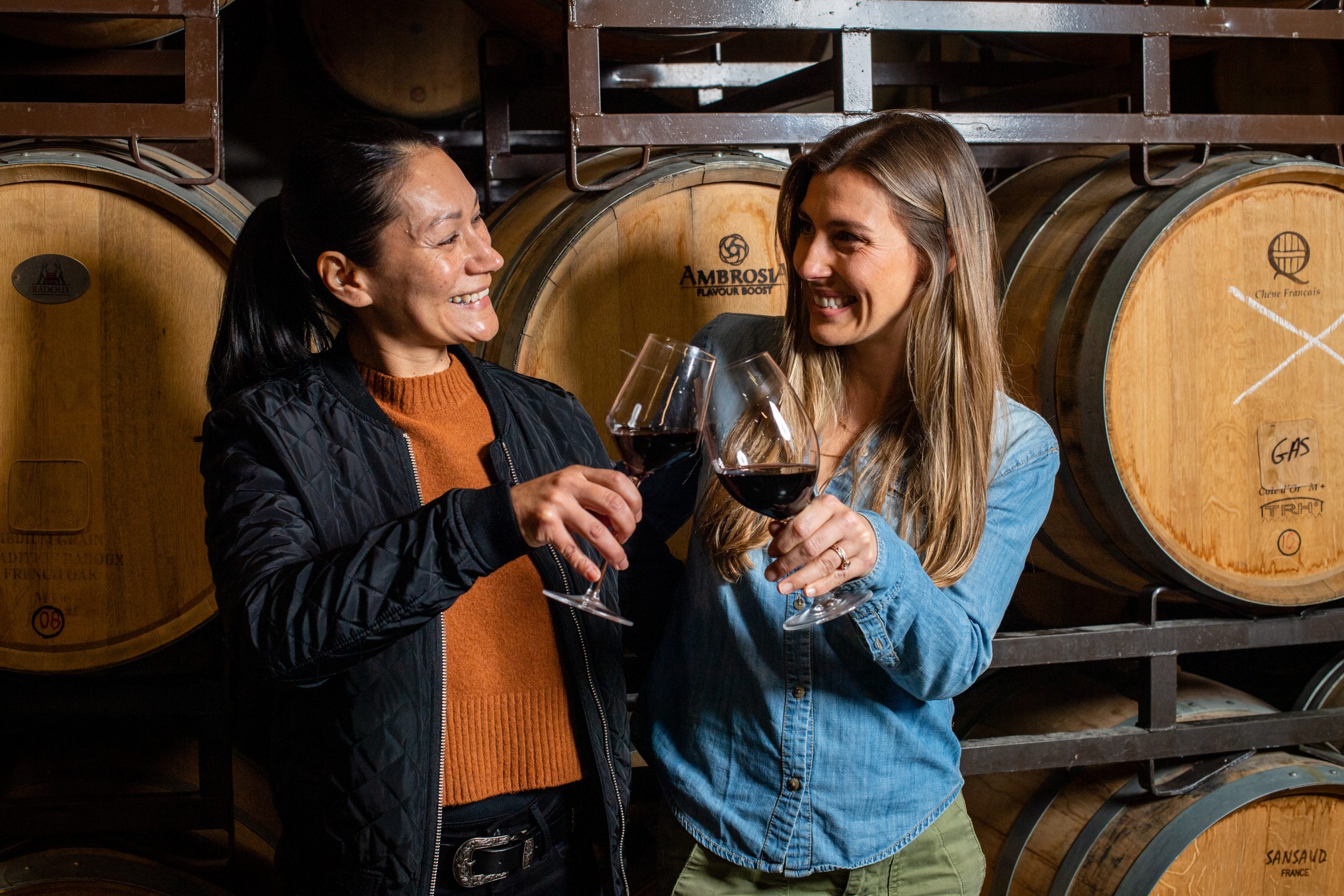
On Valentine’s Day, who doesn’t love to celebrate a great power couple? In Temecula Valley wine country, dynamic duos abound. Not all of them share a last name, and not all of them started with a first date. Some started in a cellar. Some over karaoke. Some have been going strong for 40 years. But all are fueled by a love of region, craft, hospitality, and the importance of pouring every ounce of passion into every bottle.

This February, we’re celebrating six of these extraordinary partnerships: winemakers and hospitality directors, mentors and cellar rats, and spouses who’ve somehow managed to build a thriving wine business without killing each other.

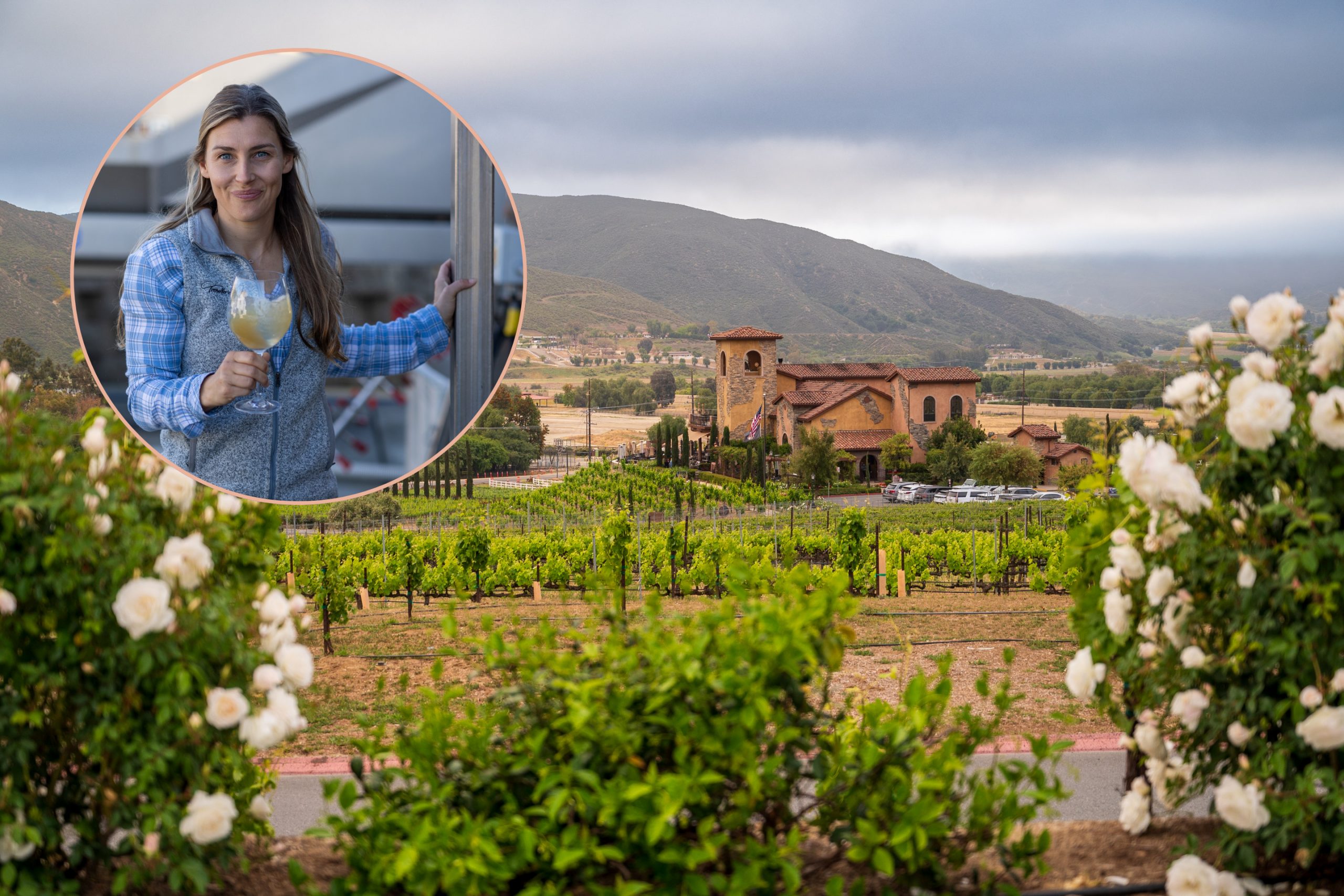
Walter Carter & Justin Knight, Danza del Sol Winery, and Masia de la Vinya Winery

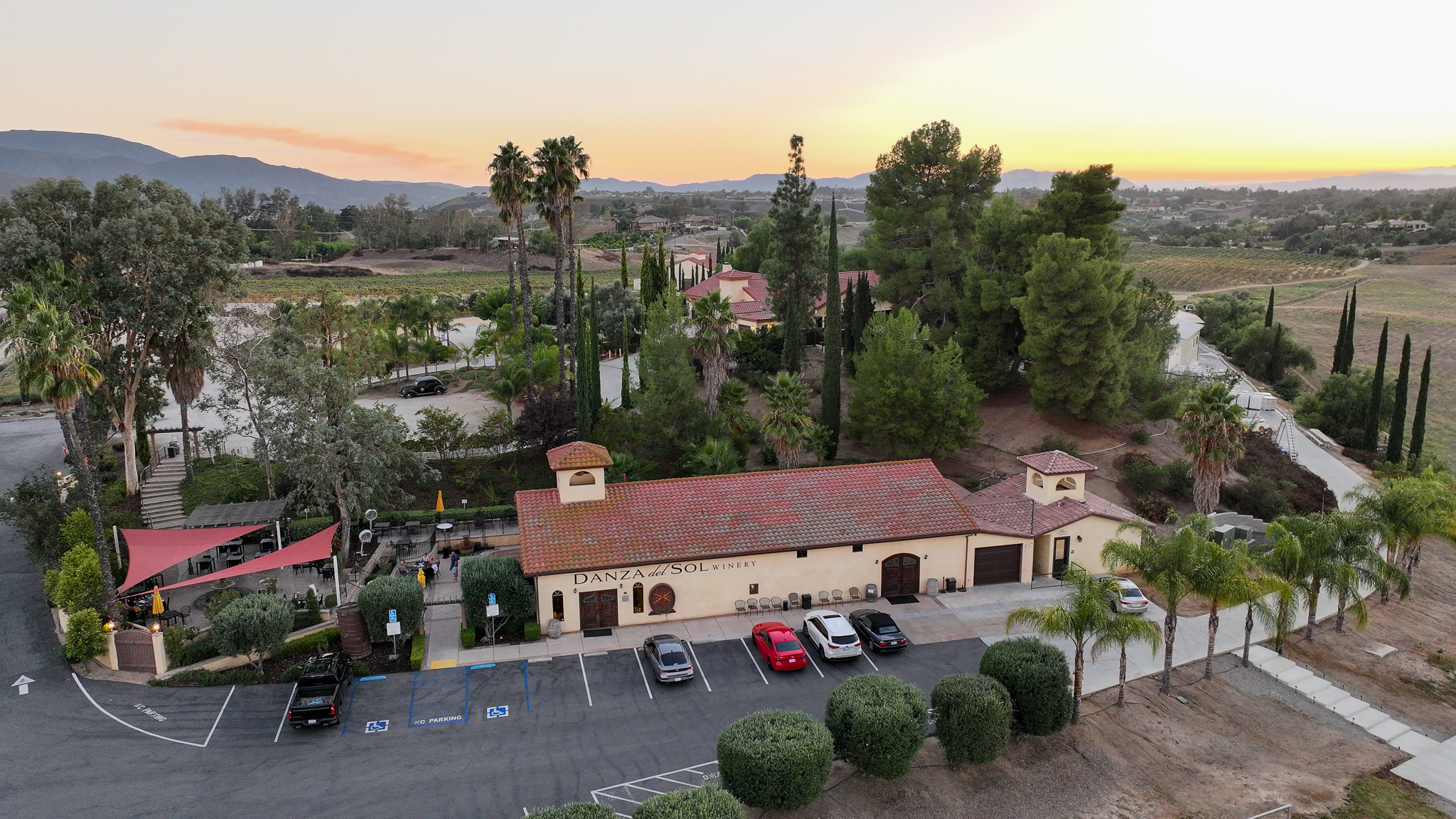
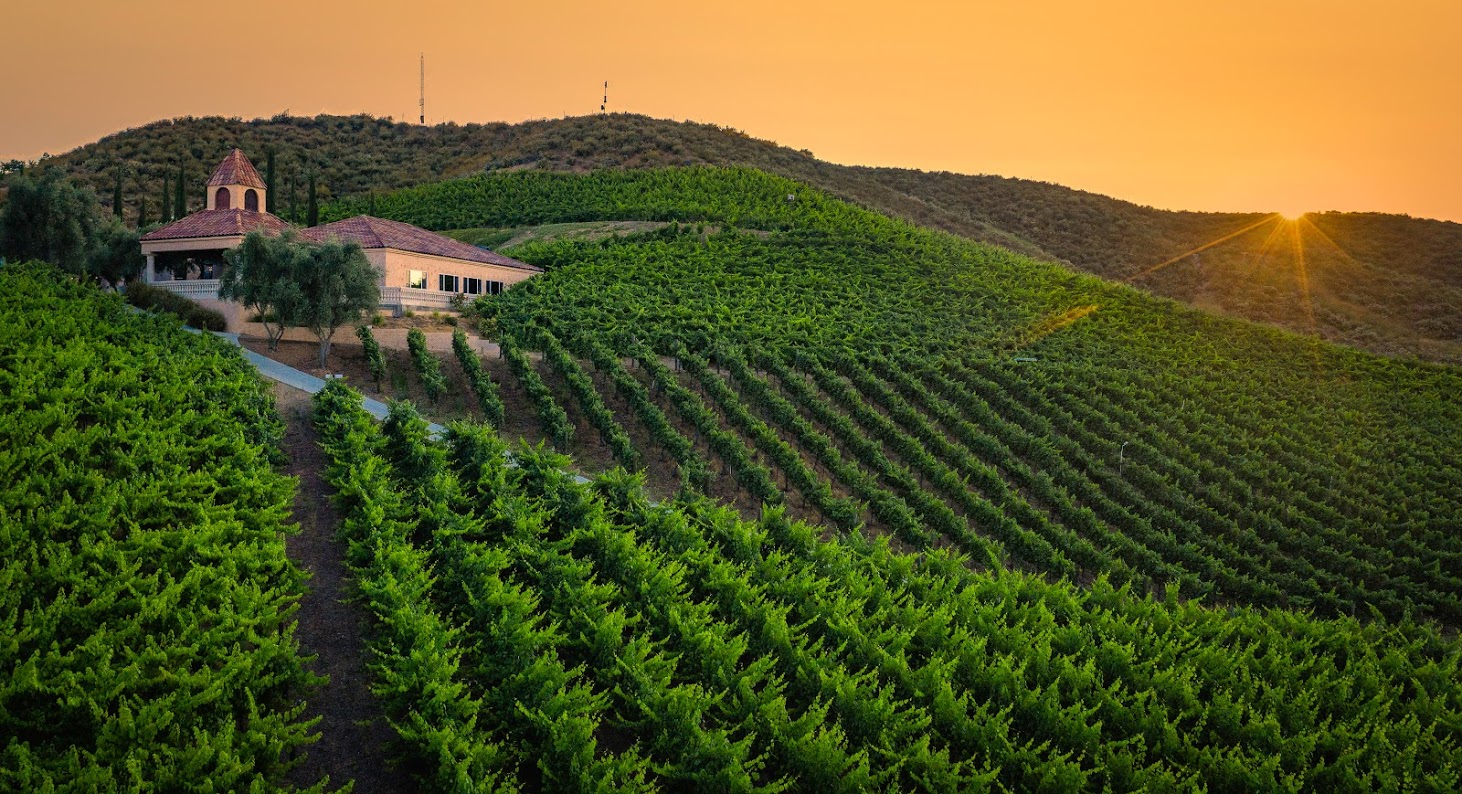
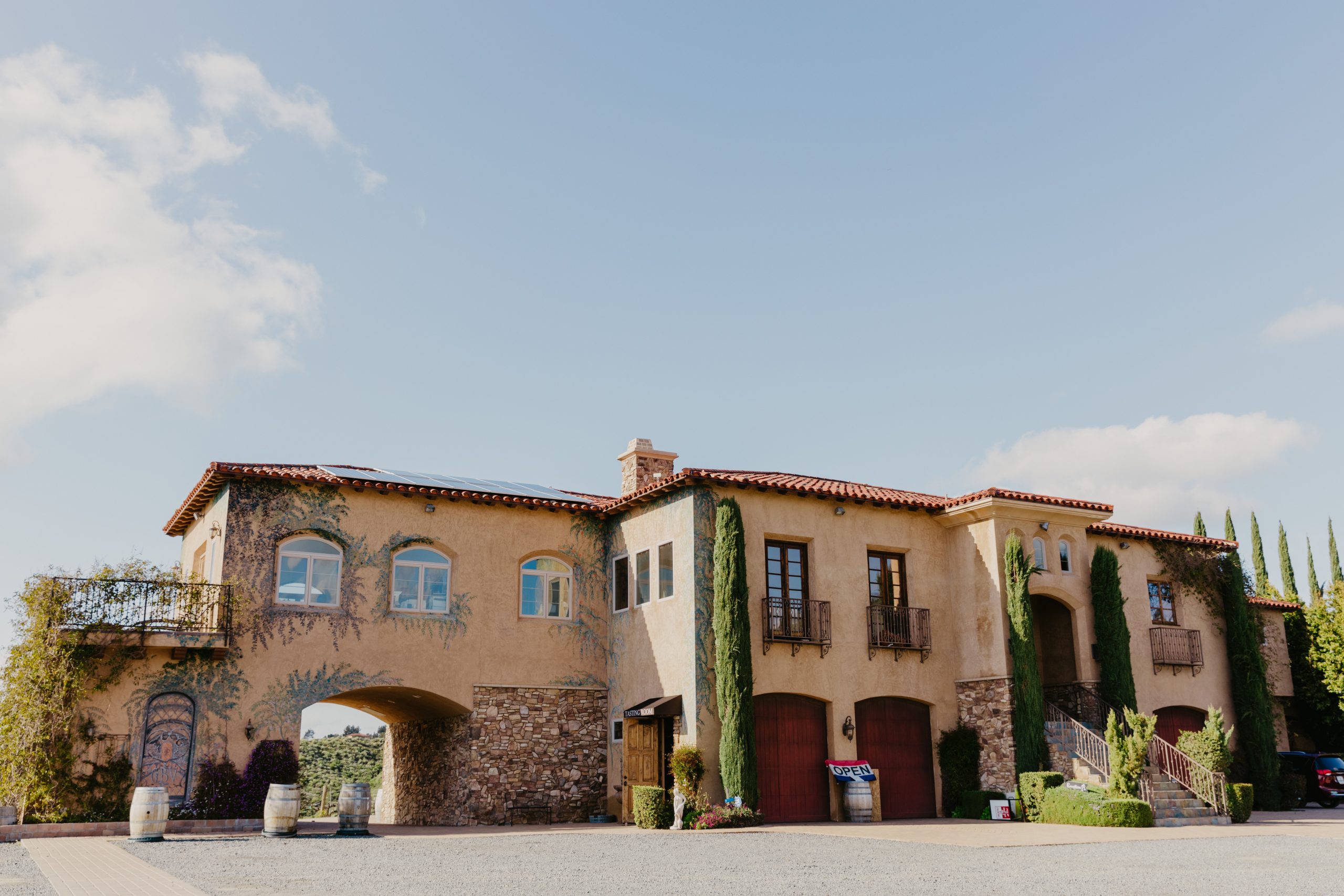
Danza del Sol Winery

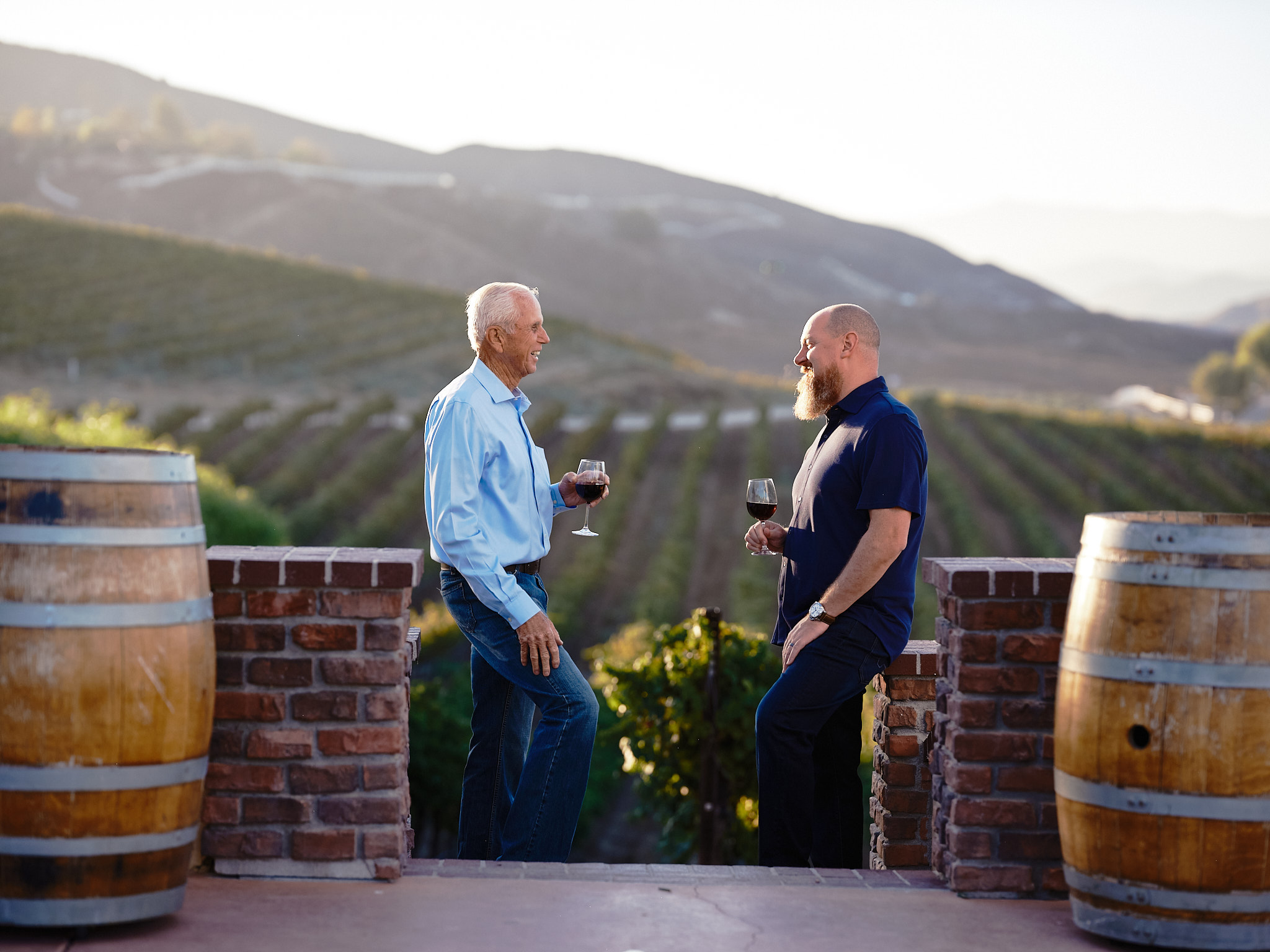
The Partnership: Walter Carter, Director of Hospitality, and Justin Knight, Winemaker

Walter and Justin’s partnership is built on a simple truth: great wine is only half the story. The other half is how it’s experienced. Coming from different sides of the winery world—Justin from the cellar and vineyards, Walter from hospitality and guest experience—they discovered their strengths were undeniably complementary.

“The magic is balance,” they explain. Justin leads with intention, precision, and respect for the land, while Walter brings heart, storytelling, and an unwavering focus on the guest experience. Together, they bridge what happens behind the scenes with what guests feel at the table, turning wine into an experience, not just a pour.

They’re united in their belief that quality and integrity can never be compromised, and that Temecula Valley fruit should always be celebrated. But don’t ask them to agree on the region’s flagship grape. Walter champions Tempranillo as the crown jewel, while Justin argues Sangiovese is the true belle of the ball. The upside? Danza produces exceptional examples of both, each with a cult-like following.

When asked what wine best represents their partnership? Grenache. Expressive, versatile, and deeply connected to place, it rewards intention and balance—just like their partnership. It reflects Justin’s thoughtful winemaking and Walter’s ability to translate that craft into stories guests remember long after the last sip.

Nick & Cindy Palumbo, Palumbo Family Vineyards & Winery

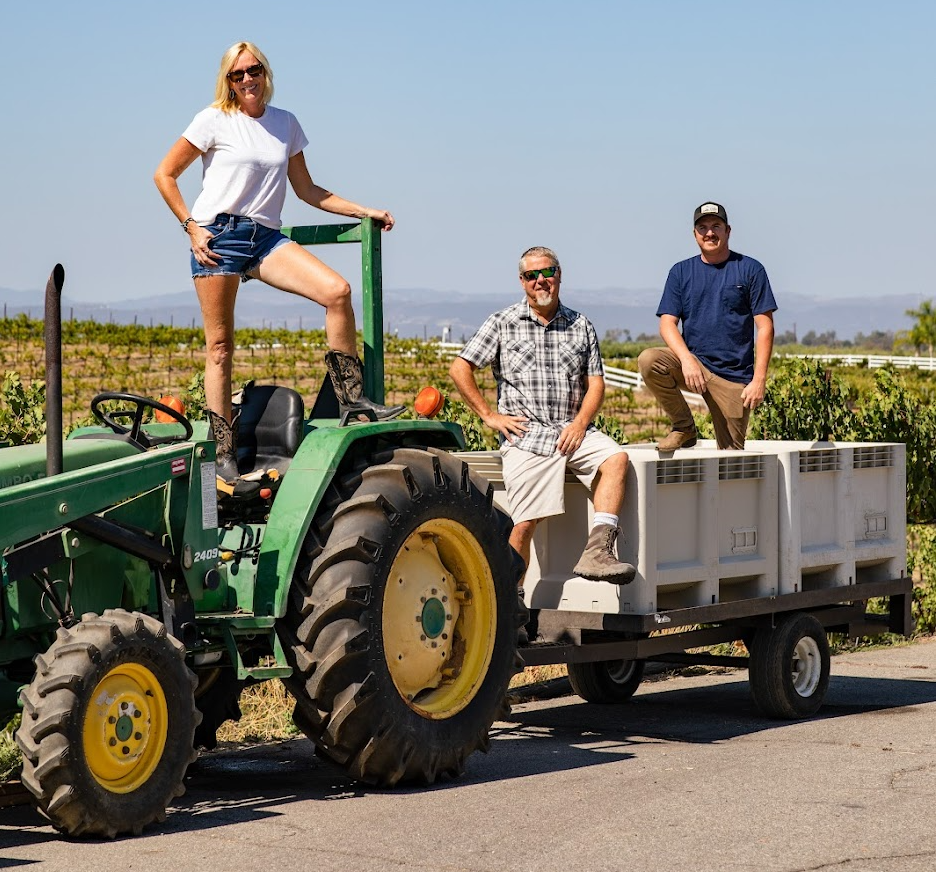
Palumbo Winery in Temecula California

The Partnership: Nick Palumbo, Owner/Winemaker, and Cindy Palumbo, Owner/ “Everything Else”

Nick and Cindy’s love story began over 25 years ago at karaoke night at Texas Lil’s in downtown Temecula. “It was a little sleepier downtown back then,” Nick recalls. After a stop at the Stampede—the only other place open at night—it took a couple of months to click. “But after that, it was game on, and we never looked back.”

Their approach to building the winery fell into step with their relationship, a natural fit with their commitment to family, lifestyle, and creating a healthy environment to raise their kids and contribute to the community. “If we have learned anything in this business over the years, it’s that sticking to who you are and being authentic is the secret sauce to long-term success,” Nick says.

Family has always come first, and their biggest disagreements? “Whether to lie in the sun or stay in the shade,” Nick jokes. “Cindy likes the sun!” But seriously, they’ve mastered the art of stepping back, taking a breath, and letting things go. What they agree on is far more important than what they don’t.

The wine that represents their partnership: Sparkling Wine. “After all, a great bottle makes Cindy happy,” says Nick, “and if Cindy is happy, then Nick is happy.”

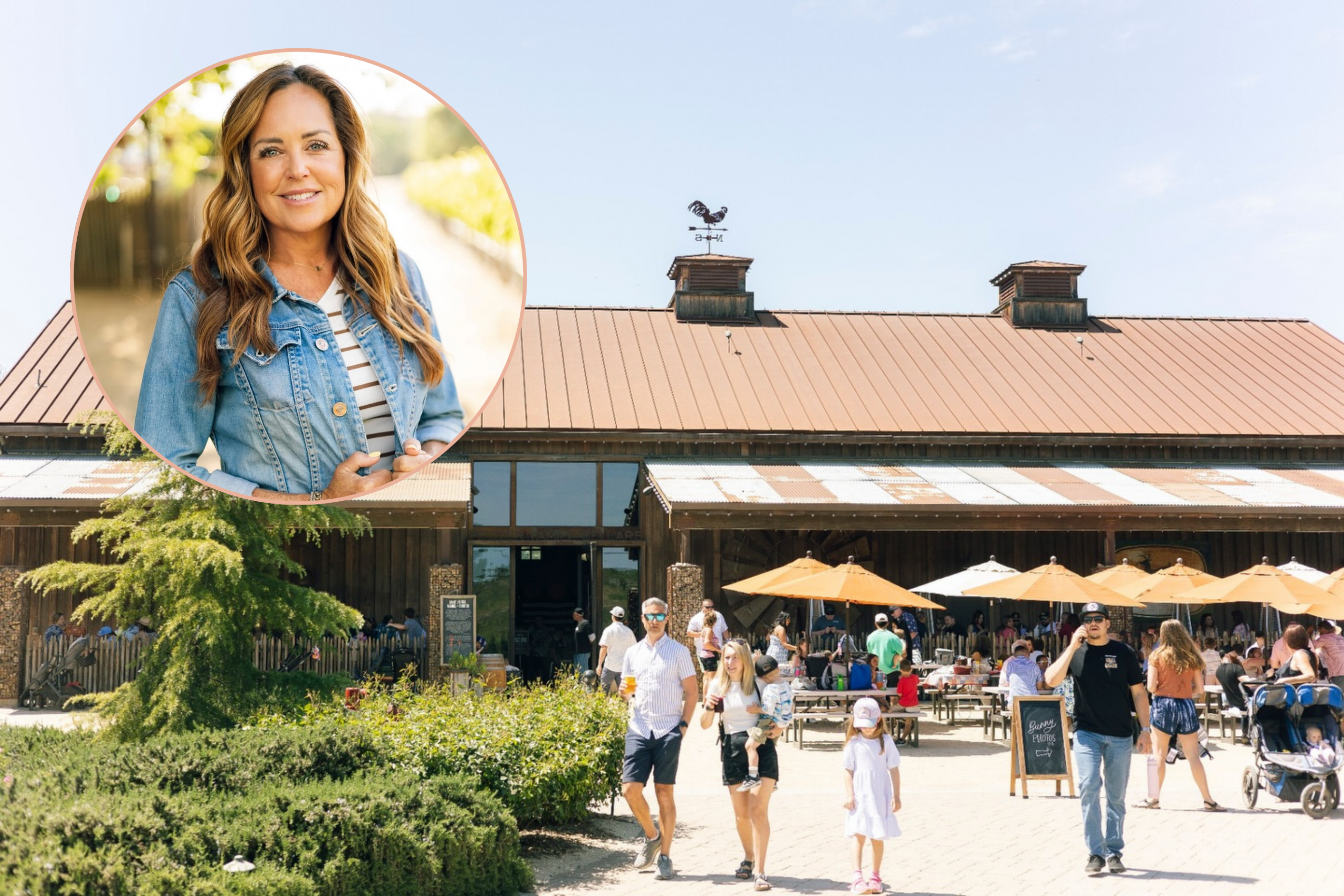
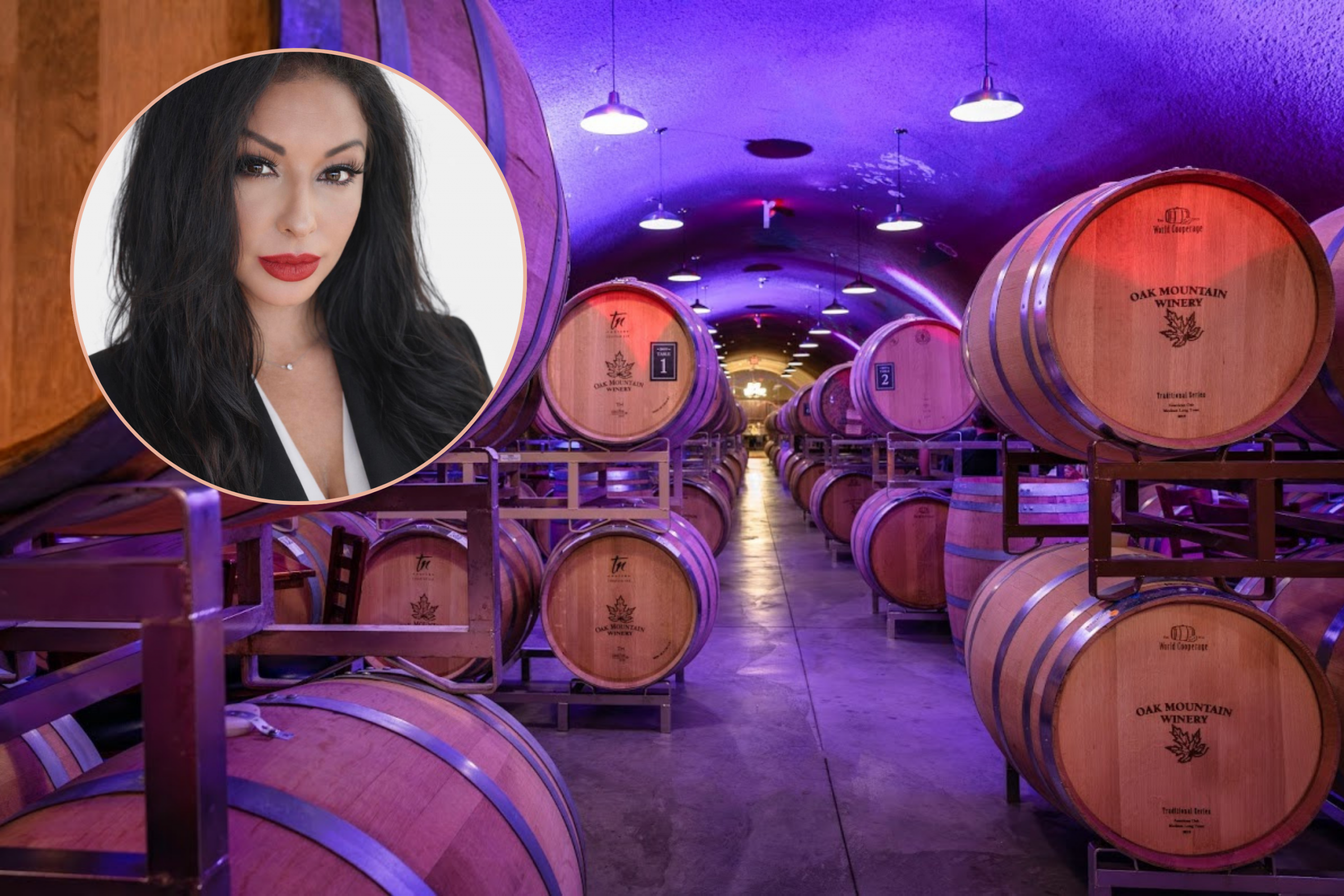
Johnny & Karena Leon, Oak Mountain Winery

The Partnership: Johnny Leon, Owner/President, and Karena Leon, Director of Operations and Founder & Director of the S O M Program

Johnny and Karena’s story has all the romance of a great wine: an instant connection rooted in shared values, passion, and purpose. They met at the winery, where what began professionally quickly became deeply personal. They married on May 17, 2025, at the very place where they first met—Oak Mountain Winery.

Together, they’ve built both their life and their business side by side. Their journey hasn’t been without challenges, but through unwavering support for one another, they’ve grown stronger, transforming a shared dream into a winery grounded in love, resilience, and community.

According to the couple, Johnny is the visionary, deeply passionate about wine, history, and creating meaningful guest experiences. Karena brings clarity, strategy, and heart to operations and community outreach. They say their magic lies in balance: honoring each other’s strengths, supporting one another through challenges, and always moving forward with intention and love.

They almost always agree on the importance of family, community, and giving back. Where they sometimes diverge is on pace—Johnny dreams boldly and quickly, while Karena focuses on thoughtful execution and long-term sustainability.

The wine that represents their partnership: Amor Eterno, a sweet Muscat Canelli, released on their wedding date. The name means “eternal love” in Spanish and honors their Mexican roots, symbolizing a bond that is deeply rooted, enduring, and meant to be shared—much like their marriage and the life they continue to build together.

Robert Renzoni & Olivia Bue, Robert Renzoni Vineyards

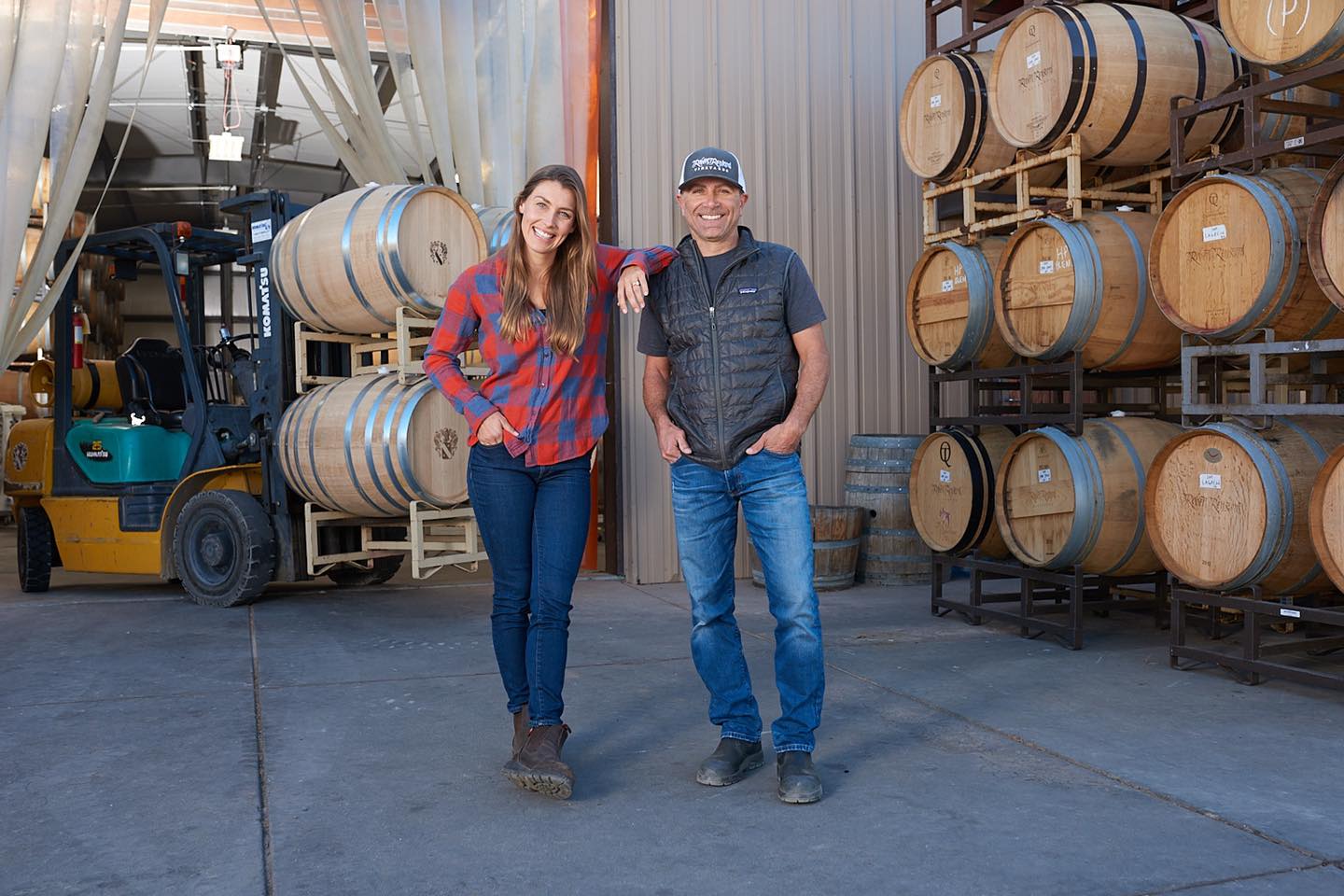
Robert Renzoni Vineyards

The Partnership: Robert Renzoni, Owner, and Olivia Bue, Winemaker

Back in 2013, Olivia was working as an assistant winemaker in Temecula Valley, and Robert was storing his finished wine at the same warehouse. When Robert began looking for an assistant winemaker a year later, Olivia immediately jumped at the opportunity.

“It turned out to be one of the best decisions I could have made,” Olivia reflects. “Little did I know at the time that I was beginning a journey that would shape my future as a winemaker for the next 12+ years.”

Their secret sauce? Have fun doing it. “In the midst of the stress and the many tasks at hand, we always remind ourselves how lucky we are to blend and make wine for a living,” they say. “We aren’t curing cancer, we are creating something that brings joy and helps people celebrate and remember life’s special moments.”

Olivia says Robert understands the wine business better than anyone she’s met and always prioritizes reinvesting in the company over personal profit. In the meantime, Olivia’s attention to detail produces consistently high-quality wines year after year. “I feel our synergy allows us to push each other creatively, stay grounded in our values, and ultimately create wines that truly reflect who we are and what we want to drink.”

They always agree on the final blend—no blend is complete until both give their stamp of approval. But spending money? That’s where they diverge. Robert invests boldly (think $18,000 handmade specialty tanks), while Olivia is a self-described minimalist. “You can probably guess who typically gets his way,” she laughs. “His intuition has proven invaluable as I’ve had the front row seat to the tremendous growth of Robert Renzoni Vineyards.”

The wine that represents their partnership: 1886, their Wine Club exclusive red blend. Like all their blends, it mirrors how they work together—each brings something distinct (palate, precision, vision, business sense), but it’s the harmony that creates something beautiful. As they put it, “Like any great blend, our partnership is built on trust, patience, and the belief that the best results come from harmony, not ego.”

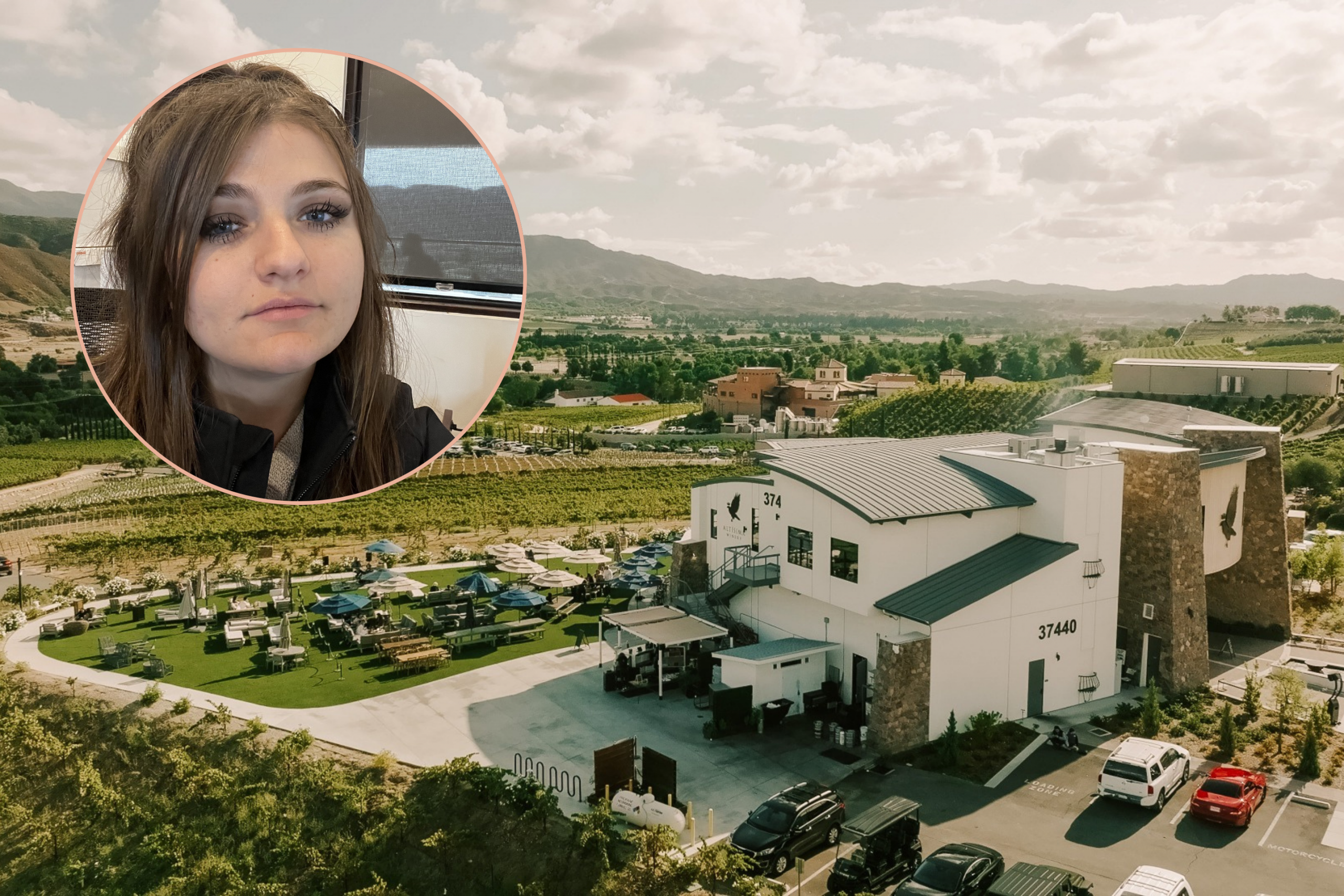
Chris Johnson & Zach Smith, Altísima Winery

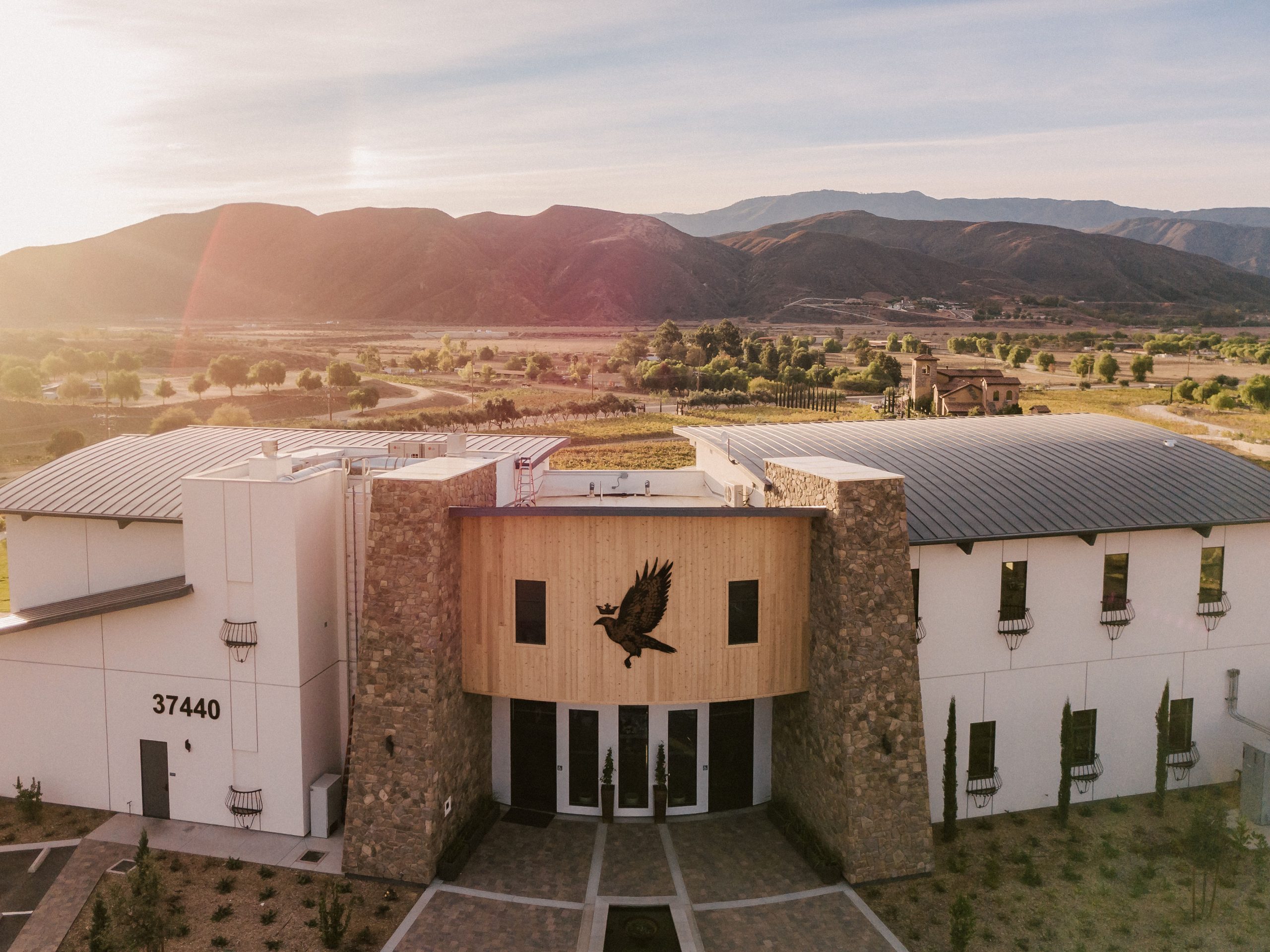
Altisima Winery Temecula California

The Partnership: Chris Johnson, Winemaker, and Zach Smith, Assistant Winemaker

Three years ago, Zach began at Altísima as a barback in the tasting room. But before his shifts, he’d stop by the production area to watch Chris work and learn about winemaking. His curiosity, work ethic, and genuine passion quickly stood out, and Chris offered him a chance to step into a “cellar rat” role.

Zach immediately proved he had the drive to succeed, and, just three years later, he and Chris operate as the dynamic duo leading Altísima’s winemaking program. It’s a modern-day mentorship success story that would make any superhero proud.

Chris brings visionary expertise and a deep understanding of the vineyard, while Zach complements it with meticulous precision and creative problem-solving in the cellar. What makes the partnership work is their shared passion for crafting wines that are expressive, balanced, and unforgettable. Every bottle reflects their teamwork and individual strengths.

They almost always agree that great wine starts in the vineyard. What do they disagree on? How many sips it takes to know if a wine is just right. Chris says five. Zach says, well, many more. “And somehow, they’re both always ‘still deciding,'” the team jokes.

The wine that represents their partnership: Opulento, the first wine they crafted together. It blends Chris’s bold vision with Zach’s precision, and every sip tells the story of their teamwork, balance, and shared passion for creating something truly exceptional.

Ken & Christina Falik, Gershon Bachus Vintners

Gershon Bachus Winery

The Partnership: Ken and Christina Falik, Owners

Ken and Christina married in 1986 after five years of friendship and immediately became business partners. They’ve owned and operated merchandise marketing companies for 40 years, but the winery was their passion project—a chance to brand something from inception to end, entirely their own vision.

“First, we found the land in 2001, then we established the brand in 2005 and began the winemaking process along with our key consultants who knew the terroir and could realize our dream,” Christina explains. “A piece of Italy in Temecula. Tuscany-meets-Temecula at Gershon Bachus Vintners.”

Their secret to 40 years together? “We believe that we are in it together always,” they say. “Laughter and humor will take the edge off of any of the sharpness that comes with being a partner and a spouse. We are in it to win it.”

They agree on quality over quantity, always. What do they disagree on? How much is too much. But that creative tension keeps things interesting and has clearly served them well through four decades of partnership.

When asked what wine represents their partnership, the answer is obvious: Aeolus, a blend of Cabernet Franc, Zinfandel, and Grenache designed during their first harvest in 2008. Each year, the formula changes, but the wine’s overall appeal and strength in their portfolio best describe their partnership in life and love. “If something doesn’t feel right, make a change, whether large or small, but keep the foundation intact.”

From romantic partners who’ve built family legacies together to mentorships that have blossomed into creative partnerships, these power couples prove that great wine is always a team effort. Whether they’re finishing each other’s blends or playfully disagreeing about flagship grapes, these dynamic duos are the heart of Temecula Valley wine country. This Valentine’s season, raise a glass to partnership in all its beautiful forms.

Meet more of our winemakers here: https://www.temeculawines.org/wineries/experiences/meet-the-winemakers/

Share

Get to Know Steve Bourguignon, Falkner Winery

My name is Steve Bourguignon, I was born and raised in Normandie, France. I moved to the US in 2007 right after obtaining my degree in transportation and logistics. I am married and I have 2 beautiful daughters. After multiple customer service jobs, I decided to follow my passion for wine and apply at Falkner in 2015. I have been working in Temecula wine country ever since and I love it!

What wine trend am I the most excited about right now? 

I believe the rise for sustainable and biodynamic wines is an amazing trend. This movement towards natural and sustainable farming is a great trend that I 100% agree with. I believe we can make amazing wines without damaging mother nature.

Who has been a mentor in my career?

The person who has been there from the beginning of my journey in wine country and has influenced my career the most in a positive way is Raymond Murgo. He has provided valuable advice that makes me better at my job. 

Describe my ideal wine and food pairing?

Tough question! I am very passionate about wine and food. If I have to choose, my number one pairing would be a Beef Bourguignon paired with a nice Pinot Noir from Burgundy (and let’s not forget a fresh baguette to go with it.) 🙂

What is my go to sip after a long day?

My favorite glass of wine to relax after a long day at work would be a crisp Sauvignon Blanc. One of my favorite Sauvignon Blanc is produced in the appellation of Sancerre in France’s Loire Valley.

What is something new I hope to learn this year?

I am hoping to register and pass my Level 2 sommelier degree with the court of master sommelier of America. I passed my level one last year and would like to get my level 2 in the next 12 months.

Any dream role or experience I would love to take on in the wine industry?

I would love to follow the footsteps of my mentor Raymond and become a tasting room manager one day. I have been serving and selling wine for over 10 years and understand the business very well and would love to advance my career in this direction. 

Share

Harvesting Heritage: Temecula’s Deep Roots in Mexico and Baja

Temecula Valley’s proximity to Baja California makes it unlike any other wine region in the statewhere Hispanic heritage, borderland culture, and Mediterranean terroir converge in every glass.

While Northern California may dominate the global imagination of California wine, the state’s earliest vineyards were planted much farther south. Spanish missionaries introduced the Mission grape to San Diego in the late 1700s, and those first vines laid the foundation for the entire industry.

Today, Temecula Valley carries that heritage forward, shaped in no small part by its proximity to Mexico and the Baja Peninsula. Just an hour from the border, Temecula is a place where cultures converge – and where Hispanic heritage is deeply rooted in its wines.

Stories of Heritage and Innovation

Nadia Urquidez, Winemaker for Doffo Winery

Born in Ensenada and raised in San Vicente, Nadia Urquidez of Doffo Winery brings her Baja background and a scientist’s training to Temecula. She speaks of Cabernet Sauvignon as if it were a bridge to her culture – its fermentation aromas reminding her of Mexican cuisine, a sensory link between her homeland and her adopted valley. “The welcoming people in the industry, the solidarity, and passion about wine are what attract me to Temecula Valley,” she says. “Also the hard work they do every day to put the name of The Valley on the map with high-quality, award-winning wines.”

Javier Flores, one of Temecula’s most respected winemakers, began his career at LA Cetto in Tijuana before crossing the border to work in Temecula, where he has spent more than two decades at South Coast Winery and Carter Estate. “I was attracted to Temecula Valley because of the proximity to my family in Tijuana and friends in the Mexican wine industry in Valle de Guadalupe,” he says. He still credits his Baja beginnings for shaping his curiosity and versatility. Today, he works with as many as 30 different grape varieties, proof of the creative freedom Temecula afford.

Raised in Tijuana after being born in Sonora, winemaker Renato Saís is another example of the cross-border spirit that defines the region. With nearly two decades of vintages behind him, he consults for wineries across Temecula, bringing both technical mastery and an unrelenting drive to raise the quality bar. “I am living my dream job,” he says. “I am proud to say that I consider this wine country my home and have the most respect for it and for the people who are trying to do the same for this amazing Valley.”

Born in Mexico City, Giovani Verdejo grew up in a family of wine lovers and began his career in Napa at just 19. After more than two decades making wine in Northern California, he moved to Temecula to join Callaway Vineyard & Winery. “Temecula had been on my mind for quite some time,” he says. “I have always loved Southern California, and when the opportunity at Callaway arose, I did not hesitate to move my family to be able to make wines here. The hot days with cool nights are not too different from where I started my career.”

Then there is Raúl Ramirez of Raúl Ramirez Bodegas y Viñedos, who came to the U.S. from Michoacán as a farmworker and eventually built his own winery and vineyards in Temecula. On his website, he calls his journey “Harvesting Dreams,” a reflection not only of his own story, but of the larger narrative of resilience and possibility that characterizes Temecula’s Hispanic wine community.

What Sets Temecula Apart

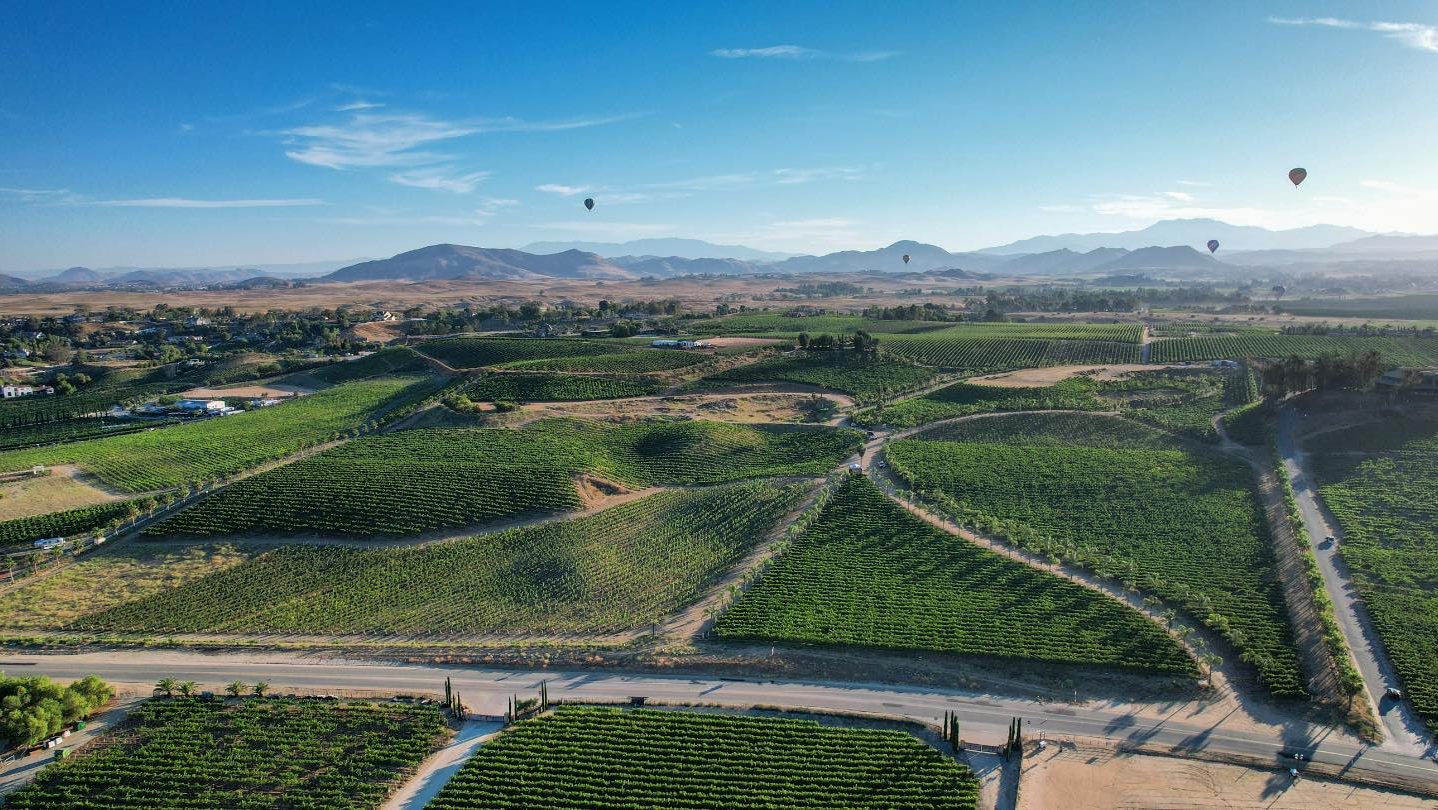
Temecula Valley Wine Country, Drone View

The influence of Mexico and Baja is not an afterthought in Temecula – it is foundational. It’s in the flavors that echo Mexican kitchens, in the collaborative spirit that mirrors Baja’s winemaking culture, and in the determination of families who crossed a border to plant roots in Southern California soil.

California wine is not defined by any single place. It is a patchwork of regions, each offering something distinct. Temecula Valley’s contribution to that patchwork is its borderland identity – a vibrant, living connection to Mexico that infuses the wines with history, culture, and heart.

As we raise a glass this Hispanic Heritage Month, we honor the winemakers whose Baja and Mexican heritage continues to shape Temecula Valley, reminding us that wine is more than a drink. It is story, culture, and community, harvested and shared across borders.

Share

The Blend Is the Signature: How Temecula Valley Winemakers Craft Wines Greater Than the Sum of Their Parts

Blending wine is both an ancient technique and a modern creative playground. In Temecula Valley—where tradition and innovation often share a glass—winemakers embrace the blend not just to refine their wines, but to express identity, character, and style.

“Blends help achieve a few different goals in winemaking,” says Marcel Velasco, Cellar Master at Peltzer Farm & Winery. “Bringing in different varieties allows a winemaker to balance out specific elements in the effort of making a wine that has all the body, color, acidity, alcohol, and aromatics they desire.” For Velasco, blending isn’t just technical—it’s personal. “You get to see a lot more creativity in the wine blend space, which at the end of the day helps you become that much better of a wine creator and more importantly a better wine drinker.” It’s also an opportunity for gaining a deeper understanding of wine in general. “It forces you to focus on the qualities that you enjoy the most from certain varieties and what could potentially be missing.”

Legacy in Balance

At Baily Vineyard & Winery, the practice of blending runs deep. “For centuries, most notably in Bordeaux and Provence, winemakers have blended wines from different varieties in order to achieve more complex flavors and balance,” Phil Baily, owner and winemaker, notes. “After Prohibition, California focused on single-varietal labeling, so blending fell out of fashion until the 1960s, when winemakers began crafting Bordeaux-style wines. That movement eventually led to the creation of the term ‘Meritage’—a blend of classic Bordeaux grapes like Cabernet Sauvignon, Merlot, and Malbec.”

Baily has been producing a Meritage since 1997. While creating these blends Phil and his wife Carol observed that Malbec and Merlot had a special affinity for each other. Feeling that labeling the wine a true Meritage didn’t seem appropriate, they created “M&M” – a blend of just those grape varieties. To this day, the wine remains a well-loved Baily tradition.

Bottling Creativity

For some, blending is a way to push boundaries. “They represent the creativity and skill of the winemaker,” says Karena Zermeno, director of sales and operations at The Cave at Oak Mountain Winery. “Depending on the execution, a well-crafted blend is usually smooth, balanced, and full of depth.” Her pick, Vino Leon, is a robust combination of Bordeaux varieties anchored by Cabernet Sauvignon, and designed to impress with both power and finesse.

“I love blends!” enthuses Bailey Morris of Wiens Cellars. “They’re dynamic and incredibly thoughtful—kind of like a painting where each small layer plays a purpose in the entire scope of the bigger picture. For me, they’re some of the most food-friendly and versatile wines available to us day-to-day. You can tell when a blend has been crafted with intention; it feels layered, expressive, and usually too easy to drink (in a good way). Their 2021 Reflection, a Super Tuscan-style Cabernet Sauvignon and Sangiovese blend, strikes that elusive balance between fresh and serious, ideal for casual charcuterie or an elevated al fresco dinner.

Old World Soul, New World Style

At Thornton Winery, Winemaker Tom Stolzer distills the purpose of blending into three words: “To create a better wine.” His 2022 Montepulciano/Aglianico—a Southern Italian homage—offers structure, spice, and ageability. “I love making wine blends because it allows me to make a specific style of wine that is unique and that cannot be achieved by a single variety.”

Erick Erno, Assistant Winemaker at Bel Vino Winery, shares a similar sentiment. “Each time we blend… it’s a blank canvas to paint a new wine and let it evolve as something special.” Their Butterfly Effect Blend—Cabernet Sauvignon, Merlot, and Cabernet Franc—is an opulent, mocha-tinged red that feels both plush and polished.

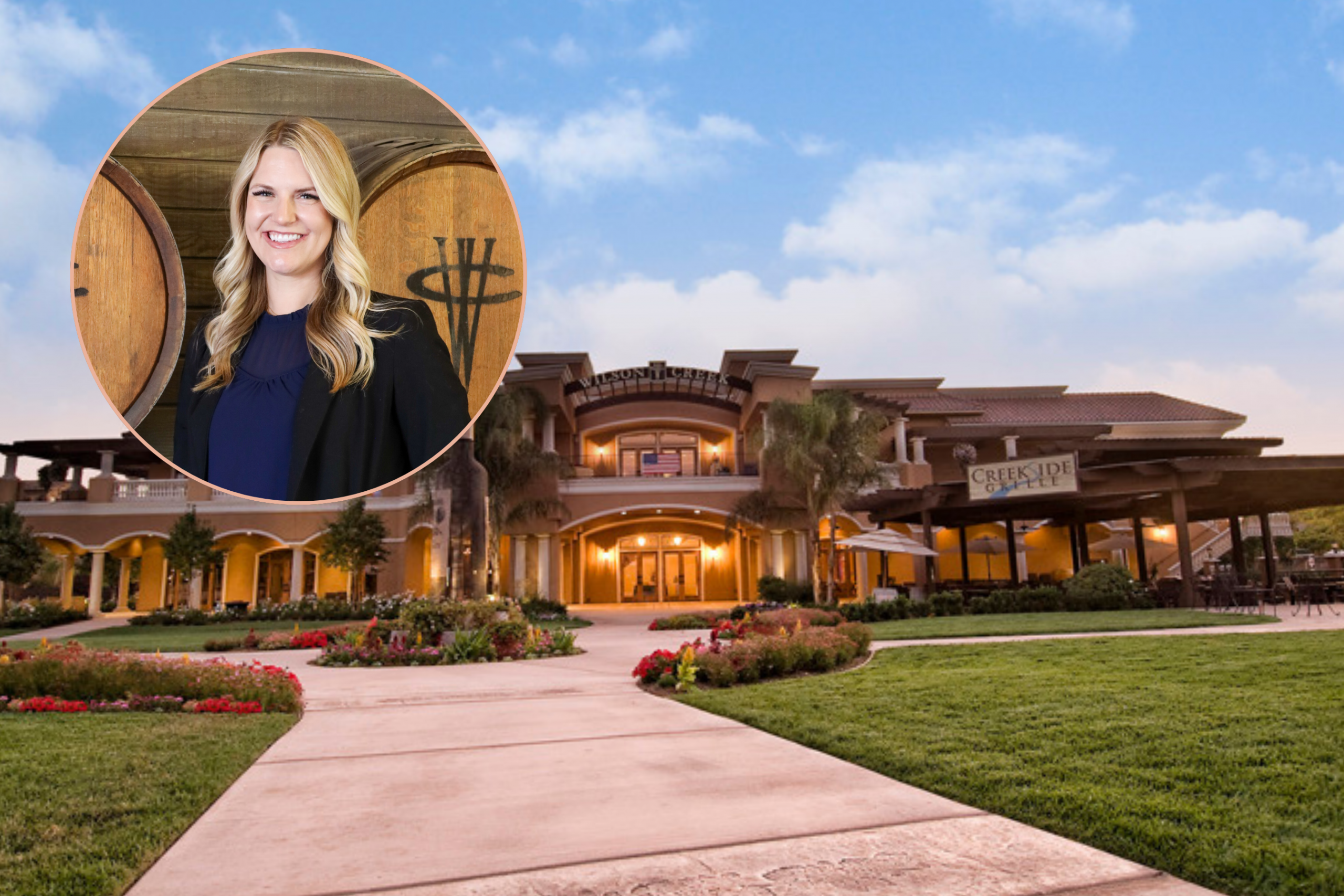
Some winemakers find creative freedom in blending when single-varietal wines feel limiting. “Blending allows for creative expression,” says Kristina Filippi, Winemaker at Wilson Creek. “It’s an opportunity to combine the strengths of different varietals, crafting a wine that’s greater than the sum of its parts.” Wilson Creek’s Double Dog Blend pairs Petite Sirah with Cabernet Sauvignon for a bold, structured wine with both richness and elegance.

“I have a strong appreciation for traditional blends, like Châteauneuf-du-Pape and Rioja,” says Jon McPherson, master winemaker for South Coast Winery and Carter Estate. “I also believe that classic méthode champenoise sparkling wines are perfect examples of blending done with intention – each blend is crafted to achieve a distinct house style while adding layers of flavor and complexity. For me, blending has the power to transform a good wine into something exceptional, elevating it beyond expectations and enhancing the overall experience.”

McPherson also highlights their new 2024 GVR—a Rhône-style white featuring Grenache Blanc, Viognier, and Roussanne. “Together, these varieties create a wine that feels greater than the sum of its parts—a true cornucopia of fruit and flower aromas.”

Composition Over Convention

At Churon Winery, Brittany Mastin leans into the nuance blending offers: “Blends often feel a little more approachable and layered, offering something unique with every sip.” Their Paso Doble, a vibrant red blend with cherry, raspberry, and dried fig, is tailor-made for barbecue ribs or burgers with flair.

For Arnaud Debons, who makes wine for both BOTTAIA and Ponte Winery, blending is more than just strategy—it’s philosophy. “Making blends is using the character of each varietal to its best… crafting a special product with the winemaker’s signature,” he says. “As much as I love to make wines from single grape respecting the terroir and the originality of each varietal, making blend is the ultimate experience for the winemaker. BOTTAIA’s Rosso (Sangiovese, Aglianico, and Sagrantino) and Ponte’s Doppietta (Syrah and Cabernet Sauvignon) are two bold, expressive blends that channel Italian structure with California sun.

“As a winemaker making wine is a passion, and crafting blend is art,” Debons says simply—and across Temecula Valley, it’s clear that artistry is alive and thriving.

11 Great Temecula Valley Wine Blends to Try

  • Peltzer Farm & Winery
    2021 Super Tuscan – Sangiovese, Cabernet Sauvignon, Merlot | $55
    View Wine
  • Baily Vineyard & Winery
    2021 M&M Blend – Malbec, Merlot | $30

View Wine

  • The Cave at Oak Mountain Winery
    Vino Leon – Cabernet Sauvignon, Petit Verdot, Cabernet Franc, Malbec, Merlot | $75

View Wine

  • Wiens Cellars
    2021 Reflection – Cabernet Sauvignon, Sangiovese | $52
    View Wine
  • Thornton Winery
    2022 Montepulciano/Aglianico – 52% Montepulciano, 48% Aglianico | $44
    View Wine
  • Bel Vino Winery
    Butterfly Effect Blend – Cabernet Sauvignon, Merlot, Cabernet Franc | $54.95
    View Wine
  • Wilson Creek Winery
    2021 Double Dog Blend – Petite Sirah, Cabernet Sauvignon | $69.99
    View Wine
  • Carter Estate / South Coast Winery
    2024 GVR – Grenache Blanc, Viognier, Roussanne | $30
    View Wine
  • Churon Winery
    2022 Paso Doble– Red blend | $49
    View Wine
  • BOTTAIA Winery
    2022 Rosso BOTTAIA – Sangiovese, Aglianico, Sagrantino | $55
    View Wine
  • Ponte Winery
    2021 Doppietta – Syrah, Cabernet Sauvignon | $50
    View Wine

Share

Celebrating Women in Temecula Valley Wine: Strength, Innovation, and the Future of the Industry

The world of wine has long been shaped by the hands of women, though their contributions haven’t always been given the recognition they deserve. As the industry evolves, women are stepping into leadership roles across winemaking, hospitality, and business, proving that their voices, skills, and perspectives are not just valuable but essential. International Women’s Day provides the perfect opportunity to highlight the extraordinary women making their mark in Temecula Valley Wine Country. With this year’s theme, #AccelerateAction, there’s no better time to amplify the voices of these trailblazers who are driving innovation, breaking barriers, and redefining what it means to be a woman in wine.

In celebration of Women’s History Month, we asked some of Temecula Valley’s leading women in wine to share their insights on the industry, their most unexpected lessons, and the advice they’d give to other women looking to enter the field. Here’s what they had to say.

Doffo Winery—Doffo sisters Samantha and Brigitte and winemaker Nadia Urquidez

TVWA: What’s the most unexpected or unconventional lesson you’ve learned – either about wine, or yourself – from working in the wine industry?

Doffo: One of the most unexpected lessons we’ve learned in the wine industry is that winemaking is as much about intuition as it is about science. While there are technical aspects to crafting great wine, there’s also an art to it—trusting your instincts, reading the vineyard, and knowing when to step in and when to let nature take its course. This has also taught us a lot about ourselves: patience, adaptability, and resilience are just as crucial in winemaking as they are in life.

TVWA: If you could give one piece of advice to women looking to break into the wine world – whether in winemaking, hospitality, or business – what would it be?

Doffo: Don’t be afraid to take up space, speak up, and trust your knowledge. Whether in winemaking, hospitality, or business, confidence is key. Surround yourself with people who challenge and inspire you, and never stop learning. The wine industry has historically been male-dominated, but the tides are changing—be part of that change and own your place in it!

TVWA: What’s one misconception about being a woman in wine that you wish would go away?+

Doffo: That we’re only here for the marketing or hospitality side of things. Women are just as capable in the cellar, the vineyard, and the boardroom as our male counterparts. We know the science, the craftsmanship, and the business just as well—if not better! It’s time to do away with the outdated assumption that winemaking is a man’s job.

TVWA: Who is your greatest female mentor, either in wine or in life? Why?

Doffo: Our greatest female mentors are the strong women in our own family. They’ve shown us what it means to work hard, lead with integrity, and never back down from a challenge. They’ve instilled in us a deep respect for tradition while also encouraging innovation. In wine and in life, having strong women as role models has been invaluable.

TVWA: What are you toasting the other women in wine with for Women’s History Month and why?

Doffo: We’re raising a glass of our finest red blend to all the women in wine—past, present, and future. We toast to the trailblazers who paved the way, the innovators who are redefining the industry, and the newcomers who are ready to make their mark. Here’s to breaking barriers, making great wine, and lifting each other up along the way!

Wilson Creek Winery—Kristina Filippi, Winemaker; Wendy Holder, VP of Marketing

TVWA: What’s the most unexpected or unconventional lesson you’ve from working in the wine industry?

Kristina: I have always been a bit of an introvert, so the biggest lesson I’ve learned is finding my voice and having the confidence to use it. Speaking up in a room full of industry veterans wasn’t always easy, but I’ve realized that my perspective and knowledge are just as valuable as anyone else’s.

Wendy: Wine has an uncanny way of revealing people’s true personalities—including my own. You see, wine isn’t just about swirling, sniffing, and sipping; it’s about storytelling, connection, and sometimes, a little controlled chaos.

TVWA: If you could give one piece of advice to women looking to break into the wine world, what would it be?

Kristina: Get your foot in the door and take every opportunity to learn something new. Engage with others, ask questions, and don’t be afraid to dive into different aspects of the industry.

Wendy: Learn to pivot—gracefully, and often. The industry is constantly evolving, so adaptability and resilience are essential. Be open to learning, ready to embrace change, and unafraid to rewrite the plan when necessary. Build a strong network, trust your instincts, and remember: no one truly has it all figured out—so don’t be afraid to dive in, make mistakes, and grow.

TVWA: What’s one misconception about being a woman in wine that you wish would go away?

Kristina: I believe this is changing, but I’d say the archaic idea that women are more suited for roles in hospitality and sales, though we are great in those areas too! Over the years I’ve had lots of people seem surprised when I’ve told them I’ve worked in vineyards, or when I’ve been introduced as the winemaker. There is sometimes an assumption that there is someone else overseeing my work in a higher winemaking capacity.  Women are very much suited to work in any area that entices our interest including viticulture and enology, and we are also absolutely capable of doing the “heavy lifting” in the cellar.

Wendy: That women can’t handle the “serious” parts of the industry, like winemaking and vineyard management. Spoiler alert: We absolutely can—and we are. We are making bold, complex wines, running entire vineyards, leading financial decisions, and yes—still throwing a killer event while doing it.

TVWA: Who is your greatest female mentor, either in wine or in life? Why?

Wendy: It’s impossible to choose just one because, truthfully, I’m surrounded by incredible female mentors every day. The women I work with in wine country aren’t just colleagues—they’re friends, sounding boards, and an endless source of wisdom (and occasional wine-fueled therapy sessions). Cheers to those who can turn a tough day into a laugh-filled one over a glass of sparkling, paired with a little grit and grace

TVWA: What are you toasting the other women in wine with for Women’s History Month and why?

Wendy: Even though spring practically begs for a crisp white or a delicate rosé, I’m toasting the incredible women in wine with a bold, unapologetic glass of Petite Sirah. Because Petite Sirah is powerful, complex, and leaves a lasting impression.

Kristina: Cheers to the great strides that we have made in this industry over the last couple of decades as well as seeing more and more talented and strong women advancing their careers within the industry, especially in viticulture and winemaking.

Europa Village—Casey Reed, Assistant Tasting Room Manager

TVWA: What’s the most unexpected or unconventional lesson you’ve learned from working in the wine industry?

Casey: The more you learn about wine, the less you know. As for a personal lesson, I realized how important patience is, not just with the wine aging process, but with my own personal growth in the industry. This is not for the faint of heart or for someone who wants a quick start. In a way, you grow and evolve just as the wine does – it’s a long, gradual journey. 

TVWA: If you could give one piece of advice to women looking to break into the wine world, what would it be?

Casey: Own your unique perspective and never underestimate your worth. The wine industry, like many others, thrives on diversity of thought, background, and experience. Whether you’re stepping into winemaking, hospitality, or business, your voice matters. Embrace your individuality, and trust that the skills and perspectives you bring are valuable. Don’t shy away from asking questions, seeking mentorship, and carving your own path, even if it doesn’t follow a traditional route. Confidence, curiosity, and a willingness to grow are key. 

TVWA: What’s one misconception about being a woman in wine that you wish would go away?

Casey: One misconception I wish would go away is the idea that women in wine are somehow less knowledgeable or capable than their male counterparts. There’s a persistent stereotype that women are often seen as novices or “just the pretty face” of wine, rather than the experts they truly are. The reality is that women have been shaping the wine world for centuries, whether in vineyards, cellars, or as sommeliers and winemakers. This misconception undermines the immense skill, expertise, and innovation women bring to the industry. It’s high time the focus shifts from gender to the talent, passion, and dedication that define someone’s work in wine, regardless of whether they’re male or female.

TVWA: Who is your greatest female mentor, either in wine or in life? Why? 

Casey: Besides my mother who introduced me to wine and has great wine taste herself; I would have to say Nicole Muscari. Nicole has an innate ability to blend knowledge with creativity, making wine more approachable and enjoyable for everyone she interacts with. What I admire most about her is her dedication not just to the craft, but to empowering those around her, especially women in the wine industry.

TVWA: What are you toasting the other women in wine with for Women’s History Month and why?

Casey: For Women’s History Month, I would raise a glass of Salmon Billecart Champagne in celebration of the incredible women who are breaking barriers, creating, and inspiring within the wine industry. This champagne, with its delicate bubbles and elegant flavors, represents the craftsmanship, dedication, and sophistication that women like those in the wine world bring to their work every day. It’s a toast to the perseverance, passion, and strength that women in wine have shown—and continue to show—paving the way for the next generation of female leaders, makers, and innovators. Here’s to breaking glass ceilings, to creating new possibilities, and to making history with each pour!

Danza del Sol & Masia de la Vinya Wineries—Sara Sindicich, Director of Operations 

TVWA: What’s the most unexpected or unconventional lesson you’ve learned from working in the wine industry? 

Sara: The most unexpected lesson I’ve learned is that imperfection can be beautiful. In wine, unpredictable elements like weather or fermentation create unique, memorable results. This has taught me that life’s flaws can also lead to unexpected growth and beauty—it’s all about embracing the process.  

TVWA: If you could give one piece of advice to women looking to break into the wine world, what would it be?

Sara: Be confident in your knowledge and voice, but stay open to learning. The wine world can be intimidating, but your perspective is valuable. Embrace your passion, seek mentorship, and continue refining your skills—your presence can shape the industry.

TVWA: What’s one misconception about being a woman in wine that you wish would go away?

Sara: The belief that women in wine are only interested in wine as a “lifestyle.” In reality, women bring a wealth of knowledge, hard work, and dedication to every part of the industry, from winemaking to business to education. Our expertise is rooted in passion and experience, not just trends or image.  

TVWA: Who is your greatest female mentor, either in wine or in life? Why? 

Sara: My greatest female mentor has undoubtedly been my mom. Though she never worked in the wine industry, she instilled in me her unwavering determination, ambition, and a mindset that always strives to support others and embrace every challenge. I am incredibly proud to be her daughter and carry her lessons with me every day.

TVWA: What are you toasting the other women in wine with for Women’s History Month and why?

Sara:For Women’s History Month, I’d toast to the strength, creativity, and resilience of women—especially those breaking barriers in the wine industry. To winemakers, sommeliers, vineyard owners, and all who’ve fought for their place in a male-dominated field, cheers to you. Keep pushing forward and creating opportunities for the next generations. 

Robert Renzoni Vineyards—Olivia Bue, Winemaker

TVWA: What’s the most unexpected or unconventional lesson you’ve learned from working in the wine industry?

Olivia: Never hesitate to ask questions or admit when you don’t know something. Curiosity is a powerful tool for growth and learning. Remember, everyone starts somewhere, and asking questions is a sign of strength, not weakness.

TVWA: If you could give one piece of advice to women looking to break into the wine world what would it be?

Olivia: 14 years ago, a winemaker offered me invaluable advice: to commit to a winery that provides the tools necessary for learning and growth as a winemaker. I’ve held onto that wisdom, and now, eleven years later, I’m thrilled to be in my dream role at Robert Renzoni Vineyards.

TVWA: What’s one misconception about being a woman in wine that you wish would go away?

Olivia: Mom-winemakers can balance the demands of home life and their passion for winemaking. Managing the demanding harvest schedule requires exceptional time management—skills that many mothers naturally develop through family life. Their ability to prioritize, delegate, and adapt allows them to navigate the daily grind efficiently. It’s inspiring to see how these qualities can turn a hectic schedule into a somewhat organized routine.

TVWA: Who is your greatest female mentor, either in wine or in life? Why?

Olivia: Martha Stouman of Martha Stouman Wines. I was fortunate to study alongside her at UC Davis where I was constantly inspired by her passion for wine. Watching her create and build a beautiful brand has been inspirational.

What are you toasting the other women in wine with for Women’s History Month and why?

Olivia: Cheers to the incredible women who support one another, lifting each other up as we share our passion for wine!

South Coast Winery and Carter Estate Winery—Emily Bloom, Assistant Winemaker and Vineyard Coordinator

TVWA: What’s the most unexpected or unconventional lesson you’ve learned from working in the wine industry?

Emily: The most unexpected lesson I’ve learned is that no two days are ever the same – you have to be ready to adapt and pivot at a moment’s notice. Flexibility is essential to success, whether it’s adjusting to unpredictable vineyard conditions or refining winemaking techniques. Keeping an open mind and embracing collaboration have been invaluable in achieving the best possible outcomes.

TVWA: If you could give one piece of advice to women looking to break into the wine world, what would it be?

Emily: If time and resources allow, seek out internships in different wine regions around the world. Experiencing diverse winemaking techniques, cultures, and approaches will not only deepen your understanding of the craft but also shape your perspective in ways that extend beyond the vineyard. The personal and professional growth that comes from immersing yourself in new environments can be invaluable throughout your career.

TVWA: What’s one misconception about being a woman in wine that you wish would go away?

Emily: The idea that winemaking is a male-dominated field needs to go. Winemaking is for everyone – anyone with a passion for the craft, from soil to glass, has a place in this industry. Wine is made all over the world, and our industry should reflect that diversity, embracing equity and inclusion at every level. While there is still work to be done, we continue to push for a more welcoming and representative space for all who love wine and are dedicated to creating something that brings people together.

Who is your greatest female mentor, either in wine or in life? Why?

Emily: I am continually inspired by the incredible women in the Temecula Valley wine industry. Their passion, dedication, and commitment to excellence in winemaking push me to keep learning and growing. Their strength, resilience, and pursuit of quality serve as a constant source of motivation, reminding me of the impact that collaboration and determination can have in this industry.

TVWA: What are you toasting the other women in wine with for Women’s History Month and why?

Emily: I’m raising a glass to the incredible women of the Temecula Valley and the wine industry as a whole – from production and winemaking to tasting rooms, events, and sales. Your dedication, passion, and hard work are shaping this region into a thriving and respected wine destination. Cheers to all of us and the impact we continue to make!

Altísima Winery—Sharon Cannon, Hospitality Manager

TVWA: What’s the most unexpected or unconventional lesson you’ve learned from working in the wine industry?

Sharon: Wine has taught me that perfection isn’t the goal – It’s the imperfections, the surprises in each vintage, that make it truly special. Similarly, in life & business, adaptability and embracing the unexpected often lead to the most rewarding experiences.

TVWA: If you could give one piece of advice to women looking to break into the wine world, what would it be?

Sharon: Own your voice and expertise with confidence. Never be afraid to take up space at the table!

TVWA: What’s one misconception about being a woman in wine that you wish would go away?

Sharon: That we have to fit a specific mold to be taken seriously. Women in wine bring diverse perspectives, skills, and talents to every role. There’s no one way to succeed, and our impact speaks for itself.   

Who is your greatest female mentor, either in wine or in life? Why? Oh, my goodness, so many to list. A local industry lady that I admire greatly is Devin Parr – because she embodies resilience, passion, and unwavering dedication to her craft. She may not know it, but she has taught me that success isn’t just about knowledge, it’s about confidence, adaptability, and lifting others up as you climb!

What are you toasting the other women in wine with for Women’s History Month and why?

Sharon: The Altísima Sparkling Rosé – because we should always be celebrating!

Wiens Cellars—Amanda Kreyenhagen, Wine Club & Customer Service Manager

TVWA: What’s the most unexpected or unconventional lesson you’ve learned while working in the industry?

Amanda: There’s always something new to learn. Just when you think you’ve mastered something, a new vintage, technique, or customer insight shifts your perspective. Wine is ever-evolving, and that’s what keeps it exciting—it challenges you to stay curious and open-minded.

If you could give one piece of advice to women looking to break into the wine world, what would it be?

Amanda: Educate yourself, ask questions, and don’t be afraid to get hands-on experience. Whether you’re in the vineyard, the cellar, or the tasting room, learning by doing is invaluable. There’s no single path to success in the wine industry, so embrace the journey, seek mentors, and always be willing to put in the work.

TVWA: What’s one misconception about being a woman in wine that you wish would go away?

Amanda: The idea that female winemakers aren’t on the same level as male winemakers. Women have been crafting exceptional wines for decades, yet outdated perceptions still exist. Talent, skill, and passion define great winemakers—not gender.

Who is your greatest female mentor, either in wine or in life? Why?

Amanda: Sabrine Rodems has been an incredible inspiration. She’s not just a highly skilled winemaker but also an accomplished business owner who has built a successful winery and tasting room while producing award-winning wines. She embodies what it means to balance creativity, technical expertise, and leadership in this industry.

TVWA: What are you toasting the other women in wine with for Women’s History Month and why?

Amanda: I’m raising a glass of Cabernet Franc—a wine that, much like women in this industry, is versatile, bold, rich, and carries an undeniable finesse. It has structure and depth, yet it’s also elegant and expressive. Here’s to the women who continue to break barriers, redefine excellence, and bring their passion to every corner of the wine world. Cheers!

Share

Meet Four Wineries Raising the Bar on Farm-to-Table Dining and Sustainable Living in Temecula Valley

Nestled in Southern California, Temecula Valley is renowned not only for its gorgeous vineyards and world-class wineries but also for a burgeoning farm-to-table movement that is captivating food and wine enthusiasts alike. A growing number of wineries in this region are embracing sustainable practices by cultivating their own gardens and greenhouses. These on-site sources of fresh ingredients are seamlessly integrated into the culinary creations served at their winery restaurants. This commitment to homegrown ingredients not only enhances the dining experience but also underscores the wineries’ dedication to environmental stewardship and local agriculture.

Meet four standout wineries in Temecula Valley that have taken the farm-to-table philosophy to heart. From vibrant herb gardens to delightful vegetable patches and storybook greenhouses, these wineries offer a unique dining experience where the journey from garden to plate is celebrated. Whether you’re a wine aficionado, a foodie, or a sustainability enthusiast, these wineries provide an inspiring glimpse into the future of responsible, delicious dining.

Meritage at Callaway Winery

Callaway Vineyard and Winery, the first commercial winery in Temecula Valley and an icon in the region’s wine scene, combines its rich history with a modern approach to winemaking and dining. Meritage Restaurant, which sits just adjacent to the stunning winery, offers a sophisticated menu that highlights ingredients from Callaway’s own greenhouse and gardens in which they grow chili peppers, Fresno chilis, kalamansi, lemons, grapefruit, finger limes, blackberries, mulberries, peaches, bell peppers, papayas, figs, dragon fruit, pomegranates, clementines, kumquats, and, of course, and grapes. Chef Michael Steff uses what’s in season in the restaurant’s daily menu items whenever possible, including salads, vegetarian items, and vinaigrettes.

When not using their own produce, the restaurant sources the best ingredients from local vendors in the area. This focus on hyper-local, farm-fresh ingredients ensures that each dish is as vibrant and flavorful as the wine it is paired with, providing a harmonious dining experience that showcases the best of what the region has to offer.

Carol’s at Baily Winery

Baily Winery holds a significant place in Temecula Valley’s history, renowned for its pioneering role in the region’s wine industry since its establishment in the early 1980s. Carol’s Restaurant at Baily Winery stands out not only for its exceptional wines but also for its authentic farm-to-table dining experience, thanks to the dedication of Carol Baily. Every spring, Carol plants an extensive produce garden next to the restaurant, cultivating a variety of fresh vegetables and herbs, including tomatoes, squash, cucumbers, eggplant, peppers, rosemary, mint, basil, bay leaves, and lavender. Beyond the garden, the property also boasts lemon trees, pomegranate bushes for salads, and rose bushes that provide beautiful table decorations. This homegrown produce is skillfully incorporated into the restaurant’s dishes, enhancing the flavors of offerings like grilled pepper gazpacho with shrimp, summer caprese salad, sandwiches and burgers topped with sliced tomatoes, grilled zucchini and eggplant, rosemary roasted potatoes, and even ratatouille during bountiful vegetable seasons.

Carol’s resourcefulness shines as she battles rabbits with Dollar Tree laundry baskets to protect her young plants, and each year, she hosts the Great Zucchini Giveaway when the squash harvest exceeds the kitchen’s needs. Next time you visit Carol’s at Baily Winery for lunch, take a moment to admire her garden, located to the left of the entrance by the lawn. This charming addition underscores the restaurant’s commitment to fresh, locally-sourced ingredients and offers a delightful glimpse into the care and effort that goes into every dish.

The Pinnacle Restaurant at Falkner Winery

Falkner Winery, perched atop a picturesque hill is celebrated for its stunning views—some of the best in Temecula Valley—and exceptional wines. Complementing this experience is The Pinnacle Restaurant, renowned for its healthy and delicious Mediterranean-American cuisine, with flavors accented by herbs taken from the winery’s own garden. This Wine Country gem has recently taken its menu a step further by introducing multiple plant-based dishes that emphasize both flavor and health.

The new plant-based menu at the Pinnacle Restaurant features creative and savory dishes such as Eggplant Parmigiana, Linguini alla Bolognese, Portobello Mushroom Risotto, Grilled Vegetable Napoleon, and Rotini alla Puttanesca. These dishes are crafted using organic vegetables and house-grown herbs wherever possible, with no meat or dairy products used. For example, the Eggplant Parmigiana uses organic eggplant sourced from local growers through Ingardia Brothers, fried crispy, and served over red lentil penne, tossed in house-made tomato marinara sauce, and topped with plant-based mozzarella cheese and fresh basil. The Linguine alla Bolognese features plant-based “Beyond Beef™” sautéed in fresh house-grown herbs, marinated in San Marzano tomato sauce, and deglazed with red wine. The focus for the Pinnacle Restaurant continues to be on healthy, flavorful food, including new items like Hearty Mushroom Soup and Wild Pacific Sea Bass, which utilize local, organic ingredients to provide a memorable dining experience that aligns with their farm-to-table ethos.

Palumbo Family Vineyards and Winery

Palumbo Family Vineyards and Winery is a boutique winery known for its artisanal approach to winemaking and its commitment to sustainable practices. While the winery does not have a restaurant on-site, it occasionally hosts private dinners for special guests and club members. Visitors to the tasting room are treated to a sensory delight, with pathways surrounded by olive trees that produce the winery’s seasonal olive oil, and landscaping filled with aromatic rosemary, lavender, sage, and more. These herbs not only scent the walkways but are also used in cooking and in floral arrangements throughout the property.

The Palumbo family’s dedication to sustainable living is evident in their approach to winery life, which includes living on-site and raising their own food, such as pigs, goats, cows, and chickens. While they aren’t permitted to sell their home-raised meats to guests, they freely share their lifestyle and values with visitors. This holistic approach means incorporating their sustainable practices into their food offerings and winery processes, such as using egg whites from their chickens in the fining of their wines, a nod to traditional winemaking methods. The Palumbo family’s commitment to respecting the land and sharing their way of life enriches the experience for all who visit their winery.

Share

Toast Temecula Valley This Earth Day

This SoCal region will be making award-winning wines for generations to come thanks to their robust sustainability efforts and regenerative agricultural practices

Nestled in the rolling hills of Southern California, Temecula Valley is emerging as a beacon of sustainable viticulture, marrying age-old winemaking traditions with pioneering environmental practices. The region, famed for its warm Mediterranean climate, diverse range of grape varieties, and welcoming tasting rooms, has also become a hotbed for regenerative agriculture, where wineries strive not merely to coexist with nature but to actively rejuvenate their land. This approach, championed by local vintners, emphasizes soil health, water conservation, and biodiversity, ensuring that the vineyards not only produce high-quality grapes but also contribute to the ecological balance and social well-being of the valley.

Several Temecula wineries are leading the charge in this green revolution, adopting organic farming techniques that shun synthetic pesticides and fertilizers in favor of natural alternatives. These practices not only enrich the terroir but also foster a sustainable ecosystem conducive to premium winemaking. Among the vineyards, one can witness a harmonious blend of traditional methods and innovative strategies aimed at reducing the carbon footprint and preserving the natural beauty of the region for future generations. In exploring Temecula’s commitment to sustainability, we delve into the stories of these pioneering wineries, their philosophies, and the tangible impact of their efforts on both the environment and the quality of their wines.

Palumbo Family Vineyards & Winery

The Palumbos have been active participants in the California Sustainable Winegrowing Alliance since 2002, and were one of the first wineries in Temecula Valley to become certified through this program. “We not only became certified in our vineyard, but also in our winery, knowing that if you are truly committed to sustainability, you have to look at your whole business and its impact on the community,” says owner/winemaker Nick Palumbo.

Palumbo notes that they share many of the same tenets and practices of regenerative farming, although they place equal emphasis on the three “Es” of sustainability. “After all, being Environmentally friendly, socially Equitable, and Economically sound is more than a business model,” he says. “By living on property, raising our children here, and being active members in our community, it is important to be good stewards of the land and good neighbors, as well as being able to continue to do business in a positive and ethical way.”

Robert Renzoni Vineyards

Robert Renzoni Vineyards, a trailblazer in sustainable winemaking in Southern California, achieved a significant milestone in 2023 by obtaining certification as a California Sustainable Winegrowing (CSWA) operation and becoming the region’s first winery to be fully powered by solar energy. “As a family-owned winery dedicated to producing high-quality wines, Robert Renzoni Vineyards shares the commitment to preserving sustainable agriculture and protecting the land for future generations,” says winemaker Olivia Bue.

They are also deeply committed to soil and nutrient management to maintain vineyard health. “Healthy soil is the basis of sustainable winemaking and has a direct impact on wine quality,” says Bue. “In order for Temecula Valley to continue succeeding and growing as a region, we need to prioritize our land for future generations.”

The winery’s care for the soil includes integrating high quality compost (the most nutrient dense material) from Amended Soils in Sonoma into their own soil, planting cover crops annually to stimulate biological activity and enhance organic matter content within the soil, avoiding synthetic fertilizers (they are a pesticide-free estate), implementing rain water collecting tanks to limit water usage, properly managing pH and vine balance, and managing pests with organic materials when necessary. “Our commitment to the land goes beyond just sustainability,” adds Bue. “It’s about creating a partnership that benefits both the environment and the community for decades to come.”

Wilson Creek Winery and Vineyards

Wilson Creek has long been fully committed to a program of regenerative agriculture. They started with a traditional sustainability program eleven years ago, which included the elimination of all herbicides, the introduction of cover crops, reduced and eliminated tillage, irrigation, efficiency, and a program of reduced fungicides and insecticides through integrated pest management programs. 

Seven years ago, led by vineyard manager Greg Pennyroyal, they introduced a regenerative agriculture program. “The core concept of regenerative agriculture is that all things are connected in a diverse community of self-regulating related systems,” explains Pennyroyal. “To assist in managing these complex systems, we started a program of environmental-monitoring and data-gathering to see the effects of our regenerative program.”

This extensive program includes a rigorous regimen of tasks, including biweekly plant sap analysis during the growing season, which gives a detailed quantitative report over time of the actual uptake of all major and minor plant nutrients, monthly soil health assessments, Glassy Winged Sharpshooter monitoring, and the introduction of beneficial insects and insectary flowering plants, among many other activities. It also includes ongoing collaborative studies with other regulatory agencies, utilities companies, government entities, and private businesses for monitoring and cause-effect analysis.

And the proof is in the pudding. “Block Nine is our most intensive biologically supported block,” notes Pennyroyal. “After three years, Block Nine is showing significantly increased yields, decreased pathogen pressure, improvement of vineyard microbiome, and improved winemaking. We are also monitoring economic inputs and returns to demonstrate not only the scientific but the economic viability of regenerative practices.”

Pennyroyal and his team are always the first to support others in their efforts toward sustainable practices.  “Sustainability has generally been focused on limiting additional negative impacts on the environment,” he says. “Considering our current state of accelerating ecosystem degradation, we feel we need to go beyond stability and move towards regeneration. Regeneration is not only limiting negative factors but also supporting overall ecosystem services to reverse the downward spiral towards an upward spiral of improvement in diversity and resiliency.” 

He believes that Temecula Valley is in a unique position to lead these efforts both locally and in other wine-producing regions, given their climate for wine production, as well as access to outreach through direct-to-consumer experiences. “The public is often confused by the newly emerging science of true ecosystem restoration and regeneration,” he explains. “By directly engaging with our guests, we can deliver an authentic person-to-person experience and understanding.” 

Ponte Winery

Ponte Winery began its transition to sustainable practices in 2007, and, in 2011, became the first winery in Temecula Valley to achieve the Certified California Sustainable Winegrower designation. A key aspect of their environmental strategy is the “no tillage” approach, which they have implemented to control erosion and maintain the integrity of organic matter in the soil, limiting soil disturbance to just once a year for weed management. They have also embraced the use of native cover crops since 2007. “We work to respect the land by not introducing non-native plants into the vineyard,” says assistant winemaker Juan Domingo. “We leave fields fallow for a minimum of two years with only native plants to let the soil rest before we replant.”

Always pushing their sustainability efforts forward, Ponte has been committed to recycling glass, cardboard, and cork since 2007, ensuring that waste materials are repurposed and not simply sent to landfills. This recycling initiative is a significant part of their sustainability efforts, reflecting their dedication to environmental stewardship across all their properties.

“We take care of the land and business as one,” says winemaker Arnaud Debons. “We started as leaders in sustainability, and we would like to continue to be the one others get inspiration from. In doing so we as a Valley can help reduce our Carbon footprint while still providing good hospitality to our guests.” 

South Coast Winery & Carter Estate Winery

South Coast Winery and its 200-acre vineyard have been certified sustainable since 2013, with sister property Carter Estate Winery joining the ranks in 2018. Both are accredited by the California Sustainable Winegrowing Alliance. Their sustainability efforts prioritize resource conservation – in particular water – with more than 100 acres of vineyards relying on water sourced from their own reservoir, a critical strategy given the recurring drought conditions fueled by climate change. To that end, the winery’s vineyard management practices are finely tuned to optimize water use and availability.

In a concerted effort to ensure the health of their grapevines, both properties minimize synthetic inputs and implement rigorous pest and disease monitoring and control. “An exceptional aspect of our vineyard ecosystem is its integration with the natural environment, exemplified by our vineyards bordering the Cleveland National Forest,” says assistant winemaker Emily Bloom. “We endeavor to maintain harmony with the surrounding ecosystem, fostering the growth of native plants and encouraging natural pest control through neighboring wildlife.”

Bloom and her team understand that sustainability is not a one-and-done philosophy and acknowledge that there is always room for progress. But they also know that these efforts are non-negotiable when it comes to safeguarding viticulture in Temecula Valley and beyond for generations to come. “In line with global trends, Temecula Valley, like much of the world, is experiencing more extreme weather due to intensified climate change. It’s crucial for us all to acknowledge this reality and continually improve our farming and winemaking practices,” she says. “Many wineries and vineyards in the area are already leading the way with sustainable, organic, and regenerative methods, inspiring us to strive for a more sustainable future. We commend the hard work of growers in the valley and remain committed to crafting distinctive wines from high-quality grapes through environmentally responsible practices.”

Share

Get to Know the New and Emerging Talent in Temecula Valley Winemaking

Shane Sevier, Vitagliano Winery & ActionWines

Shane Sevier’s winemaking journey began in 2010 at the young age of 18. By 2018, he had taken over winemaking at Vitagliano Winery, and, just last year, he launched his own company, ActionWines.

Shane’s foray into winemaking started when he was a busboy at Falkner Winery. “The winemaker Steve Hagata would always come in for lunch and I got to know him and his assistant winemaker George Meyers very well,” he says. This led to a lifelong passion. “I would not be where I am if it wasn’t for Steve Hagata and George Meyers.  They have become like family to me.”

He cherishes the breathtaking beauty of Temecula Wine Country and the supportive community that surrounds him. “I also love being able to craft something that people enjoy with friends and family and how it can bring people together to celebrate life in general!” When it comes to Temecula grapes, Shane is captivated by Muscat. “I love making a dry, crisp, and tropical wine with Muscat,” he says. “[It] has such an amazing nose and can offer great complexity if done right. It can be very versatile and is a beautiful grape.”  

Looking forward, he sees a bright and bustling future for Temecula, driven by a dedication to continuously elevating the quality of the region’s wines. “We have a community here that is trying to push the quality of our wines and striving to always improve and be better,” he says. “As time goes on and that catches more and more traction, Temecula will keep getting better and better. 

Nathan Zema, Mount Palomar Winery

Nathan Zema’s winemaking odyssey in Temecula Valley kicked off in 2006 at the age of 17, with a career spanning various roles including everything from events and tasting room hospitality to Jeep tours to operational management and, ultimately, wine production. “Each of these positions has deepened my understanding of the Valley’s distinctive farming and winemaking practices and our patrons’ evolving tastes and preferences,” he says. “Mentored by notable figures like Marshall Stuart and Enrique Ferro, I had the privilege of observing and contributing to the Valley’s evolution from a young age, watching as other winery owners embarked on their ventures.”  

For Nathan, the allure of winemaking in Temecula lies in the Valley’s stunning landscapes, tight-knit community, and unwavering commitment to quality. “[Through] its evolution over the years, the Valley has preserved its original, fun-loving community ethos,” he says.

He has a particular fondness for Petite Sirah, thanks to its intense, bold colors, depth, and intricate characteristics. It also carries personal significance for him. “It’s the first variety I worked on in the Valley, with my contribution, which led to a notable achievement – a double gold best-in-class,” he recalls.

Nathan sees a bright horizon for Temecula Valley winemaking. “I foresee immense opportunities for the younger generation to marry traditional winemaking methods with cutting-edge technological advancements,” he says. “This fusion is crucial in producing wines that are not just of superior quality but also embody the true essence of our region.”

Nadia Urquidez, Doffo Winery

Born in Ensenada and raised in the small town of San Vicente in Baja California, Mexico, Nadia Urquidez’s winemaking career started in 2011 at Doffo Winery, where she has been for nearly nine years. Her entry into winemaking was sparked by a friend’s call about a winery in need of her expertise in science. Thankfully her Bachelor of Science degree in chemistry came in handy.

Nadia enjoys the diversity of grapes and the supportive winemaking community in Temecula Valley. When it comes to making wine, she has a special affinity for Cabernet Sauvignon. “I just love the way it is,” she says. “The maturation in the vine is perfect. During the fermentation process, it releases spectacular aromas that remind me of Mexican cuisine. And then it is a challenge because [if not produced correctly] it can have a lot of astringency and green notes… The most important thing is that people always expect a good Cabernet Sauvignon: big, round, and balanced.”

While Nadia remains optimistic about the future of winemaking, she is realistic about obstacles the wine industry faces in general. “It will be a challenge; first because of global warming,” she says. “Weather directly impacts the quality of the grapes. Also, young adults are choosing to drink less or choosing other types of beverages.”  

Kristina Filippi, Wilson Creek Winery

Kristina Filippi has 16 years of winemaking under her belt, with the last 2.5 at Wilson Creek Winery. Her journey began shortly after her 21st birthday when she fell in love with the winemaking process and industry, ultimately making her way to Temecula Valley. “The climate and weather can’t be matched, [plus] the beautiful scenery and wonderful people!”

While she admits that choosing a favorite grape to work with feels akin to picking a favorite child, she’s currently leaning toward Malbec, especially thrilled with the unique outcome of the 2023 vintage.

Kristina believes the future of winemaking in Temecula is bright, marked by creativity, innovation, and a collaborative spirit that is setting a new standard for the industry. “The quality of Temecula Valley wine improves each year, and the willingness of so many in our winemaking community to communicate, share knowledge, and help each other out is creating an environment that is truly valuable and unique,” she says.

Chris Johnson, Altísima Winery

Chris Johnson transitioned from a career as a paramedic to winemaking over 10 years ago, bringing his passion for wine to Altísima Winery in December 2020. “I have always been Intrigued with wine since I was a teenager [and] how the same variety could vary from winery to winery and region to region,” he says. “So, I decided to enroll in Washington State University’s extension Enology program. Over the next 3 years, I had the opportunity to learn from Enrique Ferro, Pete Mousis, and Tim Kramer. Being surrounded by the passion they all shared really shaped the winemaker I am today.” 

Chris relishes the year-round effort to craft exceptional wines in Temecula Valley, from vineyard maintenance to the bottling process. “I love working hard and showing a wine I’m proud of,” he says. When it comes to grapes, Tempranillo holds a special place in his heart for its blending potential and unique characteristics.

Looking ahead, Chris is optimistic about Temecula’s winemaking future, crediting some of the original wineries and winemakers for setting a high standard and fostering a culture of innovation and growth. “I’m excited to see how this new generation of winemakers can learn from the original winemakers and continue to push the standard every year,” he says.

Dakota Denton, Gershon Bachus Vintners

Dakota Denton has been crafting wines for 18 years, serving as the winemaker for Gershon Bachus Vintners for the last decade. His entry into the wine industry was somewhat accidental, starting at Carol’s Restaurant at Baily Winery at the age of 15. By the time he was 20, he had landed a full-time job in the cellar, where he came to love the process of winemaking.

Dakota treasures the camaraderie among Temecula’s winemakers and the quality of grapes that make his job a joy. “One of my favorite things about making wine in Temecula is that the people get to know the other winemakers and staff, and everyone is always so friendly,” he says. “Plus, the grapes we are growing in the Valley are amazing to work with which makes my job a little easier.” He has a particular fondness for Cabernet Franc, drawn to its berry aromas, hint of earthiness, and long, dry finish.

Dakota sees the future of Temecula winemaking leaning toward Spanish and Italian varieties, excited about the potential for these grapes in the Valley. “Which reminds me,” he says. “We have a great Sangiovese on the menu!”

Share

Temecula Valley Winemakers Reflect on the 2023 Harvest and What’s in Store for 2024

The dust has finally settled on harvest 2023 and we are all now in the thick of holiday planning, shopping, and sipping. But these last few weeks of the year are also about reflecting on prior months, and looking ahead to what the new year brings.

It was in this reflective spirit that we caught up with some of our winemakers to chat with them about a few things; namely, how harvest went, what bottles they’re popping this holiday season, and what 2024 has in store not only for their own winery but for wine in general. Here’s what they had to say.

RENATO SAÍS, AVENSOLE WINERY

TVWA: How did harvest go?

RS: We started on August 20th with Sauvignon Blanc and we finished October 31st with Cabernet Sauvignon. It was a long, extensive harvest, and we are seeing good results so far. The fruit hung on the vines longer than expected, which was an uncommon thing in our region. We are excited to nurture these wines and see the bottled results in the coming years. So far, so good! 

TVWA: What are you looking forward to sipping this holiday season and why?

RS: I’ve been in the mood of red wine as of late and would like to sip our Retaggio red wine – a blend of our estate Cabernet Sauvignon and Zinfandel blend. This will be a great wine for this holidays 

TVWA: What trends in wine are you seeing on the horizon for 2024?

RS: I believe the customer base in Temecula has become more receptive of new ideas of wines and also of different grape varieties; however I would say that sticking to what we do – pursuing perfection in our jobs in the vineyards, and understanding our climates and vines are what’s most important at the moment. Customers are eager to see the evolution of our wines at Avensole and the entire region.

We are under the eye of the consumer and they are waiting for us to deliver. I believe it is great for the region, our wineries, and us winemakers. No matter what we do, we must do it right and with a foundation behind it. 

TVWA: Is there anything new in 2024 that your winery will be doing that you haven’t done before?

RS: I know we are starting to be laser focused on producing wines that are more pairing-driven, and being able to match our wine profile with the exquisite flavors and dishes from our restaurant.

NICK PALUMBO, PALUMBO FAMILY VINEYARDS & WINERY

TVWA: How did harvest go?

NP: Harvest has finally wrapped up and all the wines are safely sleeping in our beautiful French oak barrels.

TVWA: What are you looking forward to sipping this holiday season and why?

NP: Going into the holidays we are looking forward to releasing our 2023 Viognier which will be a nice addition to our typically red wine only line up.  

TVWA: What trends in wine are you seeing on the horizon for 2024?

NP: People have been really receptive to “nontraditional” wine regions as well as more “off list” wine varieties. Temecula Valley is a perfect example of this. People are looking for fresh ideas and exciting wines that are coming out of regions that may have been overlooked in the past. Our Sangiovese, Tannat, Syrah, and various blends have been crowd-pleasers along with new releases like the aforementioned Viognier coming soon.

SHANE SEVIER, VITAGLIANO WINERY

TVWA: How did harvest go?

SS: Harvest is over! Yay! Harvest is one of my favorite times of the year. This year, though, was a tough one. The weather was not our friend this year and we were constantly fighting rain throughout the summer. On top of that, we harvested more tons than we ever have here!

TVWA: What are you looking forward to sipping this holiday season and why?

SS: I will definitely be drinking some of our Dolcetto and Benedetto this holiday season with friends and family!

TVWA: What trends in wine are you seeing on the horizon for 2024?

SS: Seeing that it is slated to be a wet and cold year, I would think more people will be drinking comfort wine, like bigger reds. 

TVWA: Is there anything new in 2024 that your winery will be doing that you haven’t done before?

SS: If everything goes well, we should be expanding our production area by quite a bit, and also planting roughly 10 more acres of grapes. Very excited about this coming year!

KRISTINA FILIPPI, WILSON CREEK WINERY

TVWA: How did harvest go?

KF: We finished the first week of November. This year’s harvest was definitely challenging and kept me on my toes, but I’m very happy so far with the results I’m seeing in our wines.

TVWA: What trends in wine are you seeing on the horizon for 2024?

KF: I see a continued demand for more wines that have been produced with a conscientious view towards the environment; grapes and wines produced from vineyards that are farmed regeneratively for example. More and more people are concerned about where their food and beverages are coming from and how they are farmed and produced, which definitely has come to include vineyard and winery practices. 

TVWA: Is there anything new in 2024 that your winery will be doing that you haven’t done before?

KF: We are producing two new types of wine this year that I believe are firsts for Wilson – a Rosé of Cinsault, and Sangiovese. Always exciting to see how new wines turn out!

OLIVIA BUE, ROBERT RENZONI VINEYARDS

TVWA: Is harvest over for you? How did it go?

OB: Harvest wrapped up the second week of November. It was an extraordinarily long one! After 270 tons, 38 different vineyard lots, and countless pumpovers, we are thrilled to have completed another amazing harvest here at RRV. There were certainly some challenges this growing season, including the temperature fluctuations and intermittent rainfall through late summer. The more compact grape clusters struggled with mildew and mold damage due to moisture from rain getting trapped; however attentive and frequent canopy management helped eradicate problems.

TVWA: What trends in wine are you seeing on the horizon for 2024?

OB: I notice the interest in educational wine tasting has increased as well as the focus on transparent and sustainable winemaking practices. I’m thrilled to share with our consumers that we have officially become Sustainable by the CSWA for both Vineyard and Winery.  Focusing on vineyard techniques such as spreading compost, enhancing soil biodiversity, planting cover crops, no pesticides, and evaluating soils to produce healthier vines with greater longevity will result in higher quality grapes that produce higher quality wines.

TVWA: Is there anything new in 2024 that your winery will be doing that you haven’t done before?

OB: I’m proud to share our Vermentino trial this year in which we split 1 vineyard lot into 3 different tanks; our newly purchased terracotta clay amphora tank and concrete egg tank. The flavor profile is dramatically different among the 3 which will make for a fun tasting lineup after bottling each tank separately. We look forward to trialing our concrete and Amphora clay tanks with a few more varieties next year.     

JON MCPHERSON, SOUTH COAST WINERY AND CARTER ESTATE WINERY

TVWA: How did harvest go?

JM: Harvest started relatively late for us. We began on August 15 with Pinot Noir from Wild Horse Peak. We spent the next two days pressing Pinot Noir and Chardonnay for our Carter Estate cuvée. Luckily, the rain from Hurricane Hilary did not hurt our fruit quality and the cooling trend afterwards gave us more slow ripening hang-time.

Our first grapes at South Coast were our estate Sauvignon Blanc. These set a record for the latest start to a harvest – August 29th. We drifted in and out of harvest for the month of September with various whites and early reds. Quality was exceptional but the overall yields were categorically low. Most of this was due to poor set, which is attributed to the late spring rains we had in May and early-June during bloom.

Our Wild Horse Peak reds that came in October were some of the best we had ever seen. Days were cool and nights were even cooler, so we feel the overall harvest was a true vintage year. We finished harvest on November 2nd with our Muscat of Alexandria.

TCWA: What are you looking forward to sipping this holiday season and why?

JM: The holidays are made for sparkling wine. If I’m not sipping on a Carter Estate sparkling wine, it will definitely be the Natural or Brut from South Coast Winery.

TVWA: What trends in wine are you seeing on the horizon for 2024?

JM: Sparkling wine remains a strong seller, but the competition between other alcoholic beverages, non-alcoholic choices, and those not drinking are cutting into wine sales. Many wineries are cutting production levels due to excess inventories.

TVWA: Is there anything new in 2024 that your winery will be doing that you haven’t done before?

JM: We will continue to make award-winning wines with 100% Temecula estate grown grapes.

RICK BUFFINGTON, COUGAR VINEYARD AND WINERY

TVWA: Is harvest over for you? How did it go?

RB: Harvest is over including harvesting all of our estate olives.  It started very late but the fruit was in good shape.

TCWA: What are you looking forward to sipping this holiday season and why?

RB: This holiday season I look forward to sipping and sharing a few bottles of our very first Estate Ciliegiolo.  We only had 1 barrel which is why I can’t share much more.  I really enjoyed the undeniable cherry flavors in this light red wine.

TVWA: What trends in wine are you seeing on the horizon for 2024?

RB: I am hopeful that tasters will continue to venture out and try varietals that they can’t get anywhere else or that they know little or nothing about. I would also hope that seasoned tasters will rock the boat a little and not just stick with their usual glass of wine. How about a Vermentino instead of a glass of Chardonnay?

TVWA: Is there anything new in 2024 that your winery will be doing that you haven’t done before?

RB: We’re trying to have more and meaningful events.  For instance, the week before the Super Bowl we have a beer education and pairing event that interests me as a wine drinker and also as a beer drinker (as the saying goes, it takes a lot of good beer to make great wine).

Share

A Bright Future for Temecula Valley Southern California Wine Country

Get to Know the Next Generation and Youngest Rising Stars of This Top Wine Destination

Damian & Lucca Doffo

While many think Temecula Valley is a relatively young wine region, this Southern California wine hot spot actually celebrated its 50th anniversary in 2018! In fact, Temecula Valley has been around long enough now that the next generation of winemakers and winery employees are starting to leave their mark on this dynamic wine destination. It’s not uncommon to see multiple family members working at the same winery, sons and daughters learning the ropes and making wines alongside their parents, and young, fresh-faced winemakers just starting out in their careers staining their hands purple in the cellar.

From Temecula Valley Wine Country pioneer Phil Baily’s 24-year-old grandson Alex, who is an integral part of the Baily harvest crew alongside Phil and Phil’s son Patrick, to Nick and Cindy Palumbo’s son Reed who has been put to work in all aspects of the winery, vineyard and production at Palumbo Family Vineyards & Winery, to second generation winemaker Damian Doffo’s very young children who are regularly seen playing amongst the vines and at the winery, the future is bright Temecula Valley! Passionate winemakers, winery owners, and staff of all ages are all bringing a touch of magic to the region that Wine Enthusiast Magazine called one of the Top 10 Wine Destinations in the world in 2019.

We caught up with a few of Temecula’s youngest winemakers and next generation winery employees to learn what it’s like not only to work with family, but to be the faces of the future of Southern California Wine Country.

Jeff Carter, President of Carter Hospitality Group

Jeff Carter

Jeff is the son of Jim Carter, founder of Carter Hospitality Group and South Coast Winery, celebrating its 20th anniversary this year. Jeff was originally the CFO for Carter Hospitality Group from 1998 to 2011, ultimately becoming president in 2011.

TVWA: What is it like working with family?

JC: Working with family can be a blessing and a curse. While we have many common goals to help the business succeed, we sometimes have different approaches. Since we’re more familiar, we can be and are more direct with each other versus a traditional corporate business setting. At the end of the day, we are family and work through those differences, ultimately bringing everyone closer together. Having lost my mother when I was 24 years old, I am thankful for the time spent with my father working on new endeavors. I hear so many people wishing they had spent more time with their loved ones; I get to do that on a daily basis.   

TVWA: Do you see any differences in the way you and the next generation of winemakers and wine country personalities approach business, the community, and winemaking when compared to previous generations?

JC: I think we are starting to see some of the transition from one generation to the next and I am not yet sure how it will all work out. Will the new visions of the next generation turn into reality, or will time and experience build an appreciation for what the first generation has built? I believe the next generation of winemakers will continue to create one-of-a-kind experiences for the public, just as the first generation did. The next generation has newer technologies and data to refine the quality of the wines and are able to cast a larger net outside of Southern California – which is exciting to see.

TVWA: What do you see for the future of Temecula Valley Wine Country?

JC: Temecula Valley continues to build a stable of serious wineries making amazing and complex wines. I see Temecula Valley Wine Country expanding its presence in wine consumers’ minds and hearts, whether that is pulling in guests to the valley from a larger geographic area or putting a bottle of wine on their dinner table 3,000 miles away. Temecula has matured as a wine destination and wine aficionados across the country will continue to take notice.

Joseph Wiens, Winemaker, Wiens Family Cellars

Joseph Wiens

Joseph Wiens is one of about ten other members of the Wiens family that work at the winery. He followed in his father and founding winemaker Doug’s footsteps, and has been the head winemaker for nearly 11 years now.

TVWA: What is it like working with family?

JW: Overall, it’s been great.  Our (huge) family all has special strengths in their positions, and we all work together to make sure our guests enjoy their time with us.  We have a tradition at our winery that gives the winemaking staff relative autonomy over our winemaking program, which is very freeing, and allows our creative sides flourish. Also, sometimes we fight (just like any other family).

TWVA: Fighting in any family is to be expected! At least you have wine to get through it. Do you see any differences in the way you and the next generation of winemakers and wine country personalities approach business, the community, and winemaking when compared to previous generations?

JW: The younger generation pushes to try new winemaking techniques, less traditional blends, and branding that resonates with our generation.  Since we have so many age groups involved at our winery, we tend to diversify our portfolio of offerings, which translates into a wine list that appeals to a very wide audience.

TVWA: What do you see for the future of Temecula Valley Wine Country?

JW: I see more of the younger generation getting involved with winemaking and ownership.  That will help to keep Temecula Wine Country fresh, exciting, and relevant as a Southern California destination. 

With so many family members working alongside you, you must have some great stories to tell! Can you share?

JW: Although we’re a big, diverse family, we always get together for family gatherings.  Once the adults have enjoyed enough beer and wine, they challenge each other to a “feats of strength” game called leg wrestling (which looks as strange as it sounds).  Basically, two people lay on their backs and try to flip over the other person, using only their leg.  My uncle, Big Dave was the final boss, and to my memory, has never been beaten. 

Damian Doffo, CEO & Winemaker, Doffo Winery

Damian Doffo

Damian is the 37-year-old son of Marcelo Doffo, who purchased the land and planted vines in 1994, and wasted no time involving the whole family in the business, including Damian and his sisters Brigitte and Samantha. Damian has been the winemaker for 12 years, and also became CEO five years ago. Big sister Samantha is in charge of events and tours for the winery, and Damian’s other sister Brigitte handles all things related to design, merchandise, and aesthetic for the business.

TVWA: What is it like working with family?

DD: We love it! Our inside joke is that we even hang out after work. That’s how you know we really like each other! 

TVWA: What is it like being among the youngest winemakers in Temecula?

DD: I feel very lucky to be in the Temecula Valley amongst great company of young, talented winemakers. It’s been fun watching my peers develop and produce some amazing wines in the Valley.

TVWA: Do you see any differences in the way you and the next generation of winemakers and wine country personalities approach business, the community, and winemaking when compared to previous generations?

DD: The next generation is putting their twist and mark on the valley. I believe that this last year really put some separation between the wineries that pivoted and adapted versus those that bunkered down and went static through the pandemic.  

TVWA: What do you see for the future of Temecula Valley Wine Country?

DD: I see Temecula continuing to create its own legacy in the wine world. Our model doesn’t conform to the norms, but it’s working for us! Temecula needs to own its diversity and its tourism appeal and run with it! Celebrate the uniqueness of what our small slice of heaven offers the world.

Justin Knight, Winemaker, Danza del Sol Winery & Masia de la Vinya Winery

Justin Knight

Justin’s first job in wine was in the tasting room at Danza del Sol Winery over 12 years ago, where he first developed an interest in the production side of the business. After working under then-winemaker Mike Tingley and assistant winemaker Renato Sais, he learned the ropes, ultimately being promoted to head winemaker for both Danza del Sol and sister property Masia de la Vinya in 2018.

TVWA: What is it like being among the youngest winemakers in Temecula?

JK: I wouldn’t want to be a “young winemaker” anywhere else. Being an up-and-comer in most industries can be an intimidating time, but the previous generation of winemakers has set a strong foundation which has allowed the beginnings of a new generation to come and thrive. There is also more of a camaraderie factor in the valley, that I don’t believe is as strong in many other regions. 

TVWA: Do you see any differences in the way you and the next generation of winemakers and wine country personalities approach business, the community, and winemaking when compared to previous generations?

JK: Experimentation is one word that comes to mind in searching for differences in winemaking styles between generations. I think the younger generation will be more likely to experiment as they try and find a style of their own. Personally, I pull a lot of inspiration from the “old school” winemaking techniques that I learned from my predecessors, while also using a fair amount of “new” practices in order to make the best quality wine I can. 

TVWA: What do you see for the future of Temecula Valley Wine Country?

JK: I see Temecula continuing to grow and getting more world recognition as our region’s potential is fully realized. 

Spenser Epperson, Sales Associate, Wiens Family Cellars

Spenser Epperson

Spenser’s mother was the first non-family employee at Wiens. She started out as a sales associate in the temporary tasting room trailer while the family was building what is now the winery’s main tasting room, ultimately becoming an assistant manager before retiring ten years after she started. Spenser has been a sales associate at Wiens for two years now.

TVWA: Do you see any differences in the way you and the next generation of winemakers and wine country personalities approach business, the community, and winemaking when compared to previous generations?

SE: There has been noticeable change in the level of service expected, as well as amenities desired over the last 15 years or so. Many tasting rooms in the Valley were a belly-up style, and more informal for many years. With the change of guard, so to speak, the expectations are different, and many wineries have changed to meet demands like table service, on-site restaurants, and other amenities.

TVWA: What do you see for the future of Temecula Valley Wine Country?

SE: I believe Temecula is beginning to find itself with regard to what grape varieties can thrive and evoke a sense of place in our warm and arid climate. We are in the very early stages of transformation from a weekend destination to a serious wine region as the next generation of winemakers apply new ideas and begin to assert a more dominant role in the valley.

Meanwhile, my generation is beginning a transformation of their own. I feel my generation is much more open to new experiences. While my parents would stick to ordering a Cabernet Sauvignon or Chardonnay on a wine menu, my generation is much more open to new experiences, and is willing to try more esoteric grape varieties on a wine menu. They are also beginning to reach that age when my own parents began to discover wine. It is only a matter of time before these trends converge. When that happens, watch out!

TVWA: It’s great that Temecula Valley is home to so many unique grape varieties in addition to the classics! Can you share any funny stories from your experience working at Wiens?

SE: My mother once brought home a 2012 Grand Rouge (The Wiens Family flagship wine) for me to try. She opened it and left it on the counter. I found it and thought it was left out overnight, so I dumped it down the kitchen sink! Needless to say, I was sad when, years later, I finally had a chance to taste how good it is. We now laugh when we remember that story.

Olivia Bue, Winemaker, Robert Renzoni Vineyards

Olivia Bue

Olivia has been part of the winemaking team at Robert Renzoni Vineyards since 2014, becoming head winemaker in 2017. Her passion and commitment to quality have contributed in no small way to the large number of 90+ point scores Robert Renzoni wines have received over the years.

TVWA: What is it like being among the youngest winemakers in Temecula?

OB: Honestly, I feel like I have a lot to live up to being among the youngest in the valley and surrounded by many incredibly talented winemakers here who have been making wine for decades. I have definitely leaned on them through the years to fully understand this region’s idiosyncrasies. When I first began working in Temecula Valley as a 23-year-old, I dreaded when people asked me my age, but here I am 9 years later and feel so proud of this opportunity to grow with the wine region.  

TVWA: Do you see any differences in the way you and the next generation of winemakers and wine country personalities approach business, the community, and winemaking when compared to previous generations?

OB: The next generation of winemakers may be a bit more adventurous with old school winemaking philosophies. I think it’s great to see young adults enthused about wine, so our market is much bigger now than it was two decades ago. We younger winemakers are able to connect with that audience as well as the older consumers.

TVWA: What do you see for the future of Temecula Valley Wine Country?

OB: The main goal is for Temecula Valley to get recognized for quality winemaking beyond just Southern California. Seeing visitors specifically flying into Southern California to come spend a weekend in the beautiful Temecula Valley is so exciting. The unity this region has among the winery leaders is incredibly special. 

Dakota Denton, Winemaker, Gershon Bachus Vintners

Dakota Denton

Dakota Denton is the 35-year-old winemaker at the picturesque Gershon Bachus Vintners along the De Portola Wine trail, where he has been working in winemaking since 2013.

TVWA: What is it like being among the youngest winemakers in Temecula?

DD: Being a young winemaker I find that people are surprised about my age, and time spent working for Gershon Bachus Vintners. It’s been amazing to be able to work with some of Temecula’s great winemakers at such a young age. I was lucky enough to start working full-time in production at the age of 20. The amount of support I have received from the winemakers before me and the encouragement to keep on pursuing my dreams has helped me meet my goals at a young age. 

TVWA: Do you see any differences in the way you and the next generation of winemakers and wine country personalities approach business, the community, and winemaking when compared to previous generations?

DD: As for winemaking, I’m going to have to say no, because the wine industry is constantly updating and innovating; so, as a winemaker – young or old – we are constantly trying to keep up with the times, and the best winemaking procedures to make the best product we can.

TVWA: What do you see for the future of Temecula Valley Wine Country?

Growing up in Temecula, I’ve been able to see wine country grow and grow, and the wine get better and better every year. Temecula Valley Wine Country is producing world class wines, and, as young winemakers, it’s our job to keep the quality next-level.

TVWA: Got any stories from when you were just starting out in the business?

DD: During my first production job on a hot summer day during harvest, the cellar crew and I got in trouble at work for starting a water fight that went on for about 10 minutes – all of us just spraying each other with hoses and dumping buckets of water on each other. It was a blast.

Photos courtesy of Carter Hospitality Group, Doffo Winery, Wiens Family Cellars, Danza Del Sol Winery, Robert Renzoni Vineyards and Gershon Bachus Vintners.

Share
  • Categories

  • Archives

  • Banner Ads