Blog
Blog

Tag: wine tasting temecula valley

Raise a Glass to Mom: Unforgettable Brunch Experiences

Briar Rose Winery 
Mother’s Day Brunch | May 10th |11:00 am – 1:00 pm | Tickets $79 per person. Pop-up vendors will be at the Shop and Sip event 12:00pm – 5:00pm. 

Callaway Winery
Mother’s Day Brunch at Meritage | May 11th | Indulge Mom this Mother’s Day with a lavish brunch experience, featuring gourmet selections artfully paired with the finest Callaway wines. Bask in the elegance of sweeping vineyard views as we celebrate the women who deserve nothing but the best | Adults: $60 per person, Children (12 & under): $25, Bottomless Mimosa or Wine Pairing: $22 | Reservations are highly recommended | View the menu and make reservations HERE. 

Churon Inn & Winery 

Mother’s Day Brunch | 10:00 am & 12:00 pm seating times | $70 Adults, $30 Children | Click HERE to reserve your spot. 

Cougar Vineyards & Winery 
Mother’s Day Brunch | May 11th | Seatings at: 11:00am, 11:15am , 1:30pm  and 1:45pm.- 2 hour dining time | Cost: $74.95pp, $64.95 members, $24.95 13 & younger | Bottomless mimosas $20pp, bottomless OJ $10pp. |  For tickets, click HERE , for menu, click HERE

Europa Village Winery & Resort
Mother’s Day Brunch at Vienza | May 11th | 10:00 am – 4:00 pm | Treat Mom to a taste of Europe this Mother’s Day with a charming Mother’s Day brunch in the Giardino del Cielo and Tuscany Ballroom | Savor a bountiful buffet surrounded by lush gardens, enjoy live music, and capture the moment at our photo op all while sipping on a glass of sparkling wine, coffee, or juice included with your ticket | Adults: $99 per person, Children (5-12): $49 | Members: $89.10 per person, Children (5-12): $44.10 | For tickets, click HERE 

Leoness Cellars 
Mother’s Day Brunch | May 11th | Oak Tree Courtyard and Vineyard Terrace Brunch 10:30 am – 2:00 pm, $85 Adults, $30 Children | or 3-Course Pre-fixe Restaurant Menu 10:30 am – 4:00 pm | For complete menus and reservations, click HERE 

Oak Mountain Winery
Mother’s Day Brunch | May 11th | 10:00 am – 3:00 pm | $40 – $85pp | For reservations, click HERE 

Peltzer Family Cellars 
Mother’s Day Brunch | May 11th | Seatings at 10am and 1pm | Brunch Buffet set under a canopy of Mulberry Trees on the Farmstead. Live Pianist Brian Stoddart. Welcome glass of Prosecco Mimosa.| $110 per guest | $48 ages 12 and under | Under 2 are free | For tickets, click HERE | All Ages

Share

The Blend Is the Signature: How Temecula Valley Winemakers Craft Wines Greater Than the Sum of Their Parts

Blending wine is both an ancient technique and a modern creative playground. In Temecula Valley—where tradition and innovation often share a glass—winemakers embrace the blend not just to refine their wines, but to express identity, character, and style.

“Blends help achieve a few different goals in winemaking,” says Marcel Velasco, Cellar Master at Peltzer Farm & Winery. “Bringing in different varieties allows a winemaker to balance out specific elements in the effort of making a wine that has all the body, color, acidity, alcohol, and aromatics they desire.” For Velasco, blending isn’t just technical—it’s personal. “You get to see a lot more creativity in the wine blend space, which at the end of the day helps you become that much better of a wine creator and more importantly a better wine drinker.” It’s also an opportunity for gaining a deeper understanding of wine in general. “It forces you to focus on the qualities that you enjoy the most from certain varieties and what could potentially be missing.”

Legacy in Balance

At Baily Vineyard & Winery, the practice of blending runs deep. “For centuries, most notably in Bordeaux and Provence, winemakers have blended wines from different varieties in order to achieve more complex flavors and balance,” Phil Baily, owner and winemaker, notes. “After Prohibition, California focused on single-varietal labeling, so blending fell out of fashion until the 1960s, when winemakers began crafting Bordeaux-style wines. That movement eventually led to the creation of the term ‘Meritage’—a blend of classic Bordeaux grapes like Cabernet Sauvignon, Merlot, and Malbec.”

Baily has been producing a Meritage since 1997. While creating these blends Phil and his wife Carol observed that Malbec and Merlot had a special affinity for each other. Feeling that labeling the wine a true Meritage didn’t seem appropriate, they created “M&M” – a blend of just those grape varieties. To this day, the wine remains a well-loved Baily tradition.

Bottling Creativity

For some, blending is a way to push boundaries. “They represent the creativity and skill of the winemaker,” says Karena Zermeno, director of sales and operations at The Cave at Oak Mountain Winery. “Depending on the execution, a well-crafted blend is usually smooth, balanced, and full of depth.” Her pick, Vino Leon, is a robust combination of Bordeaux varieties anchored by Cabernet Sauvignon, and designed to impress with both power and finesse.

“I love blends!” enthuses Bailey Morris of Wiens Cellars. “They’re dynamic and incredibly thoughtful—kind of like a painting where each small layer plays a purpose in the entire scope of the bigger picture. For me, they’re some of the most food-friendly and versatile wines available to us day-to-day. You can tell when a blend has been crafted with intention; it feels layered, expressive, and usually too easy to drink (in a good way). Their 2021 Reflection, a Super Tuscan-style Cabernet Sauvignon and Sangiovese blend, strikes that elusive balance between fresh and serious, ideal for casual charcuterie or an elevated al fresco dinner.

Old World Soul, New World Style

At Thornton Winery, Winemaker Tom Stolzer distills the purpose of blending into three words: “To create a better wine.” His 2022 Montepulciano/Aglianico—a Southern Italian homage—offers structure, spice, and ageability. “I love making wine blends because it allows me to make a specific style of wine that is unique and that cannot be achieved by a single variety.”

Erick Erno, Assistant Winemaker at Bel Vino Winery, shares a similar sentiment. “Each time we blend… it’s a blank canvas to paint a new wine and let it evolve as something special.” Their Butterfly Effect Blend—Cabernet Sauvignon, Merlot, and Cabernet Franc—is an opulent, mocha-tinged red that feels both plush and polished.

Some winemakers find creative freedom in blending when single-varietal wines feel limiting. “Blending allows for creative expression,” says Kristina Filippi, Winemaker at Wilson Creek. “It’s an opportunity to combine the strengths of different varietals, crafting a wine that’s greater than the sum of its parts.” Wilson Creek’s Double Dog Blend pairs Petite Sirah with Cabernet Sauvignon for a bold, structured wine with both richness and elegance.

“I have a strong appreciation for traditional blends, like Châteauneuf-du-Pape and Rioja,” says Jon McPherson, master winemaker for South Coast Winery and Carter Estate. “I also believe that classic méthode champenoise sparkling wines are perfect examples of blending done with intention – each blend is crafted to achieve a distinct house style while adding layers of flavor and complexity. For me, blending has the power to transform a good wine into something exceptional, elevating it beyond expectations and enhancing the overall experience.”

McPherson also highlights their new 2024 GVR—a Rhône-style white featuring Grenache Blanc, Viognier, and Roussanne. “Together, these varieties create a wine that feels greater than the sum of its parts—a true cornucopia of fruit and flower aromas.”

Composition Over Convention

At Churon Winery, Brittany Mastin leans into the nuance blending offers: “Blends often feel a little more approachable and layered, offering something unique with every sip.” Their Paso Doble, a vibrant red blend with cherry, raspberry, and dried fig, is tailor-made for barbecue ribs or burgers with flair.

For Arnaud Debons, who makes wine for both BOTTAIA and Ponte Winery, blending is more than just strategy—it’s philosophy. “Making blends is using the character of each varietal to its best… crafting a special product with the winemaker’s signature,” he says. “As much as I love to make wines from single grape respecting the terroir and the originality of each varietal, making blend is the ultimate experience for the winemaker. BOTTAIA’s Rosso (Sangiovese, Aglianico, and Sagrantino) and Ponte’s Doppietta (Syrah and Cabernet Sauvignon) are two bold, expressive blends that channel Italian structure with California sun.

“As a winemaker making wine is a passion, and crafting blend is art,” Debons says simply—and across Temecula Valley, it’s clear that artistry is alive and thriving.

11 Great Temecula Valley Wine Blends to Try

  • Peltzer Farm & Winery
    2021 Super Tuscan – Sangiovese, Cabernet Sauvignon, Merlot | $55
    View Wine
  • Baily Vineyard & Winery
    2021 M&M Blend – Malbec, Merlot | $30

View Wine

  • The Cave at Oak Mountain Winery
    Vino Leon – Cabernet Sauvignon, Petit Verdot, Cabernet Franc, Malbec, Merlot | $75

View Wine

  • Wiens Cellars
    2021 Reflection – Cabernet Sauvignon, Sangiovese | $52
    View Wine
  • Thornton Winery
    2022 Montepulciano/Aglianico – 52% Montepulciano, 48% Aglianico | $44
    View Wine
  • Bel Vino Winery
    Butterfly Effect Blend – Cabernet Sauvignon, Merlot, Cabernet Franc | $54.95
    View Wine
  • Wilson Creek Winery
    2021 Double Dog Blend – Petite Sirah, Cabernet Sauvignon | $69.99
    View Wine
  • Carter Estate / South Coast Winery
    2024 GVR – Grenache Blanc, Viognier, Roussanne | $30
    View Wine
  • Churon Winery
    2022 Paso Doble– Red blend | $49
    View Wine
  • BOTTAIA Winery
    2022 Rosso BOTTAIA – Sangiovese, Aglianico, Sagrantino | $55
    View Wine
  • Ponte Winery
    2021 Doppietta – Syrah, Cabernet Sauvignon | $50
    View Wine

Share

Explore Dog-Friendly Wineries in Temecula Valley Wine Country

Temecula Valley Wine Country is not just a haven for wine enthusiasts—it’s also a paradise for dog lovers! With picturesque vineyards and welcoming atmospheres, several wineries in the region offer dog-friendly experiences that make your visit even more special. Here’s a spotlight on three standout wineries where you and your furry friend can enjoy the best of Temecula.

Cougar Vineyard & Winery
Known for its rare Italian varietals, Cougar Vineyard & Winery is a must-visit for wine lovers seeking unique flavors. Their outdoor patio is dog-friendly, offering shaded seating and misters for warm days, as well as heaters for cooler weather. You can sip on their estate wines while your pup relaxes by your side, enjoying the serene vineyard views. Cougar even has a small grassy area for your dog’s convenience, complete with poop bags for easy cleanup.

Akash Winery
Akash Winery combines stunning views with a welcoming atmosphere for both humans and dogs. Their open-air patio is perfect for enjoying a glass of wine while your well-behaved pup lounges nearby. With a rotating selection of food trucks and live music, Akash creates a lively yet relaxed environment that’s ideal for a day out with your furry companion.

Wiens Family Cellars
Wiens Family Cellars is renowned for its “Big Reds” , but it’s also a favorite among dog owners. Leashed dogs are welcome in the outdoor areas, where you can savor their award-winning varietals while soaking in the beautiful surroundings. Wiens even hosts pet-friendly events like “Woof, Wags & Wine,” making it a great choice for dog lovers looking to connect with the community.

Whether you’re a local or visiting Temecula Valley for the first time, these wineries offer the perfect blend of exceptional wine and dog-friendly hospitality. So grab your leash, pack some treats, and head out to explore the charm of Temecula Valley Wine Country with your four-legged friend!

Share

Temecula Valley Wineries Are Proving Sustainability Can Be Delicious

Celebrating Earth Day and the Region’s Commitment to a Greener Future

Each year on April 22, Earth Day reminds us of our shared responsibility to protect and preserve this planet we call home. But it’s not just a day—it’s a movement, and this year’s theme, “Our Power, Our Planet,” serves as a bold rallying cry. It calls on individuals, communities, and entire industries to harness their collective power to drive meaningful environmental change. In the world of wine, that message rings especially true. The choices made in the vineyard and cellar can directly impact the health of the land, the longevity of ecosystems, and the sustainability of future vintages.

Here in Southern California, Temecula Valley is gaining well-deserved recognition not only for its dynamic hospitality scene and world-class wines, but also for its growing commitment to environmental stewardship. Wineries across the region are embracing everything from regenerative agriculture to solar power, cover cropping, composting, water conservation, and beyond. Their efforts aren’t just good for the Earth—they’re leading to better wine and deeper connections between land, community, and consumer. Here’s a look at how five standout wineries are putting sustainability at the forefront of their farming and winemaking practices.

Doffo Winery: Grounded in Nature

At Doffo Winery, sustainability is a hands-on commitment, rooted in practices that benefit both the vineyard and the final product. “We maintain a no-till policy to preserve soil structure and health,” says Damian Doffo. “We also implement a cover crop program with legumes, barley, and flowers to improve water retention and soil nutrition while naturally suppressing weeds.” Composting and mulching further boost vineyard vitality, and a triple-sorting process ensures that only the highest-quality grapes make it into the bottle.

As for this year’s Earth Day theme, Damian says it’s about recognizing collective strength: “The theme ‘Our Power, Our Planet’ highlights the power of individuals, communities, and industries—like winemaking—to make sustainable choices that benefit the planet for future generations.” He points to strategies like regenerative agriculture, sustainable water management, eco-friendly packaging, and community education as essential ways the region can embody this ethos.

Carter Estate Winery and South Coast Winery: Smart Farming in Action

Assistant Winemaker Emily Bloom explains that their dual estates prioritize soil management, water conservation, and low-impact pest control. “Our mountain vineyards rely on rainwater collected and stored in our reservoir,” she says. “We also use drip irrigation and closely monitor our water use.” By maintaining balanced soil nutrients and minimizing synthetic treatments, the team is nurturing a vineyard ecosystem that thrives in harmony with its surroundings. “The surrounding ecosystem plays a crucial role in the health of our vineyards,” Emily notes. “A thriving natural habitat indicates a healthy vineyard.”

Earth Day’s 2025 message resonates deeply with the team. “As vintners, we have the power to make a meaningful impact,” she says. “Empowering our tasting room team to talk about our sustainable practices ensures guests understand the importance of responsible farming. By continually refining our techniques, we can reduce our environmental footprint while producing exceptional wines.”

Robert Renzoni Vineyards: Certified Sustainability, From Soil to Bottle

Certified sustainable by the California Sustainable Winegrowing Alliance in 2023, Robert Renzoni Vineyards blends passion with purpose. “It’s about creating a partnership that benefits both the environment and the community,” says winemaker Olivia Bue. Their practices include composting, cover cropping, avoiding synthetic chemicals, managing pH and vine balance, and working closely with growers who share their values.

The winery also uses 100% solar energy and collects rainwater for irrigation. “Nothing is more valuable than beginning with the purest fruit possible, grown by dedicated farmers,” Olivia adds. “By focusing on soil health and biodiversity, we can produce better wine that reflects the unique terroir of each of our vineyards.” Their mission is as clear as it is powerful: produce high-quality, honest wines while protecting the land for future generations.

Wilson Creek Winery: Regenerative Agriculture Done Right

Wilson Creek Winery has become a regional leader in regenerative farming, with Vineyard Manager Greg Pennyroyal at the helm of their science-forward, sustainability-first philosophy. The team uses cover crops to build soil health, manage erosion, and support beneficial insects, while reduced tillage, natural pest control, and compost applications help maintain a thriving vineyard ecosystem. “Regenerative agriculture is not just a farming technique; it’s a philosophy,” says Pennyroyal. “It’s about healing the land while producing exceptional wine.”

That philosophy comes to life in their groundbreaking Block 9 Cabernet Sauvignon, the first release from their regenerative vineyard block. Developed in collaboration with the University of California Riverside, this wine represents the culmination of six years of transition from conventional to regenerative agriculture. By using biological inoculants, sheep grazing, organically chelated fertility, and minimal soil disturbance, Block 9 has yielded fruit of exceptional density and balance. The 2021 vintage shows off complex aromatics of red and blue fruits layered with baking spice and cedar. The finish is long and smooth, with notes of French and American oak harmonizing with an earthy signature that speaks to the vineyard’s biological vitality. As we celebrate Earth Day and reflect on the impact of our choices, it’s inspiring to see Temecula Valley wineries leading with purpose. From soil to cellar, their commitment to sustainability is shaping a future where winegrowing and environmental stewardship go hand in hand. So the next time you raise a glass from this region, know that you’re tasting not just great wine—but the power of thoughtful, responsible farming in every sip.

Share

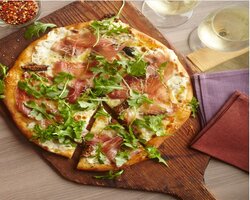
Homemade Pizza with Figs, Prosciutto, Arugula, and Fresh Mozzarella

Caramelized figs, oozing cheese, salty prosciutto, and fresh arugula are a delightful combination of flavors and textures in this autumnal pizza. Pair with your favorite Temecula Valley Rosé!

Ingredients

Pizzas:
1 (1-pound/450g) store-bought or homemade pizza dough
Extra-virgin olive oil
2 teaspoons (10ml) minced fresh rosemary leaves,
8 ounces (225g) fresh mozzarella, thinly sliced
6 tablespoons (80ml) finely grated Parmesan cheese, divided
8 slices prosciutto, about 4 ounces (110g), torn in half lengthwise
6 medium fresh California figs, quartered
2 ounces (56g) fresh arugula
Freshly ground black pepper

Makes two 10-inch (25cm) pizzas

Instructions

Make the pizzas:
Place a pizza stone on the lowest rack in the oven, and heat the oven to 475°F (250°C).

Divide the dough into 2 equal balls. Roll each ball out on a lightly floured work surface and transfer to a lightly floured pizza peel (or roll out on a piece of parchment paper). Lightly brush the dough with olive oil. Sprinkle the rosemary over each crust, leaving a 1/2-inch (1.25cm) border around the rims. Arrange half of the mozzarella over each crust, sprinkle 2 tablespoons (30ml) Parmesan over each pizza, and arrange the figs on top.

Slide the pizzas onto the baking stone (if using parchment, slide the parchment onto the baking stone). Bake the pizzas until the cheese is melted and the crust is golden brown, about 15 minutes.

Remove the pizzas from the oven. Drape half of the prosciutto slices over each pizza and sprinkle 1 tablespoon (15ml) Parmesan over each pizza. Return to the pizzas to the oven, and cook until the prosciutto is heated through, 2 to 3 minutes.

Remove the pizzas from the oven and scatter half of the arugula over each pizza. Brush the crusts with olive oil, sprinkle a few drops of olive oil over the arugula, and garnish with black pepper. Cut the pizzas into wedges and serve immediately.

Suggested Wines:

Callaway Winery ~ 2022 Special Selection Rosé of Sangiovese – Flavors of red currant and plump red plum while refreshing nectarine and watermelon highlight the sweet, tasty finish

Vitagliano Winery ~ 2022 Estate Rosé Displays aromatics of strawberry and hints of florals

South Coast Winery ~ 2022 Grenache Noir Rosé – Aromas of strawberry, raspberry and cotton candy.

Share

Celebrating Women in Temecula Valley Wine: Strength, Innovation, and the Future of the Industry

The world of wine has long been shaped by the hands of women, though their contributions haven’t always been given the recognition they deserve. As the industry evolves, women are stepping into leadership roles across winemaking, hospitality, and business, proving that their voices, skills, and perspectives are not just valuable but essential. International Women’s Day provides the perfect opportunity to highlight the extraordinary women making their mark in Temecula Valley Wine Country. With this year’s theme, #AccelerateAction, there’s no better time to amplify the voices of these trailblazers who are driving innovation, breaking barriers, and redefining what it means to be a woman in wine.

In celebration of Women’s History Month, we asked some of Temecula Valley’s leading women in wine to share their insights on the industry, their most unexpected lessons, and the advice they’d give to other women looking to enter the field. Here’s what they had to say.

Doffo Winery—Doffo sisters Samantha and Brigitte and winemaker Nadia Urquidez

TVWA: What’s the most unexpected or unconventional lesson you’ve learned – either about wine, or yourself – from working in the wine industry?

Doffo: One of the most unexpected lessons we’ve learned in the wine industry is that winemaking is as much about intuition as it is about science. While there are technical aspects to crafting great wine, there’s also an art to it—trusting your instincts, reading the vineyard, and knowing when to step in and when to let nature take its course. This has also taught us a lot about ourselves: patience, adaptability, and resilience are just as crucial in winemaking as they are in life.

TVWA: If you could give one piece of advice to women looking to break into the wine world – whether in winemaking, hospitality, or business – what would it be?

Doffo: Don’t be afraid to take up space, speak up, and trust your knowledge. Whether in winemaking, hospitality, or business, confidence is key. Surround yourself with people who challenge and inspire you, and never stop learning. The wine industry has historically been male-dominated, but the tides are changing—be part of that change and own your place in it!

TVWA: What’s one misconception about being a woman in wine that you wish would go away?+

Doffo: That we’re only here for the marketing or hospitality side of things. Women are just as capable in the cellar, the vineyard, and the boardroom as our male counterparts. We know the science, the craftsmanship, and the business just as well—if not better! It’s time to do away with the outdated assumption that winemaking is a man’s job.

TVWA: Who is your greatest female mentor, either in wine or in life? Why?

Doffo: Our greatest female mentors are the strong women in our own family. They’ve shown us what it means to work hard, lead with integrity, and never back down from a challenge. They’ve instilled in us a deep respect for tradition while also encouraging innovation. In wine and in life, having strong women as role models has been invaluable.

TVWA: What are you toasting the other women in wine with for Women’s History Month and why?

Doffo: We’re raising a glass of our finest red blend to all the women in wine—past, present, and future. We toast to the trailblazers who paved the way, the innovators who are redefining the industry, and the newcomers who are ready to make their mark. Here’s to breaking barriers, making great wine, and lifting each other up along the way!

Wilson Creek Winery—Kristina Filippi, Winemaker; Wendy Holder, VP of Marketing

TVWA: What’s the most unexpected or unconventional lesson you’ve from working in the wine industry?

Kristina: I have always been a bit of an introvert, so the biggest lesson I’ve learned is finding my voice and having the confidence to use it. Speaking up in a room full of industry veterans wasn’t always easy, but I’ve realized that my perspective and knowledge are just as valuable as anyone else’s.

Wendy: Wine has an uncanny way of revealing people’s true personalities—including my own. You see, wine isn’t just about swirling, sniffing, and sipping; it’s about storytelling, connection, and sometimes, a little controlled chaos.

TVWA: If you could give one piece of advice to women looking to break into the wine world, what would it be?

Kristina: Get your foot in the door and take every opportunity to learn something new. Engage with others, ask questions, and don’t be afraid to dive into different aspects of the industry.

Wendy: Learn to pivot—gracefully, and often. The industry is constantly evolving, so adaptability and resilience are essential. Be open to learning, ready to embrace change, and unafraid to rewrite the plan when necessary. Build a strong network, trust your instincts, and remember: no one truly has it all figured out—so don’t be afraid to dive in, make mistakes, and grow.

TVWA: What’s one misconception about being a woman in wine that you wish would go away?

Kristina: I believe this is changing, but I’d say the archaic idea that women are more suited for roles in hospitality and sales, though we are great in those areas too! Over the years I’ve had lots of people seem surprised when I’ve told them I’ve worked in vineyards, or when I’ve been introduced as the winemaker. There is sometimes an assumption that there is someone else overseeing my work in a higher winemaking capacity.  Women are very much suited to work in any area that entices our interest including viticulture and enology, and we are also absolutely capable of doing the “heavy lifting” in the cellar.

Wendy: That women can’t handle the “serious” parts of the industry, like winemaking and vineyard management. Spoiler alert: We absolutely can—and we are. We are making bold, complex wines, running entire vineyards, leading financial decisions, and yes—still throwing a killer event while doing it.

TVWA: Who is your greatest female mentor, either in wine or in life? Why?

Wendy: It’s impossible to choose just one because, truthfully, I’m surrounded by incredible female mentors every day. The women I work with in wine country aren’t just colleagues—they’re friends, sounding boards, and an endless source of wisdom (and occasional wine-fueled therapy sessions). Cheers to those who can turn a tough day into a laugh-filled one over a glass of sparkling, paired with a little grit and grace

TVWA: What are you toasting the other women in wine with for Women’s History Month and why?

Wendy: Even though spring practically begs for a crisp white or a delicate rosé, I’m toasting the incredible women in wine with a bold, unapologetic glass of Petite Sirah. Because Petite Sirah is powerful, complex, and leaves a lasting impression.

Kristina: Cheers to the great strides that we have made in this industry over the last couple of decades as well as seeing more and more talented and strong women advancing their careers within the industry, especially in viticulture and winemaking.

Europa Village—Casey Reed, Assistant Tasting Room Manager

TVWA: What’s the most unexpected or unconventional lesson you’ve learned from working in the wine industry?

Casey: The more you learn about wine, the less you know. As for a personal lesson, I realized how important patience is, not just with the wine aging process, but with my own personal growth in the industry. This is not for the faint of heart or for someone who wants a quick start. In a way, you grow and evolve just as the wine does – it’s a long, gradual journey. 

TVWA: If you could give one piece of advice to women looking to break into the wine world, what would it be?

Casey: Own your unique perspective and never underestimate your worth. The wine industry, like many others, thrives on diversity of thought, background, and experience. Whether you’re stepping into winemaking, hospitality, or business, your voice matters. Embrace your individuality, and trust that the skills and perspectives you bring are valuable. Don’t shy away from asking questions, seeking mentorship, and carving your own path, even if it doesn’t follow a traditional route. Confidence, curiosity, and a willingness to grow are key. 

TVWA: What’s one misconception about being a woman in wine that you wish would go away?

Casey: One misconception I wish would go away is the idea that women in wine are somehow less knowledgeable or capable than their male counterparts. There’s a persistent stereotype that women are often seen as novices or “just the pretty face” of wine, rather than the experts they truly are. The reality is that women have been shaping the wine world for centuries, whether in vineyards, cellars, or as sommeliers and winemakers. This misconception undermines the immense skill, expertise, and innovation women bring to the industry. It’s high time the focus shifts from gender to the talent, passion, and dedication that define someone’s work in wine, regardless of whether they’re male or female.

TVWA: Who is your greatest female mentor, either in wine or in life? Why? 

Casey: Besides my mother who introduced me to wine and has great wine taste herself; I would have to say Nicole Muscari. Nicole has an innate ability to blend knowledge with creativity, making wine more approachable and enjoyable for everyone she interacts with. What I admire most about her is her dedication not just to the craft, but to empowering those around her, especially women in the wine industry.

TVWA: What are you toasting the other women in wine with for Women’s History Month and why?

Casey: For Women’s History Month, I would raise a glass of Salmon Billecart Champagne in celebration of the incredible women who are breaking barriers, creating, and inspiring within the wine industry. This champagne, with its delicate bubbles and elegant flavors, represents the craftsmanship, dedication, and sophistication that women like those in the wine world bring to their work every day. It’s a toast to the perseverance, passion, and strength that women in wine have shown—and continue to show—paving the way for the next generation of female leaders, makers, and innovators. Here’s to breaking glass ceilings, to creating new possibilities, and to making history with each pour!

Danza del Sol & Masia de la Vinya Wineries—Sara Sindicich, Director of Operations 

TVWA: What’s the most unexpected or unconventional lesson you’ve learned from working in the wine industry? 

Sara: The most unexpected lesson I’ve learned is that imperfection can be beautiful. In wine, unpredictable elements like weather or fermentation create unique, memorable results. This has taught me that life’s flaws can also lead to unexpected growth and beauty—it’s all about embracing the process.  

TVWA: If you could give one piece of advice to women looking to break into the wine world, what would it be?

Sara: Be confident in your knowledge and voice, but stay open to learning. The wine world can be intimidating, but your perspective is valuable. Embrace your passion, seek mentorship, and continue refining your skills—your presence can shape the industry.

TVWA: What’s one misconception about being a woman in wine that you wish would go away?

Sara: The belief that women in wine are only interested in wine as a “lifestyle.” In reality, women bring a wealth of knowledge, hard work, and dedication to every part of the industry, from winemaking to business to education. Our expertise is rooted in passion and experience, not just trends or image.  

TVWA: Who is your greatest female mentor, either in wine or in life? Why? 

Sara: My greatest female mentor has undoubtedly been my mom. Though she never worked in the wine industry, she instilled in me her unwavering determination, ambition, and a mindset that always strives to support others and embrace every challenge. I am incredibly proud to be her daughter and carry her lessons with me every day.

TVWA: What are you toasting the other women in wine with for Women’s History Month and why?

Sara:For Women’s History Month, I’d toast to the strength, creativity, and resilience of women—especially those breaking barriers in the wine industry. To winemakers, sommeliers, vineyard owners, and all who’ve fought for their place in a male-dominated field, cheers to you. Keep pushing forward and creating opportunities for the next generations. 

Robert Renzoni Vineyards—Olivia Bue, Winemaker

TVWA: What’s the most unexpected or unconventional lesson you’ve learned from working in the wine industry?

Olivia: Never hesitate to ask questions or admit when you don’t know something. Curiosity is a powerful tool for growth and learning. Remember, everyone starts somewhere, and asking questions is a sign of strength, not weakness.

TVWA: If you could give one piece of advice to women looking to break into the wine world what would it be?

Olivia: 14 years ago, a winemaker offered me invaluable advice: to commit to a winery that provides the tools necessary for learning and growth as a winemaker. I’ve held onto that wisdom, and now, eleven years later, I’m thrilled to be in my dream role at Robert Renzoni Vineyards.

TVWA: What’s one misconception about being a woman in wine that you wish would go away?

Olivia: Mom-winemakers can balance the demands of home life and their passion for winemaking. Managing the demanding harvest schedule requires exceptional time management—skills that many mothers naturally develop through family life. Their ability to prioritize, delegate, and adapt allows them to navigate the daily grind efficiently. It’s inspiring to see how these qualities can turn a hectic schedule into a somewhat organized routine.

TVWA: Who is your greatest female mentor, either in wine or in life? Why?

Olivia: Martha Stouman of Martha Stouman Wines. I was fortunate to study alongside her at UC Davis where I was constantly inspired by her passion for wine. Watching her create and build a beautiful brand has been inspirational.

What are you toasting the other women in wine with for Women’s History Month and why?

Olivia: Cheers to the incredible women who support one another, lifting each other up as we share our passion for wine!

South Coast Winery and Carter Estate Winery—Emily Bloom, Assistant Winemaker and Vineyard Coordinator

TVWA: What’s the most unexpected or unconventional lesson you’ve learned from working in the wine industry?

Emily: The most unexpected lesson I’ve learned is that no two days are ever the same – you have to be ready to adapt and pivot at a moment’s notice. Flexibility is essential to success, whether it’s adjusting to unpredictable vineyard conditions or refining winemaking techniques. Keeping an open mind and embracing collaboration have been invaluable in achieving the best possible outcomes.

TVWA: If you could give one piece of advice to women looking to break into the wine world, what would it be?

Emily: If time and resources allow, seek out internships in different wine regions around the world. Experiencing diverse winemaking techniques, cultures, and approaches will not only deepen your understanding of the craft but also shape your perspective in ways that extend beyond the vineyard. The personal and professional growth that comes from immersing yourself in new environments can be invaluable throughout your career.

TVWA: What’s one misconception about being a woman in wine that you wish would go away?

Emily: The idea that winemaking is a male-dominated field needs to go. Winemaking is for everyone – anyone with a passion for the craft, from soil to glass, has a place in this industry. Wine is made all over the world, and our industry should reflect that diversity, embracing equity and inclusion at every level. While there is still work to be done, we continue to push for a more welcoming and representative space for all who love wine and are dedicated to creating something that brings people together.

Who is your greatest female mentor, either in wine or in life? Why?

Emily: I am continually inspired by the incredible women in the Temecula Valley wine industry. Their passion, dedication, and commitment to excellence in winemaking push me to keep learning and growing. Their strength, resilience, and pursuit of quality serve as a constant source of motivation, reminding me of the impact that collaboration and determination can have in this industry.

TVWA: What are you toasting the other women in wine with for Women’s History Month and why?

Emily: I’m raising a glass to the incredible women of the Temecula Valley and the wine industry as a whole – from production and winemaking to tasting rooms, events, and sales. Your dedication, passion, and hard work are shaping this region into a thriving and respected wine destination. Cheers to all of us and the impact we continue to make!

Altísima Winery—Sharon Cannon, Hospitality Manager

TVWA: What’s the most unexpected or unconventional lesson you’ve learned from working in the wine industry?

Sharon: Wine has taught me that perfection isn’t the goal – It’s the imperfections, the surprises in each vintage, that make it truly special. Similarly, in life & business, adaptability and embracing the unexpected often lead to the most rewarding experiences.

TVWA: If you could give one piece of advice to women looking to break into the wine world, what would it be?

Sharon: Own your voice and expertise with confidence. Never be afraid to take up space at the table!

TVWA: What’s one misconception about being a woman in wine that you wish would go away?

Sharon: That we have to fit a specific mold to be taken seriously. Women in wine bring diverse perspectives, skills, and talents to every role. There’s no one way to succeed, and our impact speaks for itself.   

Who is your greatest female mentor, either in wine or in life? Why? Oh, my goodness, so many to list. A local industry lady that I admire greatly is Devin Parr – because she embodies resilience, passion, and unwavering dedication to her craft. She may not know it, but she has taught me that success isn’t just about knowledge, it’s about confidence, adaptability, and lifting others up as you climb!

What are you toasting the other women in wine with for Women’s History Month and why?

Sharon: The Altísima Sparkling Rosé – because we should always be celebrating!

Wiens Cellars—Amanda Kreyenhagen, Wine Club & Customer Service Manager

TVWA: What’s the most unexpected or unconventional lesson you’ve learned while working in the industry?

Amanda: There’s always something new to learn. Just when you think you’ve mastered something, a new vintage, technique, or customer insight shifts your perspective. Wine is ever-evolving, and that’s what keeps it exciting—it challenges you to stay curious and open-minded.

If you could give one piece of advice to women looking to break into the wine world, what would it be?

Amanda: Educate yourself, ask questions, and don’t be afraid to get hands-on experience. Whether you’re in the vineyard, the cellar, or the tasting room, learning by doing is invaluable. There’s no single path to success in the wine industry, so embrace the journey, seek mentors, and always be willing to put in the work.

TVWA: What’s one misconception about being a woman in wine that you wish would go away?

Amanda: The idea that female winemakers aren’t on the same level as male winemakers. Women have been crafting exceptional wines for decades, yet outdated perceptions still exist. Talent, skill, and passion define great winemakers—not gender.

Who is your greatest female mentor, either in wine or in life? Why?

Amanda: Sabrine Rodems has been an incredible inspiration. She’s not just a highly skilled winemaker but also an accomplished business owner who has built a successful winery and tasting room while producing award-winning wines. She embodies what it means to balance creativity, technical expertise, and leadership in this industry.

TVWA: What are you toasting the other women in wine with for Women’s History Month and why?

Amanda: I’m raising a glass of Cabernet Franc—a wine that, much like women in this industry, is versatile, bold, rich, and carries an undeniable finesse. It has structure and depth, yet it’s also elegant and expressive. Here’s to the women who continue to break barriers, redefine excellence, and bring their passion to every corner of the wine world. Cheers!

Share

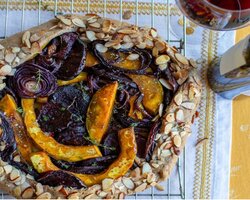
Beet and Winter Squash Galette

Cozy up with this rustic savory Beet and Winter Squash Galette. A golden, flaky whole wheat crust wraps around tender, herb-roasted beets, golden winter squash and caramelized red onions all nestled in a bed of buttery almond filling. Serve warm slices alongside a crisp salad for a light lunch or dinner. It also makes a fantastic appetizer or side dish for your next gathering. Pair it with a glass of Temecula Valley red blend to enhance the earthy notes of the dish.

Prep: 45 minutes | Cook: 40 minutes Total Time: 85 minutes

Ingredients

For the crust:

  • 3/4 cups (120g) all-purpose flour
  • ¾ cup (123g) whole wheat flour
  • ½ teaspoon salt
  • ½ cup (110g) unsalted butter, chilled and cubed
  • ½ cup ice water
  • 1 large egg beaten with 1 tablespoon milk
  • ¼ cup sliced almonds for garnish

For the roasted vegetables:

  • 1 small (876g) butternut or kabocha squash, peeled, seeded, and sliced
  • 2 medium (506g) beets, peeled and sliced
  • 1 large (273g) red onion, cut into rings
  • 2 tablespoons olive oil
  • 3 cloves garlic, chopped
  • 2 sprigs fresh rosemary, chopped (plus extra for garnish)
  • 4 sprigs thyme, leaves removed (plus extra for garnish)
  • 1 teaspoon kosher salt (plus extra for seasoning)
  • 1/2 teaspoon black pepper (plus extra for seasoning)

For the almond filling

  • 4 tablespoons (56g) unsalted butter, room temperature
  • 2 large eggs, at room temperature
  • 1 cup (100g) almond flour or almond meal
  • 2 tablespoons granulated sugar
  • 1 teaspoon lemon zest

Instructions

  • Make the crust: In a large bowl, whisk together both flours and salt. Cut in butter until mixture resembles coarse crumbs. Gradually add ice water, mixing until the dough just comes together. Form dough into a disc, wrap in plastic, and chill for at least 30 minutes.
  • Roast the vegetables: Preheat the oven to 400°F (200°C). Place squash and beets and red onions on a parchment-lined baking sheet. Drizzle with olive oil and sprinkle with the garlic, rosemary, thyme, salt and pepper. Toss to coat then spread in an even layer and roast for 25-30 minutes, or until tender.
  • Make the almond filling: In the bowl of a stand mixer fitted with paddle attachment combine all the almond filling ingredients. Beat on medium until smooth.
  • Assemble the galette: On a lightly floured surface, roll out dough into a 12-inch circle. Transfer to a baking sheet lined with parchment paper. Spread almond filling over dough, leaving a 2-inch border. Top with roasted vegetables (you may not use all of the vegetables).
  • Fold and bake: Fold edges of dough over filling, pleating as needed. Brush crust with beaten egg and sprinkle with the sliced almonds. Bake for 40-50 minutes, or until the crust is golden brown and the filling is heated through.
  • Serve: Sprinkle the galette with salt, pepper and extra herbs before slicing and serving.

Suggested Wines:

Thornton Winery ~ 2021 Thorny’s Coat Red – Aromas of  Red berries, dark cherries, light oak spice, and dusty herbs.

Wilson Creek Winery ~ 2021 GSM – Displays aromatics of French Oak spice, plum and dark cherry. the palate is a layer of red berries and finishes with a distinct smokiness.

Oak Mountain Winery ~ 2020 Caveman Red – Aromas of red fruit, chocolate/mocha, earth and leather.

Share

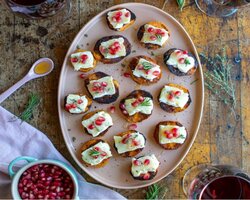
Sweet Potato Crostini with Brie and Pomegranate

This stunning appetizer is incredibly easy to make! Forget toasted bread – we’re using roasted sweet potato slices as the base for these colorful crostini. Simply top them with creamy brie cheese, a sprinkle of pomegranate seeds, and a drizzle of hot honey (or regular honey if you prefer). Serve these sweet and savory bites warm from the oven for an unforgettable appetizer. Even at room temperature, they’re delicious – the brie softens and the pomegranate seeds add a delightful crunch. Pair them with a Temecula Valley Pinot Noir or Grenache for the perfect pairing.

Yield: 4 Servings

Ingredients

  • 2 medium (700g)  sweet potatoes, peeled and sliced into ¼-inch thick rounds
  • 1 tablespoon olive oil
  • Kosher salt and freshly ground black pepper
  • 5 ounces (146 g) Brie cheese, sliced
  • ¾ cup (124g)  pomegranate arils
  • 2 tablespoons hot honey (or regular honey)
  • 2 sprigs each, rosemary and thyme

Instructions

  • Heat oven to 400°F. Line a baking sheet with parchment paper. Place sweet potato slices on the baking sheet and drizzle with the olive oil. Season generously with salt and pepper and toss to coat. Arrange in a single layer.
  • Roast on the top shelf of the oven until golden brown and tender, 20-30 minutes.
  • Remove to a serving platter and top with a slice of brie and a sprinkle of pomegranate arils. Drizzle honey over the top. Remove the leaves from the rosemary and thyme and distribute evenly over the crostini. Season again with salt and pepper and serve.

Suggested Wines:

South Coast Winery Spa & Resort ~ 2018 Grenache – Loaded with bright cherry and other berry fruit characters

Wiens Cellars ~ 2021 Pinot Noir – This wine is soft and elegant with simplicity, a delicate tannin structure highlighting the red fruit and spice

Leoness Cellars ~ 2021 CS Grenache – Aromas and flavors of red cherries and raspberries complemented subtle notes of lavender and sage

Recipe and photo courtesy of the Wine Institute of California

Share

Mindful Sips, Temecula Style

How to embrace wellness and wine in perfect harmony this January

January is often seen as a fresh start—a time to reset and focus on wellness after the indulgence of the holiday season. For many, this means embracing mindful habits, and wine lovers are no exception. Some use this time to completely abstain, going dry for the month of January to clean the slate, so to speak. Others simply approach their consumption with more intention. “I’m not doing Dry January this year,” says Wendy Holder, vice president of marketing at Wilson Creek Winery. “Instead of cutting out wine completely, I’m focusing on practicing mindful sipping and moderation. For me, wine is more than just a drink—it’s about connection, celebration, and balance.”

Temecula’s wine country, with its scenic views and inviting wineries, offers the perfect setting for a thoughtful start to the new year—wine included. We’ve gathered insights from local wineries and added a few ideas of our own to help you embrace mindfulness while celebrating the joys of wine this winter.

Savor a Wine Flight

One way to enjoy wine without overindulging is to opt for a tasting flight. Brittany Mastin, marketing coordinator at Churon Winery, suggests, “Opt for a tasting flight instead of a full pour to enjoy the flavors of multiple wines in small, thoughtful sips.” This approach lets you explore a variety of wines while keeping portions manageable. It’s a great way to focus on the flavors and nuances of each pour, rather than consuming more than necessary.

Pair Wine with Healthy Dishes

Mindful sipping can be enhanced with thoughtful food pairings. Sharon Cannon, wine club manager at Altísima Winery, encourages pairing wines with “healthy, January-friendly dishes, such as roasted vegetables, grilled fish, or fresh salads.” Not only does this elevate the wine experience, but it also keeps your meal balanced and nourishing. Temecula wineries often offer seasonal menus featuring dishes like Churon Winery’s vegetarian flatbread or grilled chicken sandwich, both of which complement a range of wines beautifully.

Make It Social

Wine is often best enjoyed in good company. “Enjoy wine as part of a shared experience with friends or family, focusing on the company and conversation rather than the quantity,” suggests Mastin. A cozy evening by the fire or a gathering at one of Temecula’s scenic wineries can be a perfect way to celebrate connection and mindfulness. Whether you’re enjoying a private tasting or simply relaxing with loved ones, the focus can shift from how much you drink to the memories you create.

Experiment with Low-ABV Options

For those looking for a lighter sip, explore lower-proof options like white wines, rosés, and sparkling wines, which typically offer less alcohol per serving. Or, consider a replacing the spirit in your go-to cocktail with wine, or experimenting with wine spritzers. “Mix your favorite wine with sparkling water or club soda for a lighter ABV option,” says Cannon. This refreshing take on wine can be both fun and flavorful, allowing you to enjoy the essence of wine without feeling overindulgent. This is also a great way to stay hydrated while sipping, further supporting a balanced approach.

Focus on Quality Over Quantity

Mindful sipping is about intention. Holder emphasizes pouring smaller amounts into your glass and savoring each sip. “Rather than going all or nothing, I prefer to enjoy wine intentionally, pairing it with healthy meals or savoring it during meaningful moments with loved ones,” she says. “This approach feels more sustainable, and aligns with my overall wellness goals. One thoughtfully enjoyed glass can be more satisfying than several rushed ones.”

Slowing down and paying closer attention to small details and moments ensures that each glass feels special and allows you to fully appreciate the craftsmanship that goes into each bottle.

Add a Wellness Element to Your Visit

Temecula’s wine country isn’t just about great wine—it’s also a hub for wellness-focused activities that make mindful sipping even more enjoyable. Here are a few ideas to inspire your next visit:

  • Wine & Yoga: Many wineries host yoga sessions followed by a glass of wine, blending physical wellness with relaxation.
  • Horseback Riding Tours: Explore Temecula’s stunning vineyards on horseback for a unique, calming perspective on wine country.
  • Spa Treatments: Book a massage or facial at one of the region’s luxurious spas.
  • Hiking & Picnicking: Take advantage of the beautiful weather and scenic trails, and pack a mindful picnic to enjoy with a single glass of wine.

Cheers to a Balanced Start

If you’re looking for the perfect wine to kick off the new year, sparkling wines are of course a popular choice, and thankfully these wines shine in Temecula Valley. “Who doesn’t love bubbles to celebrate new beginnings?” says Cannon, while Mastin recommends Churon Winery’s cuvée champagne for its crisp bubbles and festive vibe. Holder adds, “A crisp and celebratory sparkling wine is the perfect way to welcome the year with intention.”

Temecula’s wine country offers a serene backdrop to unwind, recharge, and celebrate the new year with intention. Whether you’re savoring a flight, sharing a bottle with friends, or enjoying a glass with dinner—after a zen-ful yoga session—these mindful practices can make your January a month of balance and enjoyment.

Share

Temecula Wine Country’s Latest Buzz: Renovations, Rhône Blends, and Regenerative Agriculture

Wineries in Temecula Valley share their visions for 2025, their favorite trends, and the ones they’d rather leave behind.

As 2025 approaches, Temecula Valley Wine Country is abuzz with anticipation for what promises to be an exciting year of growth, innovation, and, of course, great wine. Nestled in Southern California, this vibrant wine region continues to carve its place in the global wine scene with its welcoming mix of warm hospitality, unique wine experiences, and robust food and wine offerings. From bold renovations to groundbreaking trends in winemaking, the wineries here are ready to embrace the future with open arms and a glass of something delicious in hand.

But it’s not all about what’s new. Alongside the exciting projects and forward-thinking plans, winemakers and industry leaders are reflecting on the trends shaping wine culture – both those they’d like to see more of and those they’re hoping will fade away. We spoke to a few of the region’s most influential voices to get their take on what’s ahead, their hopes for the industry, and what they’ll be toasting with as the calendar turns.

At Oak Mountain Winery, 2025 is all about transformation. “We’re taking out the old and bringing in the new,” shares Ruth Manlulu, Membership and Office Manager. Renovations and modernizations are top of mind as the winery embraces a fresh start. Manlulu sees organic wines gaining momentum as a leading trend in the coming year, and she’s excited to sip more sparkling wine, which she says, “reminds me of spring and summer days ahead.”

Over at South Coast Winery Resort & Spa, winemaker Jon McPherson is eagerly anticipating the release of two Rhône blends: a Rosé crafted from Grenache, Cinsault, and Syrah, and a re-release of their Grenache Viognier Roussanne. The winery is also expanding its production capabilities with new equipment to refine its winemaking process, including the addition of new small-format tanks and stainless steel drums.

McPherson notes a growing shift toward wines with minimal oak influence, as well as “a greater emphasis on authenticity, and an unwavering commitment to quality.” When asked about trends he’d like to bid farewell to, he doesn’t hold back: “Canned wines, flavored wines, orange wines, and natural wines could all take a backseat in 2025,” he says, additionally noting some fatigue surrounding the no- and low-alcohol wine trend. “We’d also like to see products marketed as wine that fall outside traditional winemaking standards phased out.”

When it comes to what he’d like to sip more of in 2025, Jon is much more effusive. “Expensive Champagne, Bandol, Priorat, and Single Malt Scotch—some of the finest and most rewarding indulgences!” No counting Temecula Wines, of course.

Wilson Creek Winery is gearing up for a milestone year as it celebrates its 25th anniversary. Wendy Holder, vice president of marketing, says the year will be packed with special events, new wines, and even concerts to mark the occasion. The winery will also unveil its first vintage from Block 9, their first vineyard block dedicated to regenerative agriculture. “We are super interested to see how the Block 9 Cabernet is received,” she says.

Holder is less enthusiastic about the rise of “diet” or “low-carb” wines. “I think wine is something to be enjoyed and savored for its true character, around meals with friends and loved ones, instead of trying to force it to be something it’s not to fit into a diet plan,” she says. “Live a little and enjoy.” Her hope for 2025? A deeper exploration of Portuguese varietals like Touriga Nacional and Trincadeira, which she finds both intriguing and exciting.

From sparkling wines and regenerative agriculture to milestone anniversaries and groundbreaking blends, Temecula Valley Wine Country is entering 2025 with big ambitions and bigger ideas. While some trends like organic wines and minimal oak influence are gaining traction, others—think “diet wines” and canned creations—may find their moment fading. One thing is certain: the wines and the people of Temecula are ready to make 2025 a year to raise a glass to. Cheers to what’s next!

Share
  • Categories

  • Archives

  • Banner Ads